How To Cook Whole Mackerel In Oven For Delicious Results
Cooking whole mackerel in the oven is one of the simplest and most delicious ways to prepare this oily fish at home. This guide walks you through every step, from cleaning and seasoning to baking at the perfect temperature. You will learn how to get crispy skin, juicy flesh, and restaurant-quality results with very little effort. Whether you are a beginner or a seasoned cook, this method guarantees tender, flavorful mackerel every single time.
There is something deeply satisfying about cooking a whole fish in the oven. It feels rustic. It feels impressive. And yet, it is surprisingly simple. How to cook whole mackerel in oven is a question many home cooks ask, and the answer is easier than you think. Mackerel is an oily fish with rich flavor and firm flesh. It holds up beautifully in a hot oven. The skin crisps up perfectly, and the inside stays moist and tender.
This article will guide you through everything you need to know. We will cover preparation, seasoning, baking times, and serving ideas. By the end, you will feel confident enough to make this dish your own. Whole mackerel oven recipe techniques are straightforward once you understand the basics. Let us dive in and make your next fish dinner something special.
Key Takeaways
- Simple Prep: Cleaning and seasoning whole mackerel takes just minutes before it goes in the oven.
- Perfect Temperature: Baking at 200°C (400°F) ensures crispy skin and perfectly cooked flesh.
- Versatile Flavors: You can customize herbs, lemon, and spices to match any taste preference.
- Quick Cooking Time: A whole mackerel cooks in about 20 to 25 minutes, making it a weeknight-friendly meal.
- Healthy Choice: Mackerel is rich in omega-3 fatty acids and protein, making it a nutritious dinner option.
- Easy Scaling: This method works whether you are cooking one fish or several fillets at once.
📑 Table of Contents
- Why Oven-Baked Whole Mackerel Is a Great Choice
- Preparing Your Whole Mackerel for the Oven
- Best Seasonings and Flavor Combinations
- Step-by-Step Oven Recipe for Whole Mackerel
- Tips for Perfect Crispy Skin and Tender Flesh
- Serving Suggestions and Pairings
- Storing and Reheating Leftover Mackerel
- Frequently Asked Questions
- Conclusion
Why Oven-Baked Whole Mackerel Is a Great Choice
Many people avoid cooking whole fish because they think it is complicated. That could not be further from the truth. Baking whole mackerel in the oven is one of the easiest ways to prepare fish at home. There is no flipping required. There is no risk of the flesh breaking apart on a hot grill. The oven does all the work for you.
Mackerel is also incredibly nutritious. It is packed with omega-3 fatty acids. It provides high-quality protein. And it is relatively affordable compared to other oily fish like salmon or tuna. When you bake whole mackerel, you get a complete meal with minimal cleanup. One fish, one tray, and you are done.
Health Benefits of Mackerel
Mackerel stands out among fish for its nutritional profile. It contains more omega-3s per serving than many other species. These healthy fats support heart health, reduce inflammation, and boost brain function. A single serving of mackerel can provide your daily recommended intake of vitamin D. It is also an excellent source of vitamin B12 and selenium.
If you are looking for healthy oven-baked fish recipes, mackerel should be at the top of your list. It is nutrient-dense and low in saturated fat. The oven-baking method does not add extra oils or fats. You get all the nutrition without any extra calories from frying.
Why Oven Baking Works So Well for Mackerel
Oven baking creates a gentle, even heat around the whole fish. This means the flesh cooks uniformly from edge to center. The skin dries out and becomes crispy. The bones help hold the fish together during cooking. And the internal moisture stays locked in. You get a beautifully textured result every time.
Compared to pan-frying, oven baking gives you more control. You set the temperature and walk away. There is no need to monitor the fish constantly. This makes it ideal for busy weeknights when you want a healthy meal on the table fast.
Preparing Your Whole Mackerel for the Oven
Proper preparation is the foundation of a great whole mackerel oven recipe. The good news is that prep work takes only a few minutes. Once you know the steps, it becomes second nature.
Cleaning and Gutting the Mackerel
Start by rinsing the mackerel under cold running water. Pat it dry with paper towels. Lay the fish on a clean cutting board. Use a sharp knife to make a cut along the belly from head to tail. Reach inside and remove all the internal organs. Pull out the gills as well. These parts can make the fish taste bitter if left inside.
Next, rinse the cavity thoroughly under cold water. Use your finger to remove any remaining blood or dark tissue. This step is crucial for a clean, fresh taste. Some people also remove the head, but leaving it on helps the fish hold its shape during baking. It also looks impressive on the plate.
Scoring the Skin
Use the tip of your knife to make shallow diagonal cuts along both sides of the fish. Space them about one inch apart. These cuts, called scoring, help heat penetrate the flesh evenly. They also allow seasoning to sink into the fish. The cuts should be shallow — just through the skin and into the top layer of flesh.
Scoring also helps the skin crisp up beautifully. Without it, the skin can blister unevenly. Take your time with this step. It makes a real difference in the final result.
Drying the Fish
After cleaning and scoring, pat the entire fish dry again with paper towels. Dry skin crisps up much better than wet skin. This is a small step that many people skip. But it is one of the secrets to getting that perfect crispy mackerel skin in the oven.
Best Seasonings and Flavor Combinations
Seasoning is where you can truly make this dish your own. Mackerel has a strong, distinctive flavor. It pairs well with bold ingredients as well as delicate ones. The key is balancing the richness of the fish with complementary flavors.
Classic Mediterranean Style
The Mediterranean approach is simple and timeless. Rub the inside and outside of the fish with olive oil. Sprinkle with sea salt and freshly cracked black pepper. Add thin slices of lemon both inside the cavity and on top of the fish. Tuck fresh herbs like thyme, rosemary, or dill into the scoring cuts.
This combination lets the natural flavor of the mackerel shine. The lemon cuts through the oiliness. The herbs add a fragrant, aromatic layer. It is a classic whole grilled fish style adapted perfectly for the oven.
Asian-Inspired Flavors
If you prefer something bolder, try an Asian-inspired seasoning. Mix soy sauce, sesame oil, and a touch of honey. Add grated ginger and minced garlic. Brush this mixture over the scored skin. Sprinkle with sesame seeds before baking.
This creates a sweet, savory, and slightly umami-rich mackerel. It pairs wonderfully with steamed rice and stir-fried vegetables. The soy sauce caramelizes slightly in the oven, creating a beautiful glaze on the skin.
Herb and Garlic Butter
For a richer flavor, make a compound butter. Mix softened butter with minced garlic, chopped parsley, lemon zest, and a pinch of salt. Spread this mixture over the scored areas and inside the cavity. The butter melts into the fish as it bakes, creating an incredibly moist and flavorful result.
This method is slightly more indulgent but absolutely worth it. The herb butter mackerel tastes like it came from a fancy restaurant. Yet it takes only five minutes to prepare.
Step-by-Step Oven Recipe for Whole Mackerel
Now that your fish is prepped and seasoned, it is time to bake. Follow these simple steps for perfect results every time. This how to cook whole mackerel in oven method works consistently and produces restaurant-quality fish at home.
What You Will Need
- 2 whole mackerel, cleaned and gutted
- Olive oil (2 tablespoons)
- Sea salt and black pepper
- 2 lemons, sliced
- Fresh herbs (thyme, dill, or parsley)
- 1 tablespoon butter (optional)
- A baking tray or oven-safe dish
- Parchment paper or aluminum foil
Step-by-Step Instructions
Step 1: Preheat the oven. Set your oven to 200°C (400°F). Allow it to reach the full temperature before placing the fish inside. A hot oven is essential for crispy skin.
Step 2: Prepare the baking tray. Line a baking tray with parchment paper or aluminum foil. Lightly brush it with olive oil. This prevents the fish from sticking and makes cleanup effortless.
Step 3: Season the fish. Rub the outside of each mackerel with olive oil. Generously season with salt and pepper. Stuff the cavity with lemon slices and fresh herbs. Place the fish on the prepared tray.
Step 4: Bake the mackerel. Place the tray in the center of the oven. Bake for 20 to 25 minutes. The exact time depends on the size of the fish. Larger mackerel may need a few extra minutes.
Step 5: Check for doneness. The fish is ready when the flesh flakes easily with a fork. The skin should be golden and crispy. Use a meat thermometer to check the internal temperature. It should reach 63°C (145°F) in the thickest part.
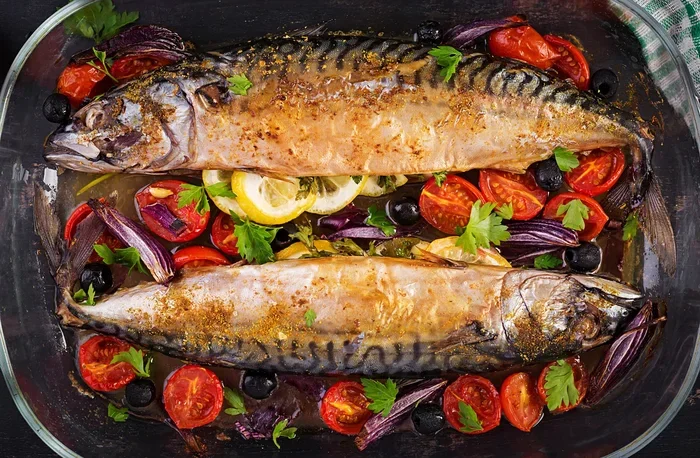
Step 6: Rest and serve. Remove the fish from the oven. Let it rest for 3 to 5 minutes. This allows the juices to redistribute. Serve whole on a platter with lemon wedges and fresh herbs.
Baking Time and Temperature Guide
The ideal oven temperature for mackerel is 200°C (400°F). At this temperature, the skin crisps while the inside cooks gently. Here is a quick reference guide for different sizes:
- Small mackerel (300-400g): 18-20 minutes at 200°C
- Medium mackerel (400-600g): 20-25 minutes at 200°C
- Large mackerel (600g+): 25-30 minutes at 200°C
- Mackerel fillets: 12-15 minutes at 200°C
Always check the fish a few minutes before the minimum time. Ovens vary, and you do not want to overcook the fish. Overcooked mackerel becomes dry and loses its delicate flavor.
Tips for Perfect Crispy Skin and Tender Flesh
Getting the skin crispy while keeping the inside tender is the hallmark of a great baked mackerel. These practical tips will help you nail it every time.
Dry the Skin Thoroughly
Moisture is the enemy of crispy skin. After cleaning the fish, pat it completely dry with paper towels. You can even let it air-dry in the refrigerator for 30 minutes before baking. The drier the surface, the crispier the result. This is one of the most important mackerel cooking tips you will ever follow.
Use a Hot Oven
A hot oven is non-negotiable for crispy skin. A temperature of 200°C or higher quickly sears the outside. This creates a barrier that locks in moisture. If the oven is too cool, the skin will steam instead of crisp. Always preheat your oven fully before adding the fish.
Do Not Overcrowd the Tray
If you are cooking multiple fish, give each one space on the tray. Overcrowding traps steam and prevents the skin from crisping. Use two trays if necessary. Air needs to circulate freely around each piece of fish.
Score the Skin Deeply Enough
Shallow scoring does not do much good. Make sure your cuts go through the skin and into the flesh by about 3 millimeters. This allows the seasoning to reach deeper layers of the fish. It also helps moisture escape from the flesh, contributing to crispier skin.
Broil at the End
For extra crispy skin, switch your oven to the broil setting for the last 2 minutes. Watch the fish closely during this time. The broiler can go from perfectly crispy to burnt very quickly. This trick gives you an extra level of texture that is truly impressive.
Common Mistakes to Avoid
Even experienced cooks make mistakes when baking whole fish. Here are the most common ones and how to avoid them:
- Not cleaning the fish properly: Residual blood or organs create a bitter taste. Always rinse and dry thoroughly.
- Using too much oil: A light coating is all you need. Excess oil makes the skin greasy rather than crispy.
- Under-seasoning: Mackerel has a strong flavor, but it still needs salt and seasoning. Taste as you go.
- Opening the oven too often: Every time you open the door, heat escapes. This extends cooking time and affects crispiness.
- Removing the fish too early: Undercooked mackerel is unpleasant. Always check for flakiness before serving.
Avoiding these mistakes will elevate your oven-baked mackerel from good to excellent. Pay attention to these details, and you will notice an immediate improvement.
Serving Suggestions and Pairings
Whole baked mackerel looks stunning on the table. It makes an impressive centerpiece for a family dinner or a dinner party. Here are some ideas for serving it beautifully.
Simple Side Dishes
Mackerel pairs wonderfully with light, fresh sides. A crisp green salad with lemon vinaigrette balances the richness of the fish. Roasted potatoes with rosemary and garlic make a hearty accompaniment. Steamed asparagus or broccolini adds a welcome green element to the plate.
For a Mediterranean feel, serve with a simple grain salad. Quinoa or couscous tossed with diced cucumber, tomatoes, and olives creates a colorful and flavorful plate. The combination of Mediterranean mackerel with these sides transports your kitchen straight to the coast.
Sauces and Condiments
A good sauce can elevate baked mackerel to new heights. A classic tartar sauce made with Greek yogurt, capers, and dill complements the fish perfectly. A drizzle of lemon aioli adds a creamy, tangy contrast. For something lighter, a squeeze of fresh lemon juice and a sprinkle of flaky sea salt right before serving is all you need.
Try a chimichurri sauce for a bold, herby kick. It is made with parsley, garlic, olive oil, and red wine vinegar. The bright, vibrant flavors cut through the richness of the mackerel beautifully.
Wine Pairings
If you enjoy wine with dinner, mackerel pairs well with crisp white wines. A Sauvignon Blanc or a dry Riesling complements the oily fish without overpowering it. For red wine lovers, a light Pinot Noir works surprisingly well. The key is choosing a wine with enough acidity to balance the richness of the fish.
Storing and Reheating Leftover Mackerel
Cooked mackerel stores well in the refrigerator. Place leftover fish in an airtight container within two hours of cooking. It will keep for up to two days. The flavor often improves overnight as the seasoning penetrates deeper into the flesh.
To reheat, use a gentle approach. Place the mackerel on a baking tray and warm it in the oven at 150°C (300°F) for 8 to 10 minutes. Microwaving can make the skin soggy and the flesh rubbery. The oven method preserves the texture much better. Leftover baked mackerel also makes a fantastic addition to salads and sandwiches the next day.
Frequently Asked Questions
Can I cook mackerel straight from the freezer?
It is best to thaw mackerel before baking. Place it in the refrigerator overnight to defrost safely. Cooking from frozen can lead to uneven cooking, with the outside overcooking before the inside is done. If you must cook from frozen, add 10 to 15 minutes to the baking time and check frequently for doneness.
What temperature should whole mackerel be when cooked?
The internal temperature of cooked mackerel should reach 63°C (145°F). Use a meat thermometer inserted into the thickest part of the fish near the backbone. The flesh should also appear opaque and flake easily when you press it with a fork. These are reliable indicators that the fish is fully cooked and safe to eat.
How do I know if mackerel is fresh?
Fresh mackerel has bright, clear eyes and shiny, metallic skin. The flesh should be firm and spring back when pressed. It should smell clean and ocean-like, not fishy or ammonia-like. Buy from a reputable fishmonger or market. If the fish has a strong, unpleasant odor, it is best to choose a different one.
Can I bake mackerel without scoring the skin?
You can, but scoring makes a significant difference. Scored skin cooks more evenly and becomes crispier. The cuts also allow seasoning to infuse the flesh more effectively. If you skip scoring, the skin may cook unevenly and the seasoning will sit mostly on the surface. It is a small extra step with a big payoff.
Is mackerel safe to eat regularly?
Yes, mackerel is one of the healthiest fish you can eat. It is rich in omega-3 fatty acids, protein, and essential vitamins. However, because it is an oily fish, it can contain higher levels of mercury compared to white fish. The FDA recommends eating 2 to 3 servings of fish per week. Mackerel is safe within those guidelines for most adults. Pregnant women should consult their doctor about fish consumption.
What is the difference between whole mackerel and mackerel fillets in the oven?
Whole mackerel retains more moisture because the bones and skin insulate the flesh during cooking. Fillets cook faster but can dry out more easily. Whole fish also present more beautifully on the plate and are fun to eat. Fillets are more convenient for beginners and easier to portion. Both methods produce delicious results, so choose based on your comfort level and the occasion.
Conclusion
How to cook whole mackerel in oven is a skill that anyone can master with a little practice. The process is straightforward, the results are impressive, and the health benefits are substantial. From cleaning and scoring to seasoning and baking, every step is simple and rewarding.
Oven-baked mackerel is one of the most underrated meals you can make at home. It requires minimal ingredients, very little prep time, and delivers maximum flavor. Whether you go with a classic Mediterranean style or experiment with Asian-inspired seasonings, the outcome is always delicious.
The key to perfect baked whole mackerel lies in the details. Dry the skin thoroughly. Use a hot oven. Score the fish properly. And never be afraid to season generously. These small actions transform a simple fish into something truly memorable.
So the next time you are at the fish market, grab a couple of fresh mackerel. Bring them home and try this method. You will be amazed at how easy and satisfying whole mackerel oven cooking can be. Your family and guests will love it. And you will wonder why you did not make it sooner.