Is Aluminium Foil Oven Safe Here is What You Need to Know
Yes, aluminium foil is generally oven safe, but there are important rules you must follow. Using foil in your oven can help with clean-up, even cooking, and heat distribution. However, lining the bottom of the oven or using foil at extreme temperatures can create serious safety hazards. This guide covers everything you need to know about is aluminium foil oven safe before you reach for that roll.
Is aluminium foil oven safe? This is one of the most common questions home cooks ask. You wrap your potatoes in it. You line your baking sheet with it. You even tent your roast with it. But is it really safe to put foil in the oven?
The short answer is yes. Aluminium foil is safe to use in most ovens. But there is a lot more to know than just a simple yes or no. Using foil the wrong way can cause uneven cooking, mess up your food, or even become a fire risk. That is why we put together this complete guide. We will walk you through everything you need to know about using aluminium foil in the oven safely and effectively.
Whether you are baking cookies, roasting vegetables, or slow-cooking a brisket, foil plays a big role in kitchen cooking. It helps with clean-up. It spreads heat evenly. And it keeps food moist. But knowing how and when to use it makes all the difference. Let us dive in and explore the world of cooking with aluminium foil in your oven.
Key Takeaways
- Aluminium foil is oven safe up to 400-450°F for most standard baking and roasting tasks.
- Never line the oven floor with foil as it can trap heat and damage your appliance or start a fire.
- The shiny side and dull side of foil have no real difference in cooking performance.
- Avoid using foil with acidic foods like tomatoes and citrus, as the foil can react and affect taste.
- Foil can reflect heat and speed up cooking when used correctly as a cover or wrapper.
- Always check your oven manual for specific guidance on foil use and temperature limits.
- Foil is not microwave safe and should never be used in a microwave oven.
📑 Table of Contents
- What Is Aluminium Foil and Why Do We Use It in the Oven?
- Can You Put Aluminium Foil in the Oven? The Safety Rules
- What Are the Benefits of Using Aluminium Foil in the Oven?
- Common Mistakes People Make with Aluminium Foil in the Oven
- Can You Use Foil in a Toaster Oven?
- What Temperature Is Aluminium Foil Safe In?
- Aluminium Foil vs. Other Oven Liners
- Expert Tips for Using Aluminium Foil in the Oven
- Quick Tips for Safe Foil Use
- Final Thoughts
What Is Aluminium Foil and Why Do We Use It in the Oven?
Aluminium foil is a thin sheet of aluminium metal. It is very flexible and easy to shape. You can wrap it, fold it, or tear it to fit any need. Most households keep a roll of foil in the kitchen for good reason.
People use foil in the oven for many reasons. Here are the most common ones:
- Lining baking sheets to make clean-up easier
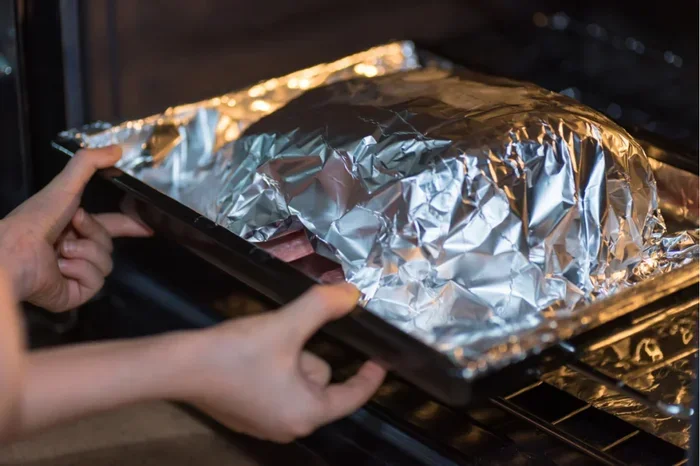
- Wrapping food like potatoes, chicken, or vegetables
- Covering dishes to prevent over-browning
- Reflecting heat for more even cooking
- Creating a steaming pouch for fish or vegetables
Foil is also great for baking with aluminium foil on a tray. It catches drips and spills so your pan stays clean. This is especially helpful when you are making something messy like bacon or glazed ribs.
How Does Foil React to Heat?
Aluminium foil can handle a lot of heat. Most standard aluminium foil is safe up to about 400 to 450 degrees Fahrenheit. That covers the vast majority of home cooking tasks. However, at very high temperatures, foil can begin to melt or warp.
The foil oven temperature limit depends on the type of foil you are using. Heavy-duty foil can handle higher heat than regular foil. Always check the packaging for temperature guidelines. If you are unsure, stick to lower oven temperatures when using foil.
Can You Put Aluminium Foil in the Oven? The Safety Rules
This is where things get important. Is aluminium foil oven safe in every situation? No. There are specific rules you need to follow to keep your oven running safely and your food tasting great.
Rule 1: Never Line the Bottom of Your Oven
This is the number one mistake people make with foil. Do not line the bottom of your oven with foil. It might seem like a great idea for easy clean-up, but it is actually very dangerous.
When you line the oven floor with foil, it traps heat. This can cause the foil to overheat and melt. In worst cases, it can start a fire. The trapped heat also blocks airflow in your oven. This means your food cooks unevenly. Your oven’s heating elements need proper airflow to work correctly.
Rule 2: Avoid Contact with Heating Elements
Keep foil away from the heating elements. If foil touches a heating element, it can spark and cause a fire. This is true for electric ovens and gas ovens alike. Always make sure foil is placed on a tray or dish and not touching any hot surfaces directly.
Rule 3: Do Not Use Foil at Very High Temperatures
Most ovens go up to 500 or 550 degrees Fahrenheit. You should not use foil at these extreme temperatures. The foil can melt onto your oven surfaces. It can also release small bits of aluminium into your food. For high-heat cooking like broiling, it is best to skip the foil entirely.
Rule 4: Do Not Store Food in Foil in the Oven
Some people think they can cover a dish with foil and leave it in a warm oven to keep food hot. This is not a good idea. Leaving foil-wrapped food in a hot oven for a long time can cause the foil to break down. It can also affect the taste and safety of your food.
What Are the Benefits of Using Aluminium Foil in the Oven?
When used correctly, foil offers some real advantages in the kitchen. Let us look at the benefits of using foil in oven cooking.
1. Easier Clean-Up
This is the biggest benefit for most people. Lining your baking sheet or roasting pan with foil means you do not have to scrub it afterwards. After cooking, you simply pull off the foil and throw it away. Your pan stays clean and ready for the next use.
If you love how to clean Hamilton Beach toaster oven without a lot of scrubbing, using foil on the tray can really help. Just make sure the foil stays on the tray and not on the oven walls or floor.
2. More Even Cooking
Foil reflects heat back toward your food. This can help cook things more evenly. It is especially useful for roasts and large cuts of meat. The reflected heat reaches areas that might otherwise stay cooler.
3. Moisture Retention
Wrapping food in foil creates a sealed environment. This traps steam and moisture inside. It is perfect for roasting vegetables, fish, or chicken. The food stays juicy and tender. You get a nice steam effect without needing a lot of added liquid.
4. Prevents Over-Browning
Have you ever had the top of your dish get too brown while the inside is still undercooked? Covering the dish with a loose tent of foil solves this problem. The foil blocks direct heat from the top while the inside continues to cook. This trick works great for casseroles and baked pasta dishes.
Common Mistakes People Make with Aluminium Foil in the Oven
Even experienced cooks make mistakes with foil. Here are the most common errors and how to avoid them.
Mistake 1: Using Foil on Every Pan
Some people use foil for every single baking task. This is not always the best idea. Foil can block airflow in the oven, which affects how your food bakes. For cookies and pastries, using a parchment paper liner or a bare baking sheet often gives better results.
If you want a safer alternative for lining pans, consider using parchment paper. You can learn more about is parchment paper toaster oven safe in our dedicated guide. Parchment paper is a great option for many oven tasks.
Mistake 2: Using Foil with Acidic Foods
Acidic foods like tomatoes, lemons, and vinegar-based sauces can react with aluminium. This reaction can cause tiny bits of aluminium to leach into your food. It can also create a metallic taste. If you are cooking something acidic, use a glass or ceramic dish instead of foil.
Mistake 3: Letting Foil Touch Food Directly for Long Periods
While foil is generally safe for short-term cooking contact, long cooking times can cause more aluminium to transfer to food. For best results, use foil as a cover or wrap and remove it when cooking is done.
Mistake 4: Using Foil in a Toaster Oven Without Checking
Toaster ovens are smaller and heat up faster than regular ovens. Foil can heat up quickly and become a fire risk in a toaster oven. If you want to use foil in a toaster oven, keep it away from the walls and heating elements. Check your toaster oven manual first.
Can You Use Foil in a Toaster Oven?
Is aluminium foil oven safe in a toaster oven? Yes, but with extra caution. Toaster ovens have smaller cavities and closer heating elements. This means foil can heat up faster and get closer to hot surfaces more easily.
Here are some tips for using foil safely in a toaster oven:
- Use small pieces of foil only
- Keep foil away from the walls and heating elements
- Do not cover the entire tray as this blocks airflow
- Check your toaster oven manual for specific foil guidelines
- Never let foil touch the crumb tray or bottom of the toaster oven
For cleaning after using foil in your toaster oven, follow our tips on how to clean Hamilton Beach toaster oven to keep your appliance in great shape.
What Temperature Is Aluminium Foil Safe In?
The safe temperature for aluminium foil depends on the type and thickness. Here is a simple guide to help you understand aluminium foil temperature limits.
| Type of Foil | Safe Temperature | Best Used For |
|---|---|---|
| Regular Aluminium Foil | Up to 400°F | Baking, wrapping, covering |
| Heavy-Duty Aluminium Foil | Up to 450°F | Roasting, grilling, high-heat cooking |
| Non-Stick Aluminium Foil | Up to 450°F | Baking sticky foods like cookies and bread |
These temperatures are general guidelines. Always check the product packaging for specific instructions. If your recipe requires temperatures above 450 degrees, it is best to skip the foil and use a different method.
For example, if you are how long do I bake brie in the oven, you can safely use foil to cover the brie during the first part of baking. This keeps the cheese soft while the outside gets golden.
Aluminium Foil vs. Other Oven Liners
Foil is not the only option for lining your oven trays. Here is how it compares to other common choices.
Foil vs. Parchment Paper
Parchment paper is safer for most oven uses. It can handle temperatures up to about 420 to 450 degrees Fahrenheit. Unlike foil, parchment paper does not reflect heat the same way. It also does not pose a fire risk if it touches a heating element. Parchment paper is the better choice for cookies and delicate baked goods.
Foil vs. Silicone Baking Mats
Silicone mats are reusable and eco-friendly. They can handle very high temperatures, often up to 480 degrees Fahrenheit. Silicone mats provide a non-stick surface without the need for any lining at all. They are a great long-term investment if you bake often.
Foil vs. No Lining at All
Sometimes the best option is simply using your pan without any lining. This allows maximum airflow and the best browning. It does mean more scrubbing, but your food will cook more evenly. For roasting vegetables or meats, a bare pan often gives the best results.
Expert Tips for Using Aluminium Foil in the Oven
Here are some practical tips from experienced cooks to help you get the most out of foil in your oven.
- Use the dull side for better heat absorption. While both sides of foil work the same, the dull side absorbs slightly more heat. This can help with even cooking.
- Create a loose tent when covering dishes. Do not wrap foil tightly around your dish. Leave some space for steam to circulate. This prevents soggy food and allows heat to reach all sides.
- Use heavy-duty foil for roasting. Regular foil can tear easily when wrapping heavier foods. Heavy-duty foil is stronger and more durable at high temperatures.
- Do not reuse foil that has touched raw meat. For food safety, always use fresh foil when wrapping raw meat. Reusing it can spread bacteria.
- Let foil cool before handling. Foil gets very hot in the oven. Use oven mitts or tongs to remove it. Hot foil can burn your hands easily.
Quick Tips for Safe Foil Use
- Always check your oven manual before using foil
- Use foil only at temperatures below 450°F
- Keep foil away from heating elements and oven walls
- Do not line the oven floor or tray with foil
- Use foil for wrapping and covering, not as a permanent pan liner
- Dispose of used foil after each use for best hygiene
- Store foil rolls in a cool, dry place to maintain quality
Final Thoughts
So, is aluminium foil oven safe? Yes, it is safe to use in your oven as long as you follow the basic rules. Keep it away from heating elements. Do not line the oven floor. Stay within the safe temperature range. And avoid using it with acidic foods for long cooking times.
Aluminium foil is a versatile kitchen tool. When used correctly, it makes cooking easier and clean-up faster. It helps your food cook evenly and stay moist. Just remember that foil is a tool, not a shortcut. Use it with care and it will serve you well for many meals to come.
Next time you reach for that roll of foil, you will know exactly what you are doing. You will feel confident that your foil in oven use is safe and effective. Happy cooking!
Frequently Asked Questions
Can I put aluminium foil in a convection oven?
Yes, you can use aluminium foil in a convection oven. However, be careful not to let the foil cover the fan or block airflow. Keep the foil away from the walls and heating elements. Use small pieces and avoid covering large areas of the oven interior.
What happens if you put foil in the oven at too high a temperature?
If you use foil at temperatures above its safe limit, it can melt, warp, or even catch fire. Melted foil can damage your oven surfaces and stick to your cookware. Always check the safe temperature range for your specific type of foil before using it.
Is it safe to cook food wrapped in aluminium foil?
Yes, it is generally safe to cook food wrapped in aluminium foil for normal cooking times and temperatures. However, acidic foods like tomatoes or citrus can cause small amounts of aluminium to leach into the food. For long cooking times with acidic ingredients, use glass or ceramic containers instead.
Can you put aluminium foil on a baking sheet in the oven?
Yes, placing aluminium foil on a baking sheet is one of the safest and most common uses of foil in the oven. It makes clean-up a breeze. Just make sure the foil does not touch the oven walls or heating elements, and do not cover the entire sheet for even airflow.
Should you use the shiny side or dull side of aluminium foil in the oven?
It does not really matter. Both sides of standard aluminium foil perform the same way in the oven. The difference in shine comes from the manufacturing process and has no impact on cooking. Some people prefer the dull side for slightly better heat absorption, but the difference is minimal.
Can you recycle aluminium foil used in the oven?
Yes, clean aluminium foil is recyclable. However, foil that has absorbed grease or food residue should go in the trash, not the recycling bin. Let the foil cool completely, wipe off any food scraps, and check with your local recycling guidelines before disposing of it.
=== CONCLUSION ===
Is aluminium foil oven safe? The answer is yes when you follow the right guidelines. Aluminium foil is a handy kitchen tool that works great in ovens and toaster ovens. Just remember to keep it away from heating elements, avoid lining the oven floor, and stay within safe temperature limits. With these simple rules in mind, you can use foil confidently for all your baking and roasting needs.
For more oven tips and guides, explore our other articles on oven safety and cooking techniques. Happy cooking and stay safe in the kitchen!