How Long To Cook Mahi Mahi In Oven For Perfect Results
Knowing how long to cook mahi mahi in oven is the key to a moist, flaky fillet every time. This guide shares the perfect temperature, timing, and simple steps for oven-baked mahi mahi that turns out crispy on the outside and tender inside. You’ll learn the ideal internal temp, easy seasoning ideas, and how to avoid common mistakes. Whether you’re using fresh or frozen fillets, these tips guarantee a healthy, family-friendly fish dinner in under 20 minutes.
Many home cooks ask how long to cook mahi mahi in oven because this firm, white fish is a weeknight favorite. It cooks fast, pairs well with almost any side, and stays healthy when baked instead of fried. Oven-baked mahi mahi delivers a satisfying meal with minimal effort and cleanup. You just need the right temperature, a few simple ingredients, and a little confidence. Once you master this basic method, you’ll make it every week.
The beauty of baked mahi mahi lies in its simplicity. Unlike thicker cuts of salmon or tuna, mahi mahi fillets are thin and cook quickly. A hot oven, a short time, and a gentle hand keep the fish moist and flaky. This article covers everything from oven temperature for fish to seasoning tricks and serving ideas. By the end, you’ll know exactly how to bake mahi mahi that tastes like a restaurant meal.
Key Takeaways
- Perfect Temperature: Bake mahi mahi at 400°F (200°C) for the best balance of crispy edges and moist center.
- Timing Is Simple: A standard 1-inch fillet needs just 10 to 12 minutes. Thicker cuts may need a few extra minutes.
- Check Internal Temp: The fish is done when it reaches 145°F (63°C) and flakes easily with a fork.
- Season Lightly: Olive oil, lemon, garlic, and fresh herbs keep the flavor bright without overpowering the delicate fish.
- Avoid Overcooking: Pull the mahi mahi out as soon as it flakes; it continues to cook from residual heat.
- Versatile Recipe: Works great with skin-on or skinless fillets, and you can add a breadcrumb topping for extra crunch.
📑 Table of Contents
- How Long To Cook Mahi Mahi In Oven: Time and Temperature Guide
- Step-by-Step Recipe for Oven-Baked Mahi Mahi
- How to Know When Mahi Mahi Is Done
- Seasoning Ideas and Flavor Variations
- Common Mistakes to Avoid When Baking Mahi Mahi
- Serving Suggestions and Meal Pairings
- Frequently Asked Questions
- Conclusion
How Long To Cook Mahi Mahi In Oven: Time and Temperature Guide
The short answer is 10 to 12 minutes at 400°F (200°C). But the exact cooking time depends on fillet thickness and whether you use skin-on or skinless pieces. A 1-inch thick fillet bakes perfectly in that window. If your fillets are thinner, they may need only 8 minutes. Thicker cuts over 1.5 inches might need 14 to 15 minutes. Always use a meat thermometer to check the mahi mahi internal temp.
Quick Reference: Baking Times by Thickness
- Thin fillets (½ inch): 8 to 10 minutes at 400°F
- Standard fillets (1 inch): 10 to 12 minutes at 400°F
- Thick fillets (1.5 inches): 14 to 16 minutes at 400°F
- At 375°F (lower temp): Add 2 to 3 minutes for even cooking
Quick Tip: If you’re cooking multiple fillets in a single layer, they will all cook at the same rate. Avoid stacking or overlapping pieces. Overcrowding the pan traps steam and prevents the top from crisping. A rimmed baking sheet lined with parchment paper makes cleanup a breeze.
Why 400°F Is the Sweet Spot
An oven temperature of 400°F (200°C) is ideal for white fish like mahi mahi. It’s hot enough to create a light, golden crust on the surface, yet gentle enough to keep the inside moist. Lower temperatures like 350°F can dry the fish out before it gets a nice color. Higher temperatures might burn the edges before the center is done. The oven temperature for fish of 400°F balances crispness and tenderness perfectly.
| Oven Temp | Fillet Thickness | Approx. Cook Time | Result |
|---|---|---|---|
| 375°F (190°C) | 1 inch | 12–15 min | Very moist, less crisp |
| 400°F (200°C) | 1 inch | 10–12 min | Perfect balance |
| 425°F (220°C) | 1 inch | 8–10 min | Crispy edges, risk of drying |
Step-by-Step Recipe for Oven-Baked Mahi Mahi
Follow these simple steps for foolproof baked mahi mahi every time. This recipe works for both fresh and thawed fillets. You’ll need just a few pantry staples.
- Preheat your oven to 400°F (200°C). Let it fully heat while you prep the fish.
- Prepare the baking dish. Lightly grease a rimmed baking sheet or a small baking pan with olive oil or a light spray.
- Pat the fillets dry with paper towels. This removes surface moisture and helps the fish get crispy instead of steamed.
- Season simply. Brush both sides with olive oil, then sprinkle with salt, pepper, garlic powder, and a squeeze of fresh lemon juice.
- Place the fillets skin-side down (if skin-on) in the dish. Leave a little space between each piece.
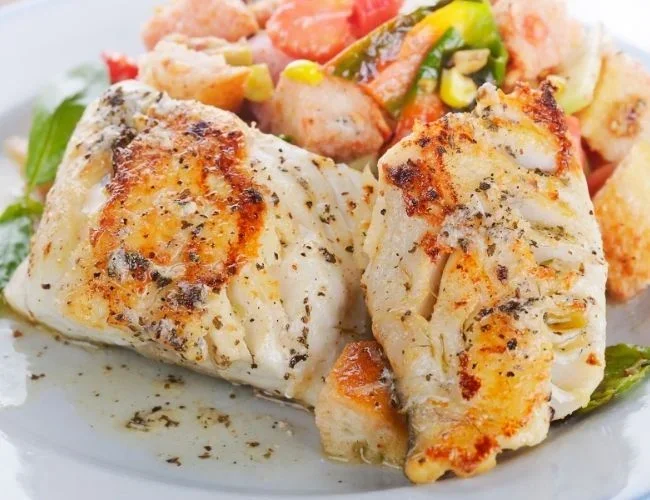
- Bake for 10 to 12 minutes. The fish is done when it is opaque and flakes easily with a fork. The internal temperature should read 145°F (63°C).
- Rest for 2 minutes before serving. This lets the juices redistribute and keeps the fillet moist.
Expert Insight: Chef Maria Torres, a seafood specialist, says: “The biggest secret to great oven-baked mahi mahi is not overcooking it. Pull it off the heat the moment it just turns opaque and starts to flake. It will carry over cook for a minute or two.”
Skin-On vs. Skinless Fillets
You can bake mahi mahi with or without the skin. Skin-on fillets hold together better during cooking and add a nice texture. The skin crisps up when baked at high heat. If you prefer not to eat the skin, simply remove it after baking. Skinless fillets cook a bit faster, so check them a minute or two early. Both styles taste equally delicious with the right seasoning.
How to Know When Mahi Mahi Is Done
Timing is a guide, but visual and tactile cues are your best tools for perfect baked fish. Undercooked mahi mahi looks translucent and raw in the center. Overcooked fish turns white and dry, with a chalky texture. The ideal doneness is opaque white throughout and tender when touched.
Three Reliable Doneness Tests
- The Fork Test: Gently press the thickest part with a fork. If the fish flakes apart in clean, separate pieces, it’s done. If it still resists, give it another minute.
- The Color Check: Raw mahi mahi is pearly and translucent. Fully cooked fish is solid white with no hint of translucency.
- The Thermometer: Insert an instant-read thermometer into the thickest part. Remove the fillet when it hits 145°F (63°C). The fish will rise a few degrees while resting.
Common Mistake: Many people keep baking until the fish is completely white all the way through. This often leads to dry, tough fillets. The fish continues cooking on the hot pan after you take it out. Aim for just opaque with a slight shine in the center, and let carryover heat finish the job.
Seasoning Ideas and Flavor Variations
Mahi mahi has a mild, slightly sweet flavor that takes on whatever you pair with it. Keeping the seasoning light lets the natural taste shine. Here are some easy mahi mahi recipe ideas you can try next time you bake fish.
Classic Mediterranean Style
- Olive oil, minced garlic, fresh lemon zest, and chopped oregano
- Top with sliced tomatoes and a few kalamata olives
- Bake and serve with a side of couscous or roasted vegetables
Crispy Herb Crust
- Mix breadcrumbs with grated Parmesan, fresh parsley, and a drizzle of olive oil
- Sprinkle the mixture over the fillets in the last 4 minutes of baking
- This creates a golden, crunchy topping without deep frying
Tropical Mango Salsa Topping
- After baking, top each fillet with a fresh salsa of diced mango, red onion, cilantro, and lime juice
- This adds a bright, sweet contrast to the savory fish
- Works beautifully as a summer dinner option
Quick Tip: Always season the fish just before baking. Salt draws moisture out of the fish if applied too early, which can lead to a steamed rather than baked texture. A light brush of olive oil helps the seasonings stick and promotes browning.
Common Mistakes to Avoid When Baking Mahi Mahi
Even simple recipes can go wrong if you skip a few key steps. Here are the most common mistakes people make when cooking this delicate fish, and how to fix them.
- Using a cold fillet straight from the fridge. Cold fish cooks unevenly. Take it out 10 to 15 minutes before baking so it reaches room temperature. This ensures the center cooks at the same rate as the edges.
- Overcrowding the pan. Placing fillets too close together traps steam. The fish steams instead of baking, resulting in a soft, pale top. Give each piece at least an inch of space.
- Skipping the pat-dry step. Surface moisture creates steam and prevents crispiness. Always blot the fillets dry with a paper towel before seasoning.
- Opening the oven door too often. Every time you open the door, the temperature drops. This extends the cooking time and can cause the fish to fall apart. Trust the timer and only check at the end.
- Overcooking by just a couple of minutes. Mahi mahi goes from perfectly moist to dry very quickly. Set a timer and watch it closely during the last few minutes.
Expert Insight: Food scientist Dr. James Liu explains: “Fish proteins tighten quickly with heat. Mahi mahi has a lower fat content than salmon, so it loses moisture faster. The best oven-baked mahi mahi comes out of the oven while still slightly translucent in the very center, then rests for two minutes.”
Serving Suggestions and Meal Pairings
Baked mahi mahi is incredibly versatile. It pairs well with a wide range of sides, from light and fresh to hearty and comforting. Here are some ideas to build a complete meal around your fillets.
- Rice and veggies: Serve over jasmine rice with steamed broccoli and a drizzle of soy-ginger sauce.
- Salad: Pair with a bright arugula salad, cherry tomatoes, cucumber, and a lemon vinaigrette.
- Roasted potatoes: Crispy roasted baby potatoes and a dollop of tartar sauce make a satisfying comfort meal.
- Grilled vegetables: Zucchini, bell peppers, and asparagus grilled alongside the fish add smoky flavor.
- Light and healthy: A warm quinoa bowl with avocado, black beans, and a squeeze of lime complements the mild fish perfectly.
Quick Tip: Leftover baked mahi mahi stays fresh in the fridge for up to 2 days. Reheat gently in the oven at 300°F for 5 to 8 minutes to keep it from drying out. Microwaving can make the fish rubbery, so the oven is the best method for reheating.
Frequently Asked Questions
Can I bake frozen mahi mahi directly from the freezer?
Yes, you can cook frozen mahi mahi in the oven, but you need to adjust the cooking time. Increase the bake time by about 5 to 7 minutes, and make sure the center reaches 145°F. Thawing the fillets first gives more even results, but it’s not strictly necessary if you’re in a hurry.
What is the best internal temperature for mahi mahi?
The USDA recommends an internal temperature of 145°F (63°C) for all fish, including mahi mahi. At this temperature, the fish is safe to eat and will be opaque and flaky. Use an instant-read thermometer inserted into the thickest part for the most accurate reading.
How do I keep mahi mahi from drying out in the oven?
The key is not to overcook it and to use a moderate oven temperature of 400°F. Brushing the fillets with a little olive oil or melted butter before baking helps retain moisture. Also, baking the fish in a single layer on a preheated sheet pan promotes even cooking without drying out the edges.
Can I use a different oven temperature for mahi mahi?
You can bake mahi mahi anywhere from 375°F to 425°F. A lower temperature like 375°F gives you a more gentle, moist result but takes a few extra minutes. A higher temperature like 425°F speeds things up and adds crispiness, but you must watch it closely to avoid drying out the fillet.
What sides go best with oven-baked mahi mahi?
Light, fresh sides work best to complement the delicate flavor of baked mahi mahi. Think steamed vegetables, a citrus-dressed salad, roasted potatoes, or a simple grain like rice or quinoa. Avoid heavy, creamy sauces that can overwhelm the fish.
How long does leftover baked mahi mahi last?
Store leftover oven-baked mahi mahi in an airtight container in the refrigerator for up to 2 days. Reheat it gently in the oven at 300°F for about 5 minutes to keep the texture tender. Avoid microwaving, which can make the fish tough and rubbery.
Conclusion
Baking mahi mahi in the oven is one of the easiest and healthiest ways to enjoy this delicious fish. The how long to cook mahi mahi in oven answer is simple: 10 to 12 minutes at 400°F for a standard 1-inch fillet. With the right temperature, a few fresh ingredients, and attention to doneness cues, you’ll serve up a meal that tastes far better than any takeout. Oven-baked mahi mahi stays moist, flaky, and full of flavor when you follow these guidelines. Practice the method a few times, experiment with different seasonings, and you’ll have a reliable mahi mahi recipe in your rotation. Your family and guests will keep asking for it, and you’ll have it ready in less than 20 minutes flat.