How Hot To Make Oven For Pizza And Bake It Perfectly
Learning how hot to make oven for pizza is the single most important step in baking great pizza at home. Most home ovens should be set between 450°F and 500°F for perfect results, but the ideal temperature depends on your pizza style. This guide covers pizza oven temperature settings, preheat timing, pizza stone usage, and expert tips for achieving a crispy pizza crust every single time.
Baking pizza at home is one of life’s simple pleasures. There is nothing quite like pulling a hot, bubbling pie out of your own oven. But the secret to great pizza starts with one simple question: how hot to make oven for pizza. Get this wrong, and you end up with a soggy crust or burnt toppings. Get it right, and you will rival your favorite local pizzeria.
The truth is, pizza baking temperature is not a one-size-fits-all number. It depends on the type of crust you are making, the toppings you use, and the equipment you have. In this guide, we will walk you through everything you need to know about pizza oven temperature, preheating your oven, and the small tricks that make a huge difference.
## The Best Pizza Oven Temperature
Getting the pizza oven temperature right is the foundation of great pizza. When you ask yourself how hot to make oven for pizza, the answer depends on what kind of pizza you are making. Let us break it down.
### What Temperature Is Best For Homemade Pizza
For most homemade pizzas, the sweet spot is between 450°F and 500°F (232°C to 260°C). This range works well for thin crust, hand-tossed, and standard-style pizzas. At this temperature, the dough cooks quickly enough to stay airy and light while the cheese melts perfectly and the crust turns golden brown.
If you have a pizza stone or a pizza steel, you can push the temperature even higher. Some bakers go up to 550°F or even 600°F for an extra crispy bottom. This mimics the intense heat of a wood-fired pizza oven, which can reach 800°F or more. You do not need that kind of heat at home, but the higher end of your oven’s range will always give you better results.
### Why Temperature Matters So Much
Temperature affects every part of your pizza. The pizza dough temperature, the way the cheese melts, and how the crust crisps all depend on the heat inside your oven.
At lower temperatures, the pizza bakes slowly. This means the crust absorbs more moisture from the sauce and cheese, leading to a soggy bottom. At higher temperatures, the dough cooks fast. The moisture evaporates quickly, leaving you with a crispy pizza crust that is crispy on the outside and chewy on the inside.
The Maillard reaction is what gives your crust that beautiful golden-brown color and deep flavor. This chemical reaction happens when proteins and sugars in the dough are exposed to high heat. The hotter your oven, the faster and more evenly this reaction occurs. That is why professional pizzerias use such extreme heat.
## How To Preheat Your Oven For Pizza
Preheating is the step most people rush through or skip entirely. But when it comes to baking pizza at home, preheating properly can make or break your result.
### How Long Should You Preheat
The general rule is to preheat your oven for at least 30 minutes. Many people only wait 10 or 15 minutes, but that is not long enough. Your oven walls, racks, and any pizza stone you are using need time to absorb and store heat.
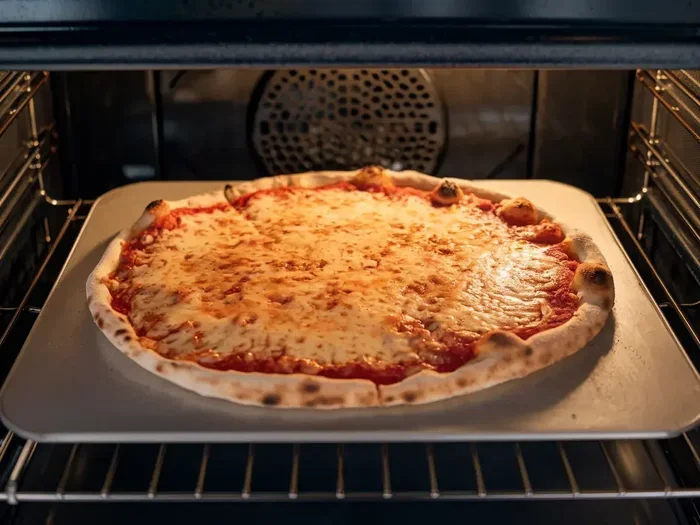
If you are using a pizza stone or pizza steel, you should place it in the oven before preheating. The stone needs the full 30 to 45 minutes to reach its maximum temperature. When you slide your pizza onto a hot stone, it instantly starts cooking the bottom of the crust. This is what gives you that signature crispy base.
For best results, set your oven to the target temperature and wait an extra 10 minutes after the preheat signal goes off. Ovens can be misleading. The internal temperature may have stabilized, but the walls and the stone may still be warming up.
### Using An Oven Thermometer
Here is a tip that many home bakers overlook. Most oven dials are not perfectly accurate. Your oven might say it is 500°F, but the actual internal temperature could be 460°F or 530°F. This is where an oven thermometer becomes essential.
An oven thermometer is a cheap tool that takes the guesswork out of baking. Place it inside your oven and check the reading against the dial. You might be surprised by the difference. Once you know your oven’s true temperature, you can adjust the dial accordingly and bake with confidence.
This small investment pays off every time you bake. It is one of the easiest ways to improve your homemade pizza results without changing any other part of your process.
## Pizza Oven Temperature By Pizza Type
Not all pizza is the same, and neither should your pizza oven settings be. Different styles of pizza require different baking temperatures and cook times. Here is a detailed breakdown.
### Thin Crust Pizza Temperature
Thin crust pizza loves high heat. Set your oven to 500°F or even 525°F for the best results. The high temperature cooks the thin dough quickly, which prevents it from drying out while still giving you a crispy, cracker-like base.
Thin crust pizzas typically bake in 8 to 12 minutes. Keep an eye on them after the 8-minute mark. The cheese should be bubbly and slightly browned, and the edges of the crust should be golden.
If you want to take your thin crust to the next level, try using the broiler for the last 1 to 2 minutes of baking. This adds a beautiful char and extra crispiness to the top. Just watch it closely so it does not burn.
### Thick Crust And Deep Dish Pizza Temperature
Thick crust and deep dish pizzas need a gentler approach. Set your oven to 400°F to 425°F for these styles. The lower temperature allows the thicker dough to cook through without burning the top or the edges.
Deep dish pizzas usually need 20 to 30 minutes of bake time. The extra thickness means the heat needs more time to reach the center. If you bake a deep dish at too high a temperature, the crust will burn on the outside while the inside remains raw.
For thick crust pizzas, 425°F for 15 to 20 minutes works well. You want the crust to be golden and firm, and the cheese to be fully melted and slightly browned on top.
### Frozen Pizza Oven Settings
Frozen pizzas are convenient, but they also need the right oven temperature. Most frozen pizza brands recommend baking at 400°F to 425°F for 12 to 18 minutes. However, you can improve the results by placing the frozen pizza on a preheated pizza stone instead of a baking sheet.
The pizza stone adds extra heat to the bottom of the crust, which helps it crisp up. Frozen pizzas tend to have a softer, soggier bottom when baked directly on a baking sheet. A preheated stone fixes this problem quickly.
### Comparison Table: Pizza Types And Ideal Oven Temperatures
Quick Reference: Pizza Oven Temperature Guide
- Thin crust pizza: 500°F to 525°F, bake 8 to 12 minutes
- Hand-tossed pizza: 475°F to 500°F, bake 10 to 14 minutes
- Thick crust pizza: 400°F to 425°F, bake 15 to 20 minutes
- Deep dish pizza: 400°F to 425°F, bake 20 to 30 minutes
- Frozen pizza: 400°F to 425°F, bake 12 to 18 minutes
- Neapolitan-style (with pizza stone): 500°F to 550°F, bake 6 to 10 minutes
## Pizza Stone And Baking Sheet Tips
Your choice of baking surface has a huge impact on your pizza’s crust. Understanding the difference between a pizza stone and a baking sheet will help you make better choices.
### Pizza Stone Vs Baking Sheet
A pizza stone is made of porous stone or ceramic material. It absorbs moisture from the dough and radiates heat evenly across the bottom of the pizza. This creates a crispy, well-baked crust that is hard to achieve with a regular baking sheet.
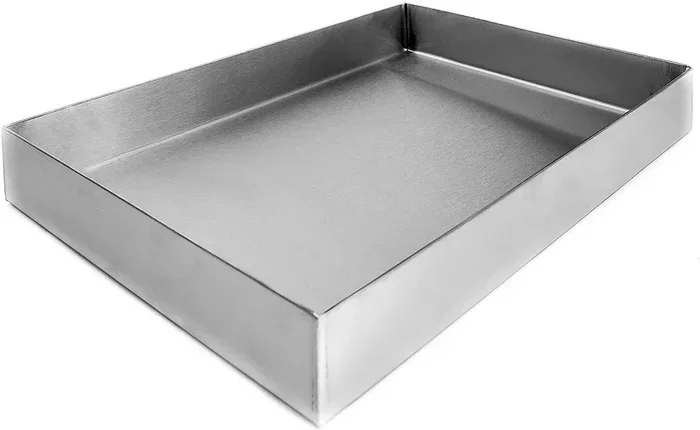
A baking sheet is flat and metal. It does not absorb moisture the same way a stone does. Pizza baked on a baking sheet tends to have a softer, sometimes soggy bottom. That said, a baking sheet works fine if you do not have a pizza stone.
A pizza steel is another excellent option. Steel conducts heat faster than stone, which means you get an even crispier bottom. Pizza steels are more expensive than stones, but many bakers consider them the best tool for the job.
### How To Use A Pizza Stone Correctly
Using a pizza stone correctly is simple but important. First, place the stone in the oven before preheating. Let it heat up along with the oven for at least 30 minutes.
Next, dust a pizza peel or flat baking sheet with cornmeal or flour. This prevents the dough from sticking when you slide it onto the stone. Slide the pizza gently onto the hot stone and close the oven door quickly to keep the heat inside.
Never wash your pizza stone with soap. The stone is porous and will absorb the soap, which can affect the taste of your pizza. Instead, scrape off any stuck-on residue and let the stone air dry. Over time, the stone develops a natural non-stick surface that improves with use.
## Common Mistakes When Baking Pizza
Even experienced home bakers make mistakes. Knowing what to avoid will save you from disappointing pizza nights.
### Not Preheating Long Enough
This is the number one mistake. If your oven and pizza stone are not fully preheated, your pizza will bake unevenly. The bottom will be pale and soft while the top cooks fine. Always give your oven at least 30 minutes to reach the target temperature.
### Opening The Oven Door Too Often
Every time you open the oven door, heat escapes. This drops the internal temperature and can affect how your pizza bakes. Try to resist the urge to check on your pizza constantly. Use the oven light to look through the window instead.
### Overloading The Pizza With Toppings
Too many toppings trap moisture and prevent the crust from crisping. This is especially true for wet ingredients like fresh mozzarella, tomatoes, and vegetables. Use toppings sparingly and pat dry any ingredients that release a lot of water.
### Wrong Rack Position
Where you place the rack in your oven matters more than you think. For pizza, the rack should be in the lower third of the oven. This positions the pizza close to the bottom heat source, which helps crisp the base. If you place the rack too high, the top will burn before the bottom is done.
## Expert Tips For Perfect Pizza Every Time
Once you have the basics down, these expert tips will take your homemade pizza to the next level.
### Use The Broiler For Extra Crispiness
The broiler is a powerful tool that many people forget about. After your pizza has baked for most of its time, switch the oven to the broiler setting for the final 1 to 2 minutes. This gives the top a beautiful golden-brown finish and adds a slight char.
Keep a close eye on the pizza when using the broiler. It works fast and can go from perfectly browned to burnt in seconds.
### Convection Vs Conventional Baking
If your oven has a convection setting, use it for pizza. A convection fan circulates hot air around the oven, which cooks the pizza more evenly. The crust browns better and the toppings cook at the same rate as the cheese.
When using convection, reduce the temperature by about 25°F from what a conventional recipe calls for. The circulating air is more efficient, so you do not need as much heat.
### Let The Dough Come To Room Temperature
Cold dough does not stretch well and bakes unevenly. Take your pizza dough out of the refrigerator at least 30 minutes before you plan to bake. Let it warm up to room temperature so it is soft and pliable.
This small step makes a big difference in how easily the dough stretches and how evenly it bakes. Cold dough in a hot oven will puff up unevenly and create air pockets instead of a smooth crust.
### Use High-Quality Ingredients
The best oven temperature in the world cannot fix bad ingredients. Use quality pizza dough, fresh mozzarella, good tomato sauce, and fresh basil. Simple ingredients done well always beat fancy ingredients done poorly.
### Experiment And Have Fun
Baking pizza at home is an art, not an exact science. Do not be afraid to experiment with different pizza oven temperature settings, bake times, and toppings. Every oven is different, and part of the fun is learning how yours works best.
Keep notes on what works and what does not. Over time, you will develop a feel for your oven and consistently produce perfectly baked pizza at home.
## Conclusion
So, how hot to make oven for pizza? The answer is clear: most pizzas bake beautifully between 450°F and 500°F, but the exact pizza oven temperature depends on the style you are making. Thin crust loves high heat, thick crust needs a gentler touch, and frozen pizzas do best when placed on a preheated pizza stone.
The key takeaways are simple. Preheat your oven for at least 30 minutes. Use a pizza stone or pizza steel for the crispiest crust. Check your oven’s true temperature with a thermometer. Place the rack in the lower third. And never rush the process.
Great pizza does not require a professional wood-fired pizza oven. It just requires the right pizza baking temperature, a little patience, and a willingness to learn. With the tips in this guide, you are well on your way to baking perfect homemade pizza that will impress everyone at your table.
Now go preheat your oven, stretch some dough, and enjoy the process. The perfect crispy pizza crust is just one hot oven away.
Key Takeaways
- Best oven temp for pizza: Set your oven between 450°F and 500°F for most styles of homemade pizza.
- Preheat for at least 30 minutes: A properly preheated oven and pizza stone make all the difference.
- Thin crust needs higher heat: Bake thin crust pizza at 500°F or higher for maximum crispiness.
- Thick crust requires lower heat: Deep dish and thick crust pizzas bake better at 400°F to 425°F.
- Use a pizza stone or steel: These tools absorb and radiate heat for a professional-quality crust.
- Check with an oven thermometer: Most home ovens run cooler or hotter than their dial suggests.
- Position the rack correctly: Place the rack in the lower third of the oven for best results.
Frequently Asked Questions
What is the best temperature to bake pizza in a home oven?
The best pizza oven temperature for most home ovens is between 450°F and 500°F. This range works well for thin crust, hand-tossed, and standard-style pizzas. If you are using a pizza stone, you can push the temperature up to 525°F for an even crispier result.
How long should I preheat my oven for pizza?
You should preheat your oven for at least 30 minutes. If you are using a pizza stone or pizza steel, place it in the oven before preheating and let it heat for 30 to 45 minutes. A properly preheated oven and stone are essential for a crispy pizza crust.
Can I bake pizza on a regular baking sheet?
Yes, you can bake homemade pizza on a regular baking sheet. However, a pizza stone or pizza steel will give you a much crispier bottom crust. A baking sheet works fine in a pinch, but it does not absorb moisture the way a stone does.
What temperature should I use for frozen pizza?
Most frozen pizzas bake best at 400°F to 425°F for 12 to 18 minutes. For better results, place the frozen pizza on a preheated pizza stone instead of a cold baking sheet. This helps the bottom crust crisp up just like a fresh pizza.
Should I use the broiler when baking pizza?
Yes, using the broiler for the last 1 to 2 minutes of baking adds a beautiful golden-brown finish to the top of your pizza. It melts the cheese evenly and adds a slight char. Just watch the pizza closely, as the broiler can burn toppings quickly.
Why is my pizza crust soggy even at the right temperature?
A soggy crust usually means the oven or pizza stone was not preheated long enough. Moisture from the sauce and toppings also plays a role. Use less wet sauce, pat dry fresh mozzarella, and make sure your baking pizza surface is fully heated before you start. These small changes make a big difference in pizza crust crispiness.