Do You Have To Make Sourdough In A Dutch Oven Or Not
Do you have to make sourdough in a Dutch oven? The short answer is no. While a Dutch oven is the most popular choice for baking sourdough bread at home, it is far from the only option. Many bakers achieve stunning results using baking stones, loaf pans, and even simple oven-safe pots. This guide breaks down every method so you can choose the best approach for your kitchen and your sourdough recipe.
There is a lot of buzz around sourdough bread right now. And a huge part of that buzz centers on one kitchen tool: the Dutch oven. Walk into any baking forum or scroll through social media, and you will see beautiful golden loaves pulled straight from a cast iron pot. It looks amazing. It sounds impressive. And it makes you wonder, do you really need one?
The truth is, baking sourdough without a Dutch oven is completely possible. Plenty of home bakers make fantastic loaves every week without ever owning one. That said, the Dutch oven does offer some real advantages. It traps steam, helps with oven spring, and gives you that signature crackly sourdough crust many people love.
This article will walk you through everything you need to know. We will cover why the Dutch oven is so popular, what happens when you skip it, and what alternatives actually work. By the end, you will know exactly which method fits your kitchen, your budget, and your baking goals.
Key Takeaways
- A Dutch oven is not required: You can bake excellent sourdough using several alternative vessels and methods.
- The Dutch oven works so well because it traps steam, which creates a crispy sourdough crust and great oven spring.
- Alternative options include baking stones, baking steel, loaf pans, and combo cooker setups.
- Your sourdough starter quality matters more than your baking vessel when it comes to flavor and texture.
- Baking temperature and timing need adjustment depending on the vessel you choose.
- Beginners can start simple with just a baking sheet and parchment paper for great results.
- Practice and patience are the real keys to mastering sourdough, regardless of the vessel you use.
📑 Table of Contents
- What Is Sourdough and Why Is the Dutch Oven So Popular?
- Do You Actually Have to Use a Dutch Oven for Sourdough?
- What Happens When You Bake Sourdough Without a Dutch Oven
- Alternative Baking Vessels for Sourdough
- Step-by-Step: Baking Sourdough in a Dutch Oven
- Expert Tips for Perfect Sourdough Every Time
- Final Thoughts on Sourdough Baking Without a Dutch Oven
What Is Sourdough and Why Is the Dutch Oven So Popular?
Before we dive into the Dutch oven debate, let us quickly cover what sourdough bread actually is. Unlike regular bread that uses commercial yeast, sourdough relies on a sourdough starter. That starter is a mix of flour and water filled with wild yeast and good bacteria. It ferments over time, giving sourdough its tangy flavor and chewy sourdough crumb.
The fermentation process is what makes sourdough special. It takes longer than regular bread. But the result is a loaf with deeper flavor, better nutrition, and a texture that feels almost artisan. Many people fall in love with sourdough because of that complex taste you cannot get from a regular loaf of sandwich bread.
Why the Dutch Oven Became the Go-To Tool
So why did the Dutch oven become the star of sourdough baking? The answer comes down to steam. When you bake bread, steam plays a huge role. It keeps the outer dough soft during the first part of baking. That softness allows the loaf to expand fully, which bakers call oven spring.
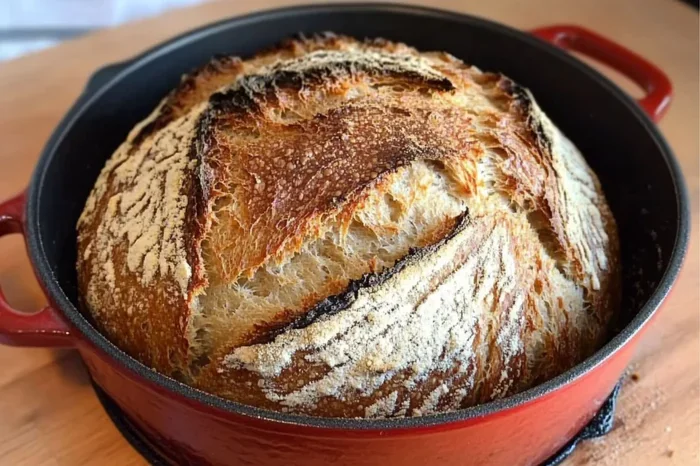
A Dutch oven traps that steam inside. The lid seals in moisture released from the dough. This creates a mini steam chamber right in your oven. The result? A beautifully risen loaf with a deep golden sourdough crust that cracks when you break it apart. No other household tool does this quite as well without any extra effort.
Another reason is simplicity. With a Dutch oven, you do not need a baking stone or a baking steel. You do not need to preheat a separate tray. You just place the dough inside, put the lid on, and let the oven do the work. For many home bakers, that ease of use made the Dutch oven the default choice.
Do You Actually Have to Use a Dutch Oven for Sourdough?
The direct answer is no. Making sourdough without a Dutch oven is absolutely doable. Thousands of bakers around the world produce outstanding loaves using completely different methods. The Dutch oven is a tool, not a requirement. Your sourdough starter, your fermentation timing, and your baking technique matter far more than the pot you use.
That said, there is a reason the Dutch oven dominates sourdough baking tips across the internet. It solves a few key problems at once. It provides even heat, traps steam, and gives you a defined shape. If you already own one, it makes sense to use it. But if you do not, do not let that stop you from baking great bread.
What Really Matters More Than Your Vessel
When it comes to bread baking techniques, the vessel is only one piece of the puzzle. Here are the things that actually determine your success:
- A healthy sourdough starter: Without an active, bubbly starter, nothing else matters. Feed it regularly and keep it at the right temperature.
- Proper fermentation: Letting your dough ferment for the right amount of time develops flavor and structure. Rushing this step leads to dense bread.
- Good shaping: Tension in the dough during shaping creates the structure you need for a round, beautiful sourdough loaf.
- Correct baking temperature: Most sourdough recipes call for high heat, usually between 450 and 500 degrees Fahrenheit. Whether you use a Dutch oven or not, getting the temperature right is critical.
- Adequate scoring: Cutting the top of the dough before baking controls where the bread expands. It also adds to the classic artisan look.
Focus on these fundamentals first. The vessel you choose is secondary. Once you master the basics, you can experiment with different baking vessels and find what works best for you.
What Happens When You Bake Sourdough Without a Dutch Oven
If you decide to skip the Dutch oven, your bread will still bake. But the results will look and feel different. Understanding those differences helps you adjust your method and still get great bread.
Less Steam Means a Different Crust
Without a sealed lid, steam escapes from the dough as it bakes. This means the outer surface dries out faster. The result is a thicker, harder crust. Some people actually prefer this. It gives the bread a rustic, rustic farmhouse feel. But if you love the thin, crackly crust that a Dutch oven delivers, you will notice the difference.
Reduced Oven Spring
Oven spring is the rapid rise that happens in the first few minutes of baking. Steam keeps the dough surface flexible so it can expand freely. Without that trapped moisture, the dough sets faster. The loaf may not rise as much. It could end up slightly flatter or denser than a Dutch oven version.
The Crumb May Be Different Too
The inside of the bread, the sourdough crumb, can also change. Without even steam, the crust-to-crumb transition may be more abrupt. Some bakers compensate by adding steam to the oven another way. You can place a tray of boiling water on the oven floor or spritz water into the oven when you load the bread. These small tricks help mimic the steam a Dutch oven provides.
Is It Still Worth It Without a Dutch Oven?
Absolutely. Many bakers would argue that baking without a Dutch oven builds better skills. You learn to control steam, temperature, and timing on your own. And the bread you produce, while different, is still deeply flavorful with a satisfying chew. The artisan bread experience does not require a specific pot. It requires knowledge and practice.
Alternative Baking Vessels for Sourdough
If a Dutch oven is not your thing, you have plenty of options. Each alternative has its own strengths and trade-offs. Let us look at the most popular ones.
Baking Stone or Baking Steel
A baking stone or baking steel is probably the most common alternative. These tools absorb heat and transfer it directly to the dough. They create a hot, even surface that promotes good bottom browning and decent oven spring.
To use a baking stone for sourdough, you preheat it in the oven for at least 30 to 45 minutes. Then you slide the dough onto the hot stone using a peel or an inverted baking sheet. The key difference is that a baking stone does not trap steam. You will need to add steam manually if you want a crispier crust.
Baking steels heat up faster than stones and hold more heat. They are a favorite among serious home bakers who want professional-level results. A combo cooker, which is a cast iron skillet with a shallow lid, works on the same principle as a Dutch oven but with a flatter base. It is a great middle ground.
Loaf Pans
A standard loaf pan is a simple and accessible option. It gives your sourdough a defined rectangular shape. The bread will have a softer crust on the sides because the pan traps some moisture. The top crust may be thicker, though. You can still achieve good oven spring in a loaf pan if you use a smaller, higher-hydration sourdough recipe.
Some bakers prefer loaf pans for sandwich-style sourdough. The uniform shape makes slicing easy. It is a practical choice for everyday bread. Just know that the flavor and texture will differ from a free-form round or oval loaf.
Sheet Pan Method
This is the simplest method of all. You shape your dough, place it on a parchment-lined sheet pan, and bake. No special equipment needed. The downside is that the bread spreads out more and the crust is less uniform. But for beginners just starting their sourdough journey, this method works surprisingly well.
Many baking experts recommend the sheet pan method for first-timers. It removes the pressure of handling a hot Dutch oven. You focus on the dough itself, the fermentation, and the shaping. Those are the skills that truly matter.
Comparison Table: Dutch Oven vs. Alternative Methods
| Feature | Dutch Oven | Baking Stone/Steel | Loaf Pan | Sheet Pan |
|---|---|---|---|---|
| Steam Retention | Excellent | Poor (needs added steam) | Moderate | Poor |
| Oven Spring | Excellent | Good | Moderate | Fair |
| Crust Quality | Crispy and thin | Crispy on bottom | Softer sides | Variable |
| Ease of Use | Very Easy | Moderate | Easy | Very Easy |
| Equipment Cost | Moderate to High | Moderate | Low | Very Low |
| Shape Control | Round or Oval | Free-form | Rectangular | Free-form |
Step-by-Step: Baking Sourdough in a Dutch Oven
Since the Dutch oven remains the most popular method, let us walk through the process step by step. Even if you plan to try an alternative, understanding this method gives you a strong foundation.
Step 1: Prepare Your Dough
Start with a mature sourdough starter that has been fed and is actively bubbling. Mix your sourdough recipe ingredients and knead the dough until it is smooth and elastic. Let it undergo bulk fermentation until it has risen by about 50 to 75 percent. This step develops the flavor and the gluten structure that gives sourdough its signature chew.
Step 2: Shape the Loaf
Gently turn the dough out onto a lightly floured surface. Shape it into a round or oval batard. Create good surface tension by folding the edges into the center and rotating the dough. A well-shaped loaf holds its form during the final proof and bakes up beautifully. Place the shaped dough seam-side up in a banneton or a floured proofing basket.
Step 3: Preheat the Dutch Oven
Place your Dutch oven with the lid on in the oven. Preheat to 475 to 500 degrees Fahrenheit. Let it heat for at least 30 to 45 minutes. The pot needs to be screaming hot before the dough goes in. This initial burst of heat is what drives the oven spring.
Step 4: Score and Bake
Carefully remove the hot Dutch oven. Place the dough inside, seam-side up. Use a sharp blade or a sourdough scoring tool to make deliberate cuts on the top. This controls the expansion. Replace the lid and bake for the first 20 to 25 minutes. The trapped steam inside the pot works its magic during this phase.
Step 5: Remove the Lid and Finish
After 20 to 25 minutes, remove the lid. The bread should have risen significantly. Now it is time to develop the sourdough crust. Continue baking uncovered for another 20 to 25 minutes until the top is deep golden brown. The internal temperature should reach about 205 to 210 degrees Fahrenheit. Let the loaf cool completely on a wire rack before slicing. This resting period allows the sourdough crumb to set properly.
Expert Tips for Perfect Sourdough Every Time
Whether you use a Dutch oven or an alternative method, these expert tips will elevate your bread.
Use a Thermometer
Invest in an instant-read thermometer. The internal temperature of the bread tells you more than any visual cue. When the center hits 205 to 210 degrees Fahrenheit, your loaf is done. Underbaked sourdough can be gummy and dense. An overbaked loaf dries out quickly.
Control Your Fermentation
Sourdough fermentation is affected by temperature. Warmer kitchens speed up the process. Cooler kitchens slow it down. Many bakers use the refrigerator to slow-ferment the dough overnight. This develops more complex flavor and makes the dough easier to handle. Experiment with different fermentation times and temperatures to find your sweet spot.
Do Not Skip the Autolyse
The autolyse is a rest period after you mix the flour and water but before you add the starter and salt. Let the mixture sit for 20 to 60 minutes. This allows the gluten to start developing naturally. The dough becomes easier to shape and produces a better sourdough crumb. It is a small step that makes a big difference.
Keep Notes
Every batch of sourdough is slightly different. Your starter’s activity, the humidity in your kitchen, and the flour you use all affect the outcome. Keep a baking journal. Write down your sourdough recipe, fermentation times, temperatures, and results. Over time, you will build a personal reference that takes the guesswork out of baking.
Quick Tips for Beginners
- Start with a simple recipe: A basic 75 percent hydration sourdough is forgiving and delicious.
- Use a kitchen scale: Measuring by weight is far more accurate than measuring cups.
- Be patient: Sourdough takes longer than regular bread. Do not rush the fermentation.
- Practice shaping: The more you shape, the better your loaves will look and bake.
- Try the cold retard: Refrigerating the shaped dough overnight improves flavor and makes scoring easier.
Common Mistakes to Avoid
- Using an inactive starter: If your starter does not double in size within 4 to 6 hours of feeding, it needs more attention before you bake.
- Skipping the preheat: A cold Dutch oven or stone leads to poor oven spring and a dense loaf.
- Over-flouring the dough: Too much flour during shaping makes the bread heavy and dry.
- Cutting too early: Resist the urge to slice into the hot loaf. Let it cool for at least one hour.
- Ignoring hydration levels: High-hydration doughs are sticky and harder to handle but produce an open, airy crumb. Low-hydration doughs are easier but denser.
Final Thoughts on Sourdough Baking Without a Dutch Oven
So, do you have to make sourdough in a Dutch oven or not? The answer is clear: no, you do not have to. A Dutch oven is a wonderful tool that produces excellent results with minimal effort. But it is not the only path to great sourdough bread. A baking stone, a loaf pan, or even a simple sheet pan can all produce beautiful, flavorful loaves.
What matters most is your sourdough starter, your understanding of fermentation, and your willingness to learn. The vessel you choose is just one variable in a larger process. Focus on the fundamentals, experiment with different methods, and enjoy the journey. Every loaf you bake teaches you something new.
Whether you are pulling a perfect round loaf from a Dutch oven or scoring a beautiful batard on a baking stone, the joy of sourdough baking is the same. It is about creating something real and nourishing with your own hands. So grab your flour, feed your starter, and get baking. The perfect loaf is waiting for you.
Frequently Asked Questions
Can I bake sourdough without any special equipment at all?
Yes, you can. The simplest method is the sheet pan approach. You shape your dough, place it on a parchment-lined sheet pan, and bake it in a hot oven. You will not get the same crust as a Dutch oven, but the flavor and texture will still be excellent. This is a great starting point for complete beginners.
What is the best substitute for a Dutch oven when baking sourdough?
A baking stone or baking steel is the most popular substitute. They provide even heat and a hot surface that promotes good browning and oven spring. A combo cooker, which is a cast iron skillet with a shallow lid, also works well and mimics the steam-trapping effect of a Dutch oven.
Does a Dutch oven really make a difference in sourdough crust?
It does. The sealed lid traps steam released from the dough during baking. This steam keeps the outer surface soft and flexible, allowing for maximum oven spring. It also creates a thin, crispy crust that is hard to replicate with open baking. If you love that crackly artisan crust, a Dutch oven is hard to beat.
How long should I bake sourdough in a Dutch oven?
Typically, you bake covered for 20 to 25 minutes, then uncover for another 20 to 25 minutes. The covered phase traps steam for oven spring, while the uncovered phase develops the golden sourdough crust. Internal temperature should reach 205 to 210 degrees Fahrenheit for a fully baked loaf.
Can I use a regular pot with a lid instead of a Dutch oven?
Yes, you can. Any oven-safe pot with a tight-fitting lid can work in a pinch. Just make sure it can handle temperatures of 450 to 500 degrees Fahrenheit. Cast iron, enameled steel, and ceramic pots are all suitable. The key is that the pot traps steam effectively during the initial phase of baking.
Why does my sourdough turn out dense even when I use a Dutch oven?
A dense loaf usually points to issues with fermentation rather than the baking vessel. Your sourdough starter may not be active enough. The dough may not have fermented long enough during bulk fermentation. Or the shaping may not have created enough tension. Check your starter, your timing, and your technique before blaming the pot.
=== CONCLUSION ===
Do you have to make sourdough in a Dutch oven? Not at all. The Dutch oven is a fantastic tool that simplifies sourdough baking and delivers consistent results. But it is just one option among many. Baking stones, loaf pans, and sheet pans all work beautifully once you understand the basics.
The real secret to great sourdough lies in your starter, your fermentation, and your patience. Master those, and you can bake incredible bread in any vessel. Start where you are, use what you have, and enjoy the process. Happy baking.