Oven Baked Frozen Salmon Fillet Recipes Worth Trying
Oven baked frozen salmon fillet recipes make weeknight dinners a breeze. You can create restaurant-quality salmon straight from your freezer with minimal effort. These methods are simple, healthy, and full of flavor. Whether you are a beginner or a seasoned cook, you will find a recipe that works. Baked frozen salmon saves time, money, and still tastes amazing every single time.
There is something truly special about oven baked frozen salmon fillet recipes. They take one of the healthiest and most delicious fish available and turn it into a simple weeknight meal. You do not need to thaw anything. You do not need fancy equipment. All you need is a hot oven, a few basic ingredients, and about 20 minutes of your time.
Baked frozen salmon has become one of the most popular dinner options for families, busy professionals, and health-conscious eaters alike. The beauty of cooking frozen salmon fillets in the oven is that you skip the thawing step entirely. This means less prep work and more time enjoying a wonderful meal. In this article, we will walk you through everything you need to know. From preparation tips to mouthwatering recipes, you will find all the guidance you need right here.
Salmon is packed with omega-3 fatty acids, protein, and essential vitamins. It is no wonder that salmon dinner ideas are so popular. But many people think that cooking salmon from frozen is hard or risky. That could not be further from the truth. With the right approach, your oven baked frozen salmon will turn out perfectly every single time. Let us dive in and explore how to make this happen.
Key Takeaways
- Oven baked frozen salmon fillet recipes are incredibly easy and save you time on busy weeknights.
- You can bake salmon straight from frozen without thawing first, which makes cooking faster and more convenient.
- The right oven temperature, around 400°F to 425°F, ensures crispy skin and juicy, tender fish.
- Simple seasonings like lemon, garlic, and herbs bring out the best flavor in frozen salmon fillets.
- Avoiding common mistakes like overcooking or skipping the pat-dry step leads to much better results.
- Frozen salmon is often fresher and more affordable than fresh salmon, making it a smart kitchen staple.
- These recipes work for any skill level and can be on your table in under 30 minutes.
📑 Table of Contents
- Why Oven Baked Frozen Salmon Is a Game Changer
- How to Prepare Frozen Salmon for Baking
- Top Oven Baked Frozen Salmon Fillet Recipes Worth Trying
- Essential Tips for Perfect Baked Salmon Every Time
- Common Mistakes to Avoid When Cooking Frozen Salmon
- Expert Insights on Baking Frozen Salmon
- Comparison Table: Popular Oven Baked Frozen Salmon Methods
- Quick Tips for Better Baked Frozen Salmon
- Frequently Asked Questions About Oven Baked Frozen Salmon
- Conclusion
Why Oven Baked Frozen Salmon Is a Game Changer
Convenience Without Compromise
Life gets busy. Between work, school, family commitments, and everything else on your plate, finding time to cook a healthy dinner can feel impossible. This is where oven baked frozen salmon fillet recipes truly shine. You can pull a fillet straight from the freezer, season it, and pop it in the oven. No waiting. No planning ahead. Just pure convenience.
Many people assume that frozen fish is lower quality than fresh fish. In reality, frozen salmon is often flash-frozen at sea shortly after being caught. This locks in freshness, flavor, and nutrients. Some studies even suggest that frozen salmon retains its nutritional value better than salmon that has been sitting in a store refrigerator for days.
Cost Savings You Will Love
Fresh salmon can be expensive. A quality salmon fillet at the grocery store often costs several dollars more per pound than frozen options. When you buy frozen fish in bulk, you save a significant amount of money over time. Plus, because you can store frozen salmon in your freezer for months, you reduce food waste. You always have a healthy dinner option ready to go.
Cooking baked salmon recipes from frozen also means fewer trips to the store. You can keep a stash of frozen salmon fillets on hand and whip up a nutritious meal any night of the week. This is a game changer for anyone trying to eat healthier on a budget.
Nutritional Benefits of Salmon
Salmon is one of the most nutrient-dense foods you can eat. A single serving provides a generous dose of protein, which helps build and repair muscles. The omega-3 fatty acids in salmon support heart health, brain function, and reduced inflammation. Salmon is also rich in vitamin D, vitamin B12, and selenium. These nutrients are essential for overall well-being.
When you bake frozen salmon in the oven, you preserve most of these nutrients. Baking is one of the healthiest cooking methods because it does not require excess oil or fat. You get a clean, wholesome meal that your whole family will enjoy. Healthy salmon dinners have never been this easy to prepare.
How to Prepare Frozen Salmon for Baking
Do You Need to Thaw Frozen Salmon?
Here is the best part. You do not need to thaw your frozen salmon fillets before baking. In fact, baking salmon straight from frozen often produces better results. The frozen surface helps the fillet hold its shape during cooking. It also creates a nice contrast between the crispy exterior and the tender, flaky interior.
However, there is one important step you should take before the fillet goes in the oven. Remove the salmon from its packaging and pat it dry with paper towels. This step removes excess moisture from the surface. Dry skin crisps up beautifully in a hot oven. Wet skin, on the other hand, can lead to steaming instead of baking, which results in a soggy texture.
Seasoning Your Frozen Salmon Fillets
Seasoning is where you can really get creative with your oven baked frozen salmon fillet recipes. The good news is that simple seasonings often work best. A little olive oil, salt, pepper, and a squeeze of fresh lemon juice can transform a basic frozen salmon filet into something extraordinary.
Here are some easy seasoning combinations to try:
- Classic Lemon Herb: Olive oil, lemon zest, garlic powder, dried dill, salt, and pepper.
- Asian-Inspired: Soy sauce, sesame oil, minced ginger, garlic, and a sprinkle of brown sugar.
- Mediterranean Style: Olive oil, lemon juice, dried oregano, cumin, paprika, and red pepper flakes.
- Smoky BBQ: Smoked paprika, garlic powder, onion powder, a touch of brown sugar, and salt.
- Simple and Clean: Just olive oil, sea salt, black pepper, and fresh parsley.
Rub your seasoning blend evenly over the top and sides of the fillet. For extra flavor, place thin lemon slices or fresh herbs directly on top of the fish before baking. This infuses the salmon with fragrance as it cooks.
Choosing the Right Pan and Foil
Line your baking sheet with parchment paper or aluminum foil before placing the salmon on it. This makes cleanup a breeze and prevents the fish from sticking. If you want extra crispy skin, place the salmon skin-side down on the pan. The direct contact with the hot baking surface helps the skin crisp up beautifully.
Some people like to use a wire rack set over a baking sheet. This allows hot air to circulate around the entire fillet, promoting even cooking. Both methods work wonderfully for baked salmon recipes. Choose whichever feels most convenient for your kitchen setup.
Top Oven Baked Frozen Salmon Fillet Recipes Worth Trying
Recipe 1: Simple Garlic Butter Baked Salmon
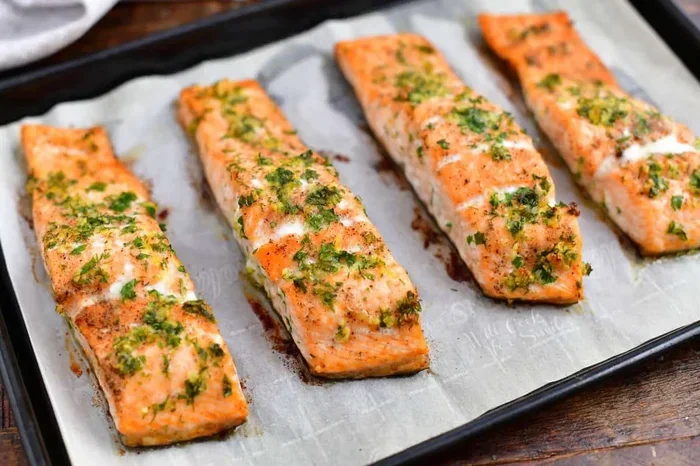
This is the ultimate easy oven baked frozen salmon fillet recipe. It requires just a handful of ingredients and delivers incredible flavor in under 25 minutes.
Ingredients:
- 2 frozen salmon fillets (about 6 ounces each)
- 2 tablespoons butter, melted
- 2 cloves garlic, minced
- 1 tablespoon fresh lemon juice
- Salt and pepper to taste
- Fresh parsley for garnish
Instructions:
- Preheat your oven to 425°F (220°C).
- Pat the frozen salmon fillets dry with paper towels.
- Mix the melted butter, garlic, and lemon juice in a small bowl.
- Place the fillets on a parchment-lined baking sheet.
- Brush the garlic butter mixture generously over each fillet.
- Season with salt and pepper.
- Bake for 20 to 22 minutes until the internal temperature reaches 145°F.
- Garnish with fresh parsley and serve immediately.
This recipe produces crispy salmon skin with a buttery, flavorful interior. It pairs wonderfully with roasted vegetables or a simple side salad.
Recipe 2: Honey Mustard Glazed Baked Salmon
If you love a little sweetness with your savory, this baked salmon recipe is for you. The honey mustard glaze caramelizes beautifully in the oven and creates a gorgeous sticky coating.
Ingredients:
- 2 frozen salmon fillets
- 2 tablespoons Dijon mustard
- 1 tablespoon honey
- 1 tablespoon olive oil
- 1 teaspoon apple cider vinegar
- Salt and pepper to taste
Instructions:
- Preheat oven to 400°F (200°C).
- Pat frozen fillets dry and place on a lined baking sheet.
- Whisk together mustard, honey, olive oil, and vinegar.
- Spread the glaze evenly over each fillet.
- Bake for 22 to 25 minutes.
- Let rest for 3 minutes before serving.
The glaze adds a beautiful golden color and a sweet tangy flavor that makes this healthy salmon dinner a family favorite. Serve it over rice or with steamed broccoli for a complete meal.
Recipe 3: Crispy Herb Crust Baked Salmon
This recipe takes your frozen salmon fillets to the next level with a crunchy herb crust. It feels like a restaurant-quality dish but comes together in minutes.
Ingredients:
- 2 frozen salmon fillets
- 1/4 cup panko breadcrumbs
- 2 tablespoons grated Parmesan cheese
- 1 tablespoon fresh thyme, chopped
- 1 tablespoon fresh rosemary, chopped
- 2 tablespoons olive oil
- Salt and pepper to taste
Instructions:
- Preheat oven to 400°F (200°C).
- Pat fillets dry and place on a prepared baking sheet.
- Mix breadcrumbs, Parmesan, herbs, salt, and pepper in a bowl.
- Drizzle olive oil over the fillets.
- Press the herb mixture firmly onto the top of each fillet.
- Bake for 20 to 25 minutes until the crust is golden and the fish flakes easily.
The herb crust adds texture and depth of flavor that elevates simple frozen fish into something truly special. This is one of those salmon dinner ideas that impresses guests without requiring a lot of effort.
Essential Tips for Perfect Baked Salmon Every Time
Get the Oven Temperature Right
Temperature is the single most important factor when baking frozen salmon. Most oven baked frozen salmon fillet recipes work best at 400°F to 425°F. A hotter oven cooks the outside quickly while keeping the inside moist. A cooler oven can cause the fish to dry out before it fully cooks through.
Always preheat your oven before placing the salmon inside. Putting cold fish into a cold oven leads to uneven cooking and longer bake times. If you have an oven thermometer, use it. Many home ovens run hotter or cooler than the dial suggests, and this can affect your results.
Know Your Salmon Cooking Time
Cooking time depends on the thickness of your fillet and whether it is frozen solid or partially thawed. As a general rule, a standard 6-ounce salmon fillet baked from frozen takes about 20 to 25 minutes at 425°F. Thicker fillets may need an extra 3 to 5 minutes.
The best way to check if your baked salmon is done is to use a meat thermometer. Insert it into the thickest part of the fillet. The internal temperature should read 145°F. The fish should also be opaque and flake easily with a fork. Avoid overcooking, as this is the most common mistake people make with salmon recipes.
Let the Salmon Rest After Baking
Once your oven baked frozen salmon comes out of the oven, let it rest for 3 to 5 minutes before cutting into it. This allows the juices to redistribute throughout the fillet. When you skip this step, the salmon can dry out quickly on the plate. A short rest makes a noticeable difference in texture and moisture.
Pair Your Salmon with the Right Sides
A great salmon dinner is about more than just the fish. The right sides can turn a simple meal into a memorable one. Here are some quick pairing ideas:
- Roasted asparagus: Toss asparagus with olive oil, salt, and garlic. Roast on the same sheet pan for a complete one-pan meal.
- Rice pilaf: A fluffy bed of rice soaks up the delicious juices from the salmon beautifully.
- Steamed broccoli: Quick, easy, and healthy. A squeeze of lemon brings everything together.
- Garlic mashed potatoes: Creamy potatoes complement the rich flavor of baked salmon perfectly.
- Simple green salad: Fresh greens with a light vinaigrette provide a refreshing contrast.
Common Mistakes to Avoid When Cooking Frozen Salmon
Skipping the Dry Step
The most common mistake people make is placing wet, unpat-dried frozen salmon fillets directly on the baking sheet. Surface moisture creates steam, which prevents the skin from crisping and can make the fish feel soggy. Always take the extra 30 seconds to pat your fillet dry with paper towels. This single step dramatically improves your results.
Overcooking the Salmon
Overcooked salmon is dry, chalky, and unappetizing. It is the number one complaint about baked fish. The key is to watch your timing carefully and use a meat thermometer. Oven baked frozen salmon fillet recipes typically need 20 to 25 minutes, but every oven is different. Start checking at the 20-minute mark. When the fish flakes easily and reaches 145°F internally, it is done. Remove it from the oven immediately.
Using Too Much or Too Little Seasoning
Seasoning is important, but balance matters. Too much salt can overpower the delicate flavor of the fish. Too little seasoning leaves the salmon bland. A light, even coating of your chosen spice blend works best. Remember, you can always add more seasoning after baking if needed.
Not Accounting for Thickness Variations
Not all salmon fillets are the same thickness. A thin tail piece will cook much faster than a thick center-cut fillet. If you are baking multiple fillets of different sizes, stagger their placement on the pan or check the thinner pieces earlier. This prevents some pieces from drying out while others are still cooking.
Expert Insights on Baking Frozen Salmon
Why Chefs Prefer Baking Frozen Salmon
Many professional chefs actually prefer cooking frozen fish over fresh fish for certain applications. The frozen state helps the fillet maintain its structure during cooking. It also reduces the risk of the fish falling apart on the skin side. When you bake frozen salmon, the gradual thawing and cooking process happens simultaneously, which can produce incredibly tender results.
The Science Behind Crispy Salmon Skin
Getting crispy skin on baked salmon comes down to three factors: dryness, heat, and contact. A dry surface exposed to high heat on a flat baking surface will crisp up naturally. This is why patting the fillet dry and placing it skin-side down on a hot pan is so important. The Maillard reaction, which is the same process that makes roasted chicken skin so delicious, occurs when the proteins and sugars on the fish surface react to high heat.
How to Tell If Your Frozen Salmon Is Still Good
Frozen salmon can last for months in a properly functioning freezer. However, quality does decline over time. For the best flavor and texture, use your frozen fish within 3 to 6 months of freezing. If you notice ice crystals on the fillet, this indicates freezer burn. While freezer-burned salmon is still safe to eat, the texture and taste may be compromised. Store your salmon in airtight packaging or vacuum-sealed bags for the longest shelf life.
Comparison Table: Popular Oven Baked Frozen Salmon Methods
| Method | Oven Temp | Cook Time | Best For | Difficulty |
|---|---|---|---|---|
| Simple Butter Baked | 425°F | 20-22 min | Quick weeknight meals | Very Easy |
| Honey Mustard Glazed | 400°F | 22-25 min | Sweet and savory lovers | Easy |
| Herb Crust Baked | 400°F | 20-25 min | Impressing guests | Medium |
| Lemon Pepper Simple | 425°F | 18-22 min | Minimal effort, clean flavor | Very Easy |
| Asian Glazed | 400°F | 20-24 min | Bold flavor seekers | Easy |
Quick Tips for Better Baked Frozen Salmon
- Always preheat your oven before placing the salmon inside.
- Pat the fillet dry with paper towels for crispier skin.
- Use a meat thermometer to check for doneness at 145°F.
- Let the salmon rest for 3 to 5 minutes after baking.
- Line your baking sheet with parchment paper for easy cleanup.
- Add a splash of lemon juice right before serving for brightness.
- Experiment with different seasoning blends to keep meals exciting.
Frequently Asked Questions About Oven Baked Frozen Salmon
Can you bake salmon directly from frozen?
Yes, absolutely. Baking frozen salmon fillets straight from the freezer is not only safe but often recommended. The frozen state helps the fish hold its shape and cook evenly. Simply pat the fillet dry, season it, and bake at 400°F to 425°F for about 20 to 25 minutes. You will get delicious, flaky results without any thawing required.
How long does it take to bake frozen salmon in the oven?
Most oven baked frozen salmon fillet recipes call for 20 to 25 minutes at 400°F to 425°F. Thinner fillets may be done in 18 minutes, while thicker pieces might need up to 28 minutes. The best indicator of doneness is an internal temperature of 145°F and fish that flakes easily with a fork.
Is frozen salmon as healthy as fresh salmon?
Yes, frozen salmon is just as nutritious as fresh salmon. In many cases, frozen fish is flash-frozen at sea within hours of being caught, which locks in nutrients. The freezing process preserves omega-3 fatty acids, protein, and vitamins effectively. Choosing high-quality frozen salmon from reputable brands ensures you get all the health benefits of this superfood.
What is the best way to defrost frozen salmon if I want to?
If you prefer to thaw your salmon fillet before baking, the safest method is to place it in the refrigerator overnight. Put the frozen fillet on a plate lined with paper towels and let it thaw slowly in the fridge. Avoid thawing salmon at room temperature, as this can promote bacterial growth. For faster thawing, you can submerge the sealed fillet in cold water for about 30 minutes.
Can I use foil when baking frozen salmon?
Yes, using aluminum foil or parchment paper is perfectly fine and actually recommended for easy cleanup. If you want crispy skin, skip the foil and place the fillet directly on the baking sheet. Foil traps steam, which can make the skin softer. For a middle ground, try using parchment paper, which allows some air circulation while still preventing sticking.
How do I prevent my baked frozen salmon from drying out?
The key to moist baked salmon is not overcooking it. Use a meat thermometer and remove the fillet as soon as it hits 145°F internally. Brushing the fillet with olive oil or melted butter before baking also helps retain moisture. Letting the salmon rest for a few minutes after baking allows the juices to settle back into the fish, keeping it tender and flavorful.
Conclusion
Oven baked frozen salmon fillet recipes are one of the simplest and most rewarding meals you can make at home. They are fast, healthy, affordable, and absolutely delicious. Whether you choose a simple garlic butter approach or try a more elaborate herb crust, the results will impress you every time.
The beauty of baked salmon recipes from frozen lies in their convenience. You never have to worry about thawing, planning, or last-minute trips to the grocery store. Keep a few frozen salmon fillets in your freezer, and you always have a nutritious dinner option ready in under half an hour.
Remember the key tips we covered. Pat your fish dry. Use the right oven temperature. Do not overcook it. Season generously but keep it balanced. These small steps make a huge difference in the final result. Once you master the basics, you can get creative with flavors and combinations that suit your taste.
Frozen salmon is not a compromise. It is a smart, practical choice that delivers outstanding flavor and nutrition. So the next time you are wondering what to make for dinner, reach for those frozen salmon fillets and try one of these oven baked frozen salmon fillet recipes. Your taste buds and your schedule will both thank you. Happy cooking!