How To Clean Grease Off Inside Oven Door The Easy Way
Cleaning grease off inside your oven door is easier than you think. With a few common household items like baking soda and vinegar, you can say goodbye to stubborn grease buildup. This guide walks you through every step so you can restore your oven door to crystal clear. You will learn safe methods, natural solutions, and quick maintenance tips that save time and money.
Have you ever opened your oven and stared at the greasy film coating the inside of the door? It happens to everyone. Cooking splatters, oil sprays, and steam build up over time until your oven door looks more like a science experiment than a cooking appliance. The good news is that cleaning grease off inside oven door does not have to be a nightmare.
You do not need expensive store-bought cleaners or hours of scrubbing. With a few simple ingredients and the right technique, you can make your oven door look brand new. This guide shows you exactly how to do it. We will cover everything from why grease builds up to the best cleaning methods you can try at home today.
Whether your oven door has light film or heavy baked-on gunk, this guide has you covered. Let us get started and bring back the shine to your oven.
Key Takeaways
- Baking soda paste is your best friend: It breaks down grease safely without harsh chemicals.
- Vinegar adds serious cleaning power: When combined with baking soda, it lifts even tough stains.
- Regular cleaning prevents buildup: A quick wipe after each use keeps your oven door looking great.
- You do not need expensive products: Most oven cleaning hacks use items already in your kitchen.
- Patience is key: Letting the cleaning solution sit makes a huge difference in results.
- Safety always comes first: Never mix bleach with other cleaners and always ventilate your kitchen.
📑 Table of Contents
- Why Grease Builds Up Inside Your Oven Door
- What You Need Before You Start Cleaning
- Step-by-Step: How To Clean Grease Off Inside Oven Door
- Natural Cleaning Solutions That Actually Work
- Stubborn Grease: When Simple Methods Are Not Enough
- Keeping Your Oven Door Clean Going Forward
- Common Mistakes to Avoid When Cleaning Oven Grease
- Expert Insights: What Professional Cleaners Recommend
- Conclusion
Why Grease Builds Up Inside Your Oven Door
Understanding why grease accumulates helps you clean it better and prevent it from coming back. When you cook, fats and oils turn into steam. That steam rises and settles on every cool surface inside your oven, including the glass door.
Over time, these tiny droplets cool and harden. They form a sticky film that gets thicker with each use. The more you cook, the worse it gets. High-heat cooking makes it even worse because the grease caramelizes and bonds to the glass.
The Role of Cooking Oils and Fats
Not all cooking oils behave the same way. Olive oil, butter, and animal fats leave behind more residue than lighter oils. When these fats heat up, they break down into smaller particles. These particles then stick to the oven door glass.
Cooking methods like broiling and frying produce the most grease splatter. If you love roasting or baking at high temperatures, you will notice more buildup on your oven door window. This is completely normal and expected.
How Temperature Affects Grease Stains
Heat changes the nature of grease. At low temperatures, oil stays liquid and wipes off easily. But at high temperatures, it polymerizes. This means it turns into a hard, plastic-like coating. That is why baked-on grease is so hard to remove.
The good news is that polymerized grease still responds to the right cleaning methods. You just need the right approach and a little patience. More on that in the next section.
What You Need Before You Start Cleaning
Gathering your supplies before you begin makes the whole process smoother. You do not want to stop halfway through because you are missing something. Here is what you will need for most oven door cleaning methods.
Essential Cleaning Supplies
- Baking soda – This is the star of most natural cleaning solutions. It is a gentle abrasive that cuts through grease effectively.
- White vinegar – Vinegar adds acidity that helps dissolve grease and brighten the glass surface.
- Dish soap – A few drops of liquid dish soap boosts the cleaning power of any paste or solution.
- Warm water – You will use warm water to mix solutions and rinse the door clean.
- Soft cloths or microfiber towels – These prevent scratching the glass while you wipe away grime.
- A soft-bristle brush or old toothbrush – Great for getting into corners and edges where grease hides.
- Spray bottle – Handy for applying vinegar solutions evenly across the door.
Optional but Helpful Items
Some extra items can make the job even easier. A plastic scraper helps remove thick, caked-on grease without scratching the glass. Rubbing alcohol works well on stubborn spots. And a razor blade scraper (used carefully) can tackle really hardened grease buildup on oven glass.
Safety Tips Before You Begin
Always make sure your oven is completely cool before you start cleaning. Never use abrasive steel wool on glass surfaces. And never mix bleach with vinegar or ammonia-based cleaners. Those combinations create dangerous fumes. Keep your kitchen well-ventilated while you work.
Step-by-Step: How To Clean Grease Off Inside Oven Door
Now let us get to the main event. This is the core method that works for most oven doors. It uses baking soda and vinegar, two ingredients you probably already have in your kitchen.
Step 1: Remove Loose Debris
Start by wiping down the oven door with a damp cloth. This removes any loose crumbs or surface grease. You want a clean surface so the cleaning solution can work directly on the stuck-on grime. Use warm water and a small amount of dish soap for this initial wipe-down.
Do not skip this step. Removing loose debris first makes the deeper cleaning much more effective. It also prevents you from spreading grease around instead of lifting it off.
Step 2: Make a Baking Soda Paste
In a small bowl, mix three parts baking soda with one part water. Stir it until you get a thick paste. The consistency should be like toothpaste. If it is too runny, add more baking soda. If it is too thick, add a tiny bit more water.
This baking soda paste is your primary cleaning tool. It is gentle enough not to scratch the glass but strong enough to break down grease. You can also add a few drops of dish soap to boost its cleaning power.
Step 3: Apply the Paste to the Door
Using your fingers or a soft cloth, spread the baking soda paste all over the inside of the oven door. Focus on the areas with the most grease buildup. Cover the entire glass surface evenly. Avoid getting paste on the rubber seals or metal frame as much as possible.
Let the paste sit for at least 15 to 30 minutes. For heavy grease, you can leave it on for up to an hour. The baking soda needs time to break down the grease molecules. This waiting period is where the magic happens.
Step 4: Spray with Vinegar Solution
After the paste has had time to work, spray a mixture of equal parts white vinegar and warm water over the door. You will see it fizz and bubble. This reaction helps lift the grease from the glass surface.
The fizzing action is completely normal and desirable. It means the cleaning solution is working. The vinegar also helps neutralize the baking soda, making it easier to wipe away.
Step 5: Scrub Gently and Wipe Clean
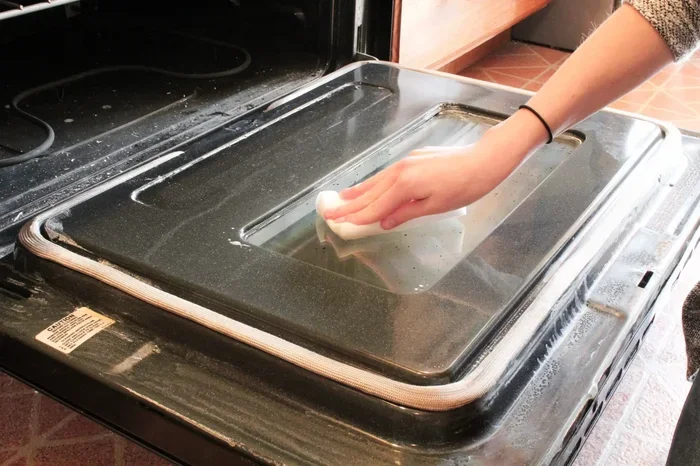
Using a soft cloth or microfiber towel, gently scrub the door in circular motions. For tough spots, use a soft-bristle brush or old toothbrush. Apply light pressure and let the cleaning solution do the heavy lifting.
Wipe away the paste and dissolved grease with a clean damp cloth. Rinse the cloth frequently and keep wiping until all residue is gone. You may need to repeat this step for areas with heavy grease stains.
Step 6: Final Rinse and Dry
Give the door one final rinse with clean warm water. Use a fresh cloth to wipe away any remaining cleaning solution. Then dry the door completely with a clean towel. This prevents water spots and leaves the glass streak-free.
Your oven door should now look significantly cleaner. If some grease remains, do not worry. The next section covers methods for those really stubborn spots.
Natural Cleaning Solutions That Actually Work
Baking soda and vinegar are not the only natural options for cleaning your oven door. Several household items can tackle grease effectively without harsh chemicals. Here are some of the best alternatives you can try.
Lemon Juice and Hot Water Method
Lemon juice is a natural degreaser. Its citric acid cuts through grease while leaving a fresh scent behind. To use this method, boil a pot of water with sliced lemons. Place the pot inside the oven on the lowest rack and let it steam for 20 to 30 minutes.
The steam loosens the grease on the oven door glass. Afterward, wipe the door with a damp cloth. The grease should come off much more easily than before. This method works especially well for light to moderate grease buildup.
Dish Soap and Warm Water Soak
For removable oven door panels, you can soak them in warm soapy water. Fill a sink or bathtub with hot water and add several drops of dish soap. Remove the door panel (if detachable) and let it soak for 30 minutes to an hour.
The warm water softens the hardened grease. After soaking, scrub gently with a soft sponge. Rinse thoroughly and dry completely before reattaching the panel. This method works great for oven racks too.
Rubbing Alcohol for Stubborn Spots
Isopropyl alcohol is a powerful solvent that dissolves grease quickly. Dampen a cloth with rubbing alcohol and apply it to the stubborn grease spots. Let it sit for 5 to 10 minutes, then wipe away. The alcohol evaporates quickly, leaving no residue behind.
Use rubbing alcohol in a well-ventilated area. It is strong but effective for spot cleaning and touching up small areas of baked-on grease.
Stubborn Grease: When Simple Methods Are Not Enough
Sometimes grease on oven door glass just will not budge with basic methods. This usually happens when grease has been building up for months or years. The good news is that you have options for tackling even the worst buildup.
Using a Commercial Oven Cleaner
When natural methods fall short, a commercial oven cleaner can do the job. Look for a degreaser specifically designed for oven glass. Spray it on according to the product instructions and let it sit for the recommended time.
Always wear gloves and work in a ventilated area. Commercial oven cleaners contain strong chemicals that can irritate skin and lungs. After treatment, wipe the door clean and rinse thoroughly with warm water. Remove any chemical residue completely before using the oven again.
The Steam and Scraping Technique
For really thick grease layers, steam can soften the buildup enough to scrape it away. Boil water and hold it over the affected area of the oven door. The steam penetrates the hardened grease and loosens its grip on the glass.
After steaming, use a plastic scraper to gently remove the softened grease. Never use metal scrapers on oven glass. They can scratch and permanently damage the surface. Work slowly and carefully for the best results.
When to Call a Professional
If you have tried everything and the grease is still there, it might be time to call a professional oven cleaning service. These experts have industrial-grade tools and solutions that can handle even the most extreme grease buildup. While it costs more than DIY methods, it saves you time and effort.
Professional cleaning is also a good option if your oven has not been cleaned in years. The buildup may be too thick for home remedies. A professional can restore your oven door to like-new condition.
Keeping Your Oven Door Clean Going Forward
Cleaning the grease off is only half the battle. The real secret is preventing buildup in the first place. With a few simple habits, you can keep your oven door looking clean for much longer.
Wipe Down After Every Use
Get into the habit of wiping the inside of your oven door after each use. While the oven is still warm (but cool enough to touch safely), use a damp cloth to wipe away any splatters or spills. This takes only 30 seconds and prevents grease from hardening over time.
This simple habit is the single most effective way to maintain oven cleanliness. It takes almost no effort and saves you from deep cleaning sessions later.
Use Oven Liners and Covers
Oven liners placed on the bottom rack catch drips and spills before they reach the oven walls and door. Silicone oven liners are reusable and easy to clean. They are an inexpensive investment that pays off in reduced cleaning time.
You can also use aluminum foil on the bottom rack to catch drips. Just make sure the foil does not touch the heating elements. This simple trick reduces grease splatter significantly.
Cover Food While Cooking
Covering dishes with lids or aluminum foil while cooking reduces splatter. Soups, stews, and casseroles are the biggest culprits for creating steam and grease that settles on the oven door. A simple cover can prevent a lot of mess.
This is especially helpful when cooking fatty meats or oily foods. Less splatter means less grease on your oven door window and a cleaner oven overall.
Schedule Monthly Deep Cleans
Even with good daily habits, plan for a monthly deep clean of your oven door. Set a reminder on your phone or calendar. During these sessions, use the baking soda and vinegar method to remove any early-stage grease before it becomes stubborn buildup.
Consistent maintenance is much easier than occasional intensive cleaning. A little effort each month keeps your oven looking great and performing efficiently.
Quick Tips for Busy Cooks
- Keep a damp cloth near the oven for quick wipe-downs.
- Use a splatter screen when frying to catch grease before it reaches the oven.
- Clean up spills immediately. The longer grease sits, the harder it gets to remove.
- Run the self-cleaning cycle if your oven has one. But be aware this can produce smoke and fumes.
- Replace oven door seals when they get worn. Damaged seals let grease escape and spread.
Common Mistakes to Avoid When Cleaning Oven Grease
Even with the best intentions, people make mistakes that can damage their oven or reduce cleaning effectiveness. Here are some common errors to watch out for.
- Using abrasive scrubbers on glass: Steel wool and harsh pads scratch oven door glass. Always use soft cloths or brushes.
- Skipping the rinse: Leaving cleaning residue on the glass creates streaks and can affect food safety.
- Using too much water: Excess water can seep into the oven door frame and damage internal components.
- Ignoring the rubber seal: Grease buildup on the door seal affects oven temperature and efficiency. Clean it gently with a damp cloth.
- Using the wrong cleaner on self-cleaning ovens: Never use chemical cleaners on a self-cleaning oven door. The high heat during the self-clean cycle can cause toxic fumes from residue.
- Not letting solutions sit long enough: Rushing the process means the cleaning solution does not have time to break down the grease. Patience pays off.
Expert Insights: What Professional Cleaners Recommend
Professional oven cleaners share a few secrets that make their work easier and more effective. These tips can help you achieve better results at home.
First, always work from the top down. Gravity pulls loosened grease downward, so cleaning the upper part of the door first prevents re-soiling areas you have already cleaned.
Second, never rush the dwell time. Whether you are using a baking soda paste or a commercial cleaner, letting it sit for the full recommended time makes a dramatic difference. The solution needs time to penetrate and dissolve the grease.
Third, invest in a good quality microfiber cloth. These cloths trap grease better than cotton rags and leave no lint behind. They are a small investment that makes a big difference in your cleaning results.
Finally, experts recommend cleaning your oven door every two to four weeks if you cook frequently. This prevents grease from reaching the stubborn, baked-on stage that requires heavy-duty treatment.
Conclusion
Cleaning grease off inside your oven door does not have to be a difficult chore. With the right approach and a few household ingredients, you can make your oven door look as good as new. The baking soda and vinegar method is safe, effective, and affordable. Natural solutions like lemon steam and dish soap soaks work well for lighter buildup. And when needed, commercial cleaners and professional services handle the toughest jobs.
The key is consistency. Regular cleaning prevents heavy buildup and makes each cleaning session faster and easier. Make it a habit to wipe down your oven door after use, and schedule a deeper clean every few weeks. Your oven will run more efficiently, last longer, and look better with proper care.
Now that you know how to clean grease off inside oven door the easy way, there is no reason to wait. Grab some baking soda and vinegar, and give your oven door the treatment it deserves. Your kitchen will thank you for it.
Frequently Asked Questions
What is the best way to clean grease off inside oven door?
The best way is to use a baking soda paste applied to the door, let it sit for 15 to 30 minutes, then spray with a vinegar and water solution. Wipe clean with a soft cloth. This natural method is safe, effective, and uses items you already have at home.
How do you remove baked-on grease from oven door glass?
For baked-on grease, use the steam method by boiling water with lemon slices inside the oven. The steam loosens the hardened grease. Then apply a baking soda paste and scrub gently with a soft brush. For really tough spots, a plastic scraper can help lift the softened grease without scratching the glass.
Can you use WD-40 to clean grease off oven door?
Yes, WD-40 can dissolve grease on oven door glass. Spray a small amount on a cloth and wipe the affected area. Let it sit for a few minutes, then wipe clean with a damp cloth. Make sure to rinse thoroughly and remove all WD-40 residue before using the oven again.
How often should you clean the inside of your oven door?
You should wipe down your oven door after every use to prevent grease buildup. A deeper cleaning with baking soda paste should be done every two to four weeks if you cook regularly. Monthly deep cleans keep the door looking clear and prevent stubborn stains from forming.
Is it safe to clean oven door with vinegar?
Yes, white vinegar is safe and effective for cleaning oven door glass. It is a natural acid that dissolves grease and cuts through grime. Mix equal parts vinegar and warm water in a spray bottle and apply to the door. It works especially well when combined with baking soda for a powerful cleaning reaction.
What should you avoid when cleaning grease off oven door?
Avoid using steel wool, abrasive pads, or harsh chemicals that can scratch or damage the glass. Never mix bleach with vinegar or ammonia-based cleaners. Also avoid using too much water that could seep into the door frame. Always work on a cool oven and ventilate your kitchen during cleaning.