How to Choose the Best Commercial Oven For Baking Cakes
Choosing the right commercial oven for baking cakes can make or break your bakery business. This guide covers every type, feature, and budget so you can make a confident decision. You will learn about convection ovens, deck ovens, and rotary options that suit different cake production needs. We also break down pricing, energy efficiency, and maintenance tips in simple terms. By the end, you will know exactly which commercial oven for baking cakes fits your kitchen perfectly.
Running a bakery is exciting. Every cake you pull out of the oven feels like a small victory. But here is the truth that many new bakery owners learn the hard way. The oven you choose shapes everything. It affects your cake baking time, your energy bills, your consistency, and even your reputation. A commercial oven for baking cakes is not just a piece of equipment. It is the heart of your entire operation.
So how do you pick the right one? The market is full of options. There are convection models, deck ovens, rotary units, and steam injection systems. Each one brings something different to the table. Some excel at batch baking. Others shine when you are producing large volumes of the same cake. This guide walks you through every important factor. By the end, you will feel confident making the best choice for your bakery.
We will cover types, features, budgets, and real-world tips. No fluff. No jargon. Just clear, practical advice that helps you invest wisely. Whether you are opening your first shop or upgrading an existing kitchen, this article has you covered. Let us dive into the world of commercial oven for baking cakes and find your perfect match.
Key Takeaways
- Match the oven type to your cake style: convection ovens work great for batch baking, while deck ovens shine for artisan and large-format cakes.
- Capacity matters most: always choose a commercial oven for baking cakes that can handle your peak production volume without overcrowding.
- Temperature control is non-negotiable: precise oven temperature control ensures even heat distribution and consistent baking results every single time.
- Energy efficiency saves money long-term: an energy efficient oven reduces operating costs and supports sustainable cake production.
- Budget wisely: the best bakery oven price balances upfront cost with long-term performance, durability, and maintenance needs.
- Regular maintenance extends oven life: simple cleaning and calibration routines keep your commercial kitchen oven running smoothly for years.
- Consider future growth: invest in cake baking equipment that can scale with your business and evolving cake production demands.
📑 Table of Contents
Understanding Your Cake Baking Needs
Before you look at any models, pause and think about your actual needs. Every bakery is different. Your cake production volume, your menu, and your kitchen space all matter. Skipping this step leads to buying the wrong equipment. And that is a costly mistake no one wants to make.
What Type of Cakes Are You Baking?
The cakes you bake directly influence your oven choice. A bakery that focuses on sponge cakes needs very different equipment than one that specializes in dense chocolate tortes. Sponge cakes benefit from even heat distribution and strong airflow. Dense cakes need gentle, steady warmth without hot spots.
Think about your most popular items. Do you bake layer cakes? Cupcakes? Wedding cakes with delicate fondant? Each type responds differently to heat. A commercial convection oven circulates hot air evenly, which works well for most standard cakes. But delicate pastries and mousse-based cakes might do better in a deck oven for baking where the heat is softer and more radiant.
How Much Volume Do You Need?
Volume is the next big factor. Are you baking 20 cakes a day or 200? The answer changes everything. A small café bakery has very different needs from a large commercial cake factory.
Consider your peak hours. If Saturday mornings are busy, you need an oven that can handle high throughput. Look at your current production numbers. Then add about 30 percent for growth. This gives you a realistic target for commercial oven capacity. Buying slightly larger than you need today saves money tomorrow.
Types of Commercial Ovens for Cake Baking
Not all ovens are created equal. Different designs suit different baking styles. Understanding each type helps you narrow down your options quickly and confidently.
Convection Ovens
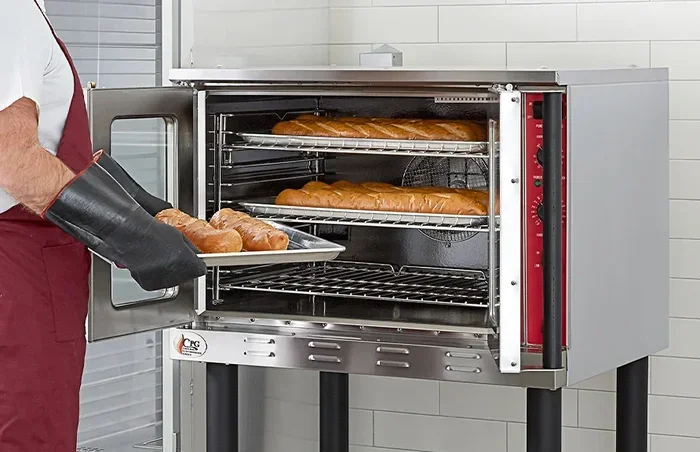
A convection oven for cakes uses a fan to circulate hot air around the food. This creates a uniform baking environment. The result is consistent browning and reduced cake baking time compared to traditional ovens.
Most commercial bakeries start with a convection model. They are versatile, reliable, and work well for a wide range of cake styles. You can bake multiple trays at once because the airflow reaches every level. This makes convection ovens a favorite for high-volume cake production.
Look for models with adjustable fan speeds. Some convection ovens let you turn the fan down for delicate cakes. This gives you more control over your baking consistency.
Deck Ovens
A deck oven for baking works differently. It uses heated stones or decks at the bottom to radiate heat upward. This creates a gentle, natural warmth that many professional bakers love.
Deck ovens are perfect for artisan-style cakes and large-format bakes. They deliver excellent oven temperature control and produce beautiful crusts. If your bakery focuses on premium, handcrafted cakes, a deck oven might be your best bet.
These ovens usually have multiple chambers. You can bake different cake types at different temperatures at the same time. That is a huge advantage for busy bakeries with diverse menus.
Rotary Ovens
A rotary oven for cakes spins the baking chamber while heating elements surround it. This ensures every cake receives equal exposure to heat. The result is remarkable baking consistency across every single tray.
Rotary ovens are common in large-scale industrial cake oven operations. They handle very high volumes efficiently. If you are producing hundreds of identical cakes daily, a rotary model can dramatically speed up your workflow.
However, rotary ovens tend to have a higher bakery oven price. They also require more floor space. Consider your budget and kitchen layout before choosing this type.
Steam Injection Ovens
A steam injection oven adds moisture during the baking process. This technique is excellent for certain cake types that benefit from a humid environment. Brioche, enriched doughs, and some European-style cakes come out beautifully in steam ovens.
These ovens offer advanced oven temperature control because you can manage both heat and humidity independently. The result is often superior texture and rise. If your cake menu includes items that need steam, this is worth serious consideration.
Key Features to Look For
Now that you understand the oven types, let us talk about the specific features that make a difference in daily baking. These details separate a good oven from a great one.
Temperature Control and Consistency
Oven temperature control is arguably the most important feature. Cakes are sensitive. Even a few degrees off can change the texture, rise, and color of your finished product.
Look for ovens with digital controls and precise thermostats. A good commercial oven for baking cakes should maintain temperature within one or two degrees. Some high-end models offer programmable temperature profiles. This means you can set different heat levels for different stages of cake baking time.
Also check for recovery time. When you open the door to load cakes, the temperature drops. A quality oven bounces back quickly. This keeps your baking consistency intact even during busy periods.
Oven Capacity and Tray Size
Commercial oven capacity is measured in pan sizes and the number of racks. Think about your standard cake pan dimensions. Do you use standard 9-inch round pans? Or larger sheet pans for sheet cakes?
Make sure the oven interior can accommodate your most common tray sizes. A cramped oven forces you to bake in smaller batches. This slows down production and wastes energy. On the other hand, an oversized oven for small batches wastes space and heat.
Measure your kitchen layout too. You need enough clearance around the oven for airflow and safe operation. A commercial kitchen oven should fit comfortably without making the workspace feel crowded.
Energy Efficiency
Energy costs add up fast in a commercial kitchen. An energy efficient oven can save you hundreds or even thousands of dollars per year. Over the lifespan of the equipment, these savings are significant.
Look for ovens with good insulation and efficient heating elements. Some modern models use infrared technology to heat up faster and use less power. Check the energy rating before you buy. A slightly higher bakery oven price for an efficient model often pays for itself within the first year.
Also consider how the oven fits into your overall kitchen energy use. A well-chosen commercial oven for baking cakes reduces your total utility costs and supports greener cake production.
Ease of Cleaning and Maintenance
Baking creates mess. Crumbs, grease, and batter build up fast. An oven that is easy to clean saves you valuable time every single day.
Look for models with removable trays, smooth interior surfaces, and accessible heating elements. Some ovens have self-cleaning cycles. While these add to the upfront cost, they reduce long-term maintenance effort significantly.
Regular maintenance keeps your commercial bakery oven running at peak performance. Schedule weekly cleaning and monthly inspections. This prevents buildup that can affect even heat distribution and shorten the oven’s lifespan.
Comparing Popular Commercial Oven Types
Let us put the options side by side. This comparison helps you visualize which oven type aligns best with your bakery goals.
- Convection Ovens: Best for versatility and medium-to-high volume. Great for standard layer cakes and cupcakes. Moderate bakery oven price. Easy to maintain.
- Deck Ovens: Ideal for artisan and premium cakes. Excellent oven temperature control and beautiful crust development. Higher price point. Needs more space.
- Rotary Ovens: Perfect for high-volume, repetitive baking. Superior baking consistency across all trays. Higher bakery oven price and larger footprint.
- Steam Injection Ovens: Best for specialized cake types that need humidity control. Advanced features and precise cake baking temperature management. Higher investment required.
Your choice depends on your menu, volume, and budget. Many successful bakeries use a combination. For example, a convection oven for everyday cakes and a deck oven for specialty items. This gives you flexibility without sacrificing quality.
Budget Considerations and Return on Investment
Budget is always a factor. But when it comes to cake baking equipment, the cheapest option is not always the smartest. Think of this as an investment in your bakery’s future.
A reliable commercial oven for baking cakes typically costs between $3,000 and $15,000 depending on the type and size. Deck ovens and rotary models sit at the higher end. Basic convection ovens are more affordable and still deliver excellent results for smaller operations.
Consider the total cost of ownership. Factor in energy consumption, maintenance, and expected lifespan. A $5,000 oven that lasts ten years and uses minimal energy is a better deal than a $2,000 oven that breaks down in three years.
Also think about what the oven enables you to produce. Better baking consistency means fewer wasted cakes. Faster cake production means more orders fulfilled. These indirect savings add real value to your investment.
Maintenance and Longevity Tips
Your oven is a long-term partner in your bakery. Treat it well and it will serve you for many years. Proper maintenance keeps performance high and repair costs low.
Clean the interior after every shift. Remove crumbs and residue before they build up. Check the door seals regularly. A worn seal lets heat escape and wastes energy. Inspect the heating elements for signs of wear or uneven glowing.
Calibrate your thermostat at least twice a year. Over time, oven readings can drift. An uncalibrated thermostat means inconsistent cake baking temperature and unpredictable results. A simple calibration check keeps your commercial oven for baking cakes performing at its best.
Train your team on proper oven use. Slamming doors, overloading racks, and ignoring preheat times all shorten oven life. Simple habits make a big difference over months and years of daily use.
Final Thoughts
Choosing the best commercial oven for baking cakes is one of the most important decisions you will make for your bakery. It is not just about buying equipment. It is about setting your bakery up for consistent success every single day.
Start by understanding your needs. Know your cake styles, your volume, and your kitchen space. Then explore the different oven types. Compare features, prices, and long-term costs. Take your time with this decision. The right oven transforms your workflow, your product quality, and your bottom line.
Remember that the best commercial oven for baking cakes is the one that fits your specific situation. No single model is perfect for everyone. But with the knowledge from this guide, you are now equipped to make a confident, informed choice. Trust your research, invest wisely, and get ready to bake cakes that delight every customer who walks through your door.
Frequently Asked Questions
What is the best type of commercial oven for baking cakes?
A convection oven for cakes is the most popular choice for most bakeries. It offers even heat distribution, reliable performance, and works well for a wide range of cake styles. However, the best type depends on your specific needs. Artisan bakeries often prefer deck ovens, while high-volume operations benefit from rotary models.
How much does a commercial oven for baking cakes cost?
Prices vary widely based on type and capacity. Basic commercial convection ovens start around $3,000. Mid-range deck ovens range from $5,000 to $10,000. High-capacity rotary and steam injection ovens can exceed $15,000. Always consider the long-term value, not just the upfront bakery oven price.
How do I maintain my commercial oven for baking cakes?
Clean the interior after every use to prevent buildup. Check door seals monthly and replace them when worn. Calibrate the thermostat at least twice a year. Inspect heating elements regularly. A well-maintained commercial bakery oven lasts longer and performs better, saving you money on repairs and replacements.
Can I bake different cake types in the same oven?
Yes, especially with convection and deck ovens. These models offer excellent oven temperature control so you can bake different items at different temperatures. Just make sure to preheat properly and avoid overcrowding the oven. This ensures even heat distribution and consistent results across all your bakes.
What size commercial oven do I need for a small bakery?
For a small bakery producing 20 to 50 cakes daily, a medium-sized convection oven with 3 to 5 racks is usually sufficient. Consider your peak production hours and standard cake pan sizes. Choosing a commercial oven for baking cakes with slightly extra capacity gives you room to grow without buying a new unit too soon.
Does an energy efficient oven really save money?
Yes, absolutely. An energy efficient oven uses less electricity or gas per bake cycle. Over months and years, these savings become significant. Many bakery owners report that the reduced operating costs of an efficient model offset the higher initial investment within the first year or two of use.
=== KEY TAKEAWAYS ===
Key Takeaways
- Match the oven type to your cake style: convection ovens work great for batch baking, while deck ovens shine for artisan and large-format cakes.
- Capacity matters most: always choose a commercial oven for baking cakes that can handle your peak production volume without overcrowding.
- Temperature control is non-negotiable: precise oven temperature control ensures even heat distribution and consistent baking results every single time.
- Energy efficiency saves money long-term: an energy efficient oven reduces operating costs and supports sustainable cake production.
- Budget wisely: the best bakery oven price balances upfront cost with long-term performance, durability, and maintenance needs.
- Consider future growth: invest in cake baking equipment that can scale with your business and evolving cake production demands.