How To Clean The Inner Glass Of Your Oven Door Easily
Cleaning the inner glass of your oven door doesn’t have to be a tough job. With the right tools and simple household items, you can restore your oven glass to crystal clear in under 30 minutes. This guide covers proven methods, natural solutions, and expert tips to help you tackle stubborn grease and baked-on grime without harsh chemicals.
Have you ever opened your oven and felt defeated by the greasy, foggy mess staring back at you from the inner glass? You are definitely not alone. Cleaning the inner glass of your oven door is one of those household chores that everyone puts off way too long. The good news is that it does not have to be a dreaded weekend task anymore.
Whether you deal with splattered sauce, baked-on cheese, or layers of hardened grease, this guide has you covered. We will walk you through every step needed to make your oven door glass cleaning quick, effective, and surprisingly satisfying. By the end, you will know exactly how to bring back the clarity of your oven glass using simple, affordable methods that really work.
Key Takeaways
- Baking soda and vinegar are the most effective natural cleaners for removing baked-on grease from oven door glass.
- Regular maintenance prevents buildup and makes deep cleaning sessions much faster and easier.
- Avoid abrasive scrubbers that can scratch or damage the glass surface of your oven door.
- Steam cleaning loosens tough stains before you apply any cleaning solution for better results.
- DIY oven door cleaning solutions save money and are safer for your family compared to commercial products.
- Know when to replace the glass if cracks or permanent discoloration affect visibility or safety.
📑 Table of Contents
- Why The Inner Glass Of Your Oven Door Gets So Dirty
- What You Will Need To Clean Oven Glass
- Step-by-Step Guide To Clean Inner Glass Of Oven Door
- Natural Cleaning Solutions That Work Wonders
- Common Mistakes To Avoid When Cleaning Oven Glass
- How Often Should You Clean Your Oven Glass
- When To Consider Oven Glass Replacement
- Expert Insights On Keeping Oven Glass Pristine
- Key Takeaways
- Conclusion
Why The Inner Glass Of Your Oven Door Gets So Dirty
Understanding why your oven glass gets so grimy is the first step toward keeping it clean. Most people do not realize that the inner glass of an oven door is exposed to extreme heat, splattering fats, and food particles on every single cook. Over time, these elements combine to create a stubborn layer of baked-on grime that seems impossible to remove.
The Science Behind Baked-On Grease
When grease and food juices hit the hot glass, they undergo a chemical change called polymerization. This process essentially turns liquid spills into a hard, plastic-like coating. That is why a simple wipe-down after cooking does not always prevent buildup. The more you cook, especially high-fat foods like roasts, pizzas, and baked goods, the faster this layer builds up.
Another factor is steam. When you cook covered dishes or boil liquids inside the oven, moisture gets trapped between the glass panels. This creates a perfect environment for grease to stick and harden. Over weeks and months, this cycle repeats until your oven door grease problem becomes visible and hard to ignore.
Does Your Oven Type Affect Dirt Buildup?
Yes, it absolutely does. A self-cleaning oven uses high heat to burn off residue, but it does not eliminate all buildup, especially on the inner door glass. Traditional ovens tend to accumulate more grime because they lack that high-heat self-cleaning cycle. Even gas ovens with sealed burners can send grease splatter upward onto the glass. Knowing your oven type helps you choose the best cleaning approach.
What You Will Need To Clean Oven Glass
Before you start, gather everything you need so the process flows smoothly. You do not need expensive or specialized products to get great results. Most of what you need is already sitting in your kitchen pantry.
Essential Cleaning Supplies
- Baking soda — a gentle abrasive that cuts through grease without scratching.
- White vinegar — a natural degreaser that reacts with baking soda to lift stains.
- Dish soap — helps break down surface grease and food residue.
- Warm water — used for mixing solutions and wiping away loosened grime.
- Spray bottle — makes it easy to apply solutions evenly across the glass.
- Soft microfiber cloth — safe for glass and effective at picking up residue.
- Plastic scraper or old credit card — helps remove hardened spots without scratching.
- Rubber gloves — protects your hands from grease and cleaning solutions.
Optional But Helpful Tools
For especially tough jobs, consider keeping a few extra items on hand. A steam cleaner works wonders at loosening baked-on stains before you apply any paste. A small bowl or container helps you hold cleaning solution against vertical glass surfaces. Some people also find that a lint-free cloth gives the final polish an extra streak-free shine. These tools are not required, but they can make oven door panel cleaning significantly easier.
Step-by-Step Guide To Clean Inner Glass Of Oven Door
Now let us get into the actual cleaning process. Follow these steps carefully and you will see a noticeable difference in no time. This method works for almost all oven types and door designs.
Step One: Remove Loose Debris
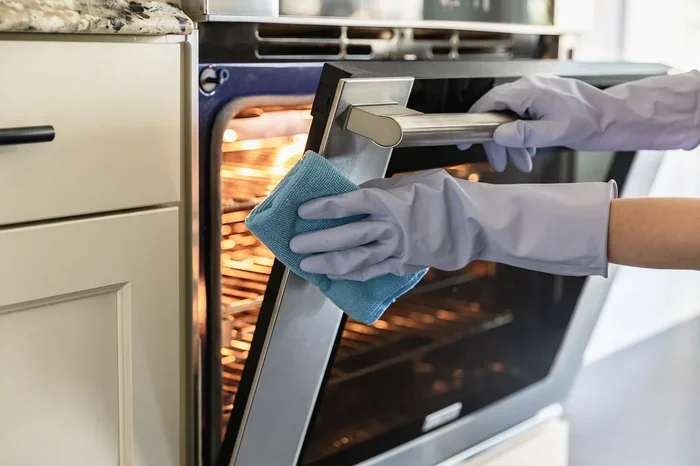
Start by wiping down the glass with a damp microfiber cloth. This removes any loose crumbs, dust, or surface grease. You want to give your cleaning solution something clean to grip onto rather than pushing dirt around. Use warm water and a drop of dish soap for this initial wipe.
Step Two: Apply The Baking Soda Paste
Mix about three tablespoons of baking soda with one tablespoon of water to form a thick paste. The consistency should be similar to toothpaste — thick enough to cling to the glass but spreadable. Apply this baking soda paste generously across the entire inner glass surface. Focus on the areas with the heaviest buildup. Let the paste sit for at least 15 to 20 minutes. This dwell time allows the baking soda to break down the grease and soften hardened stains.
Step Three: Add Vinegar For Extra Power
After the paste has had time to work, spray a light mist of white vinegar over the coated glass. You will notice a fizzing reaction — this is completely normal and actually helps lift the grime. The chemical reaction between the vinegar and baking soda creates a mild foaming action that penetrates deep into the baked-on layer. Let it sit for another 5 to 10 minutes.
Step Four: Scrub And Wipe
Using a damp microfiber cloth, gently scrub the glass in circular motions. For stubborn spots, use a plastic scraper or an old credit card to carefully lift away hardened residue. Avoid using steel wool, metal scrapers, or anything abrasive. These can permanently scratch the glass and make future cleaning even harder. Wipe away all the paste and loosened grime with clean warm water.
Step Five: Final Polish
Once the glass is free of paste and grime, give it a final wipe with a clean damp cloth. Then dry it thoroughly with a lint-free towel. This prevents water spots from forming. If any streaks remain, spray a little white vinegar on the cloth and do one more pass. Your oven glass should now look clear and transparent.
Quick Tip: For the best results, clean your oven glass when the oven is completely cool. Cleaning a warm glass can cause cleaning solutions to evaporate too quickly and reduces their effectiveness.
Natural Cleaning Solutions That Work Wonders
You do not need harsh chemical cleaners to get your oven glass sparkling. Several household items are surprisingly effective at tackling tough stains on oven glass. Here are some of the best natural alternatives.
Baking Soda And Hydrogen Peroxide
For extremely stubborn grime, combine baking soda with a small amount of hydrogen peroxide to form a paste. Apply it to the worst spots and let it sit for 30 minutes. The hydrogen peroxide adds a gentle bleaching and oxidizing effect that helps break down carbonized food deposits. This method works especially well for ovens that have not been cleaned in a long time.
Vinegar Steam Method
This technique uses steam to loosen grime before any scrubbing. Boil a pot of water with a cup of white vinegar on the stove. Place it near the open oven door and let the steam circulate for 10 to 15 minutes. The steam softens the baked-on grease, making it much easier to wipe away. After steaming, apply your baking soda paste and follow the standard cleaning steps.
Lemon Juice And Warm Water
Lemon juice is a natural acid that cuts through grease effectively. Mix the juice of one lemon with warm water and spray it onto the glass. Let it sit for 10 minutes before wiping. The citric acid helps dissolve light grease and leaves a fresh, clean scent behind. This method works best for light to moderate buildup.
Dish Soap And Warm Water Soak
If your oven door has removable glass panels, you can soak them in a sink filled with warm water and dish soap. Submerge the panel for 20 to 30 minutes to soften all the grime. Then scrub gently with a non-abrasive sponge. This method is one of the easiest ways to handle oven glass replacement cleaning if your door allows panel removal.
Common Mistakes To Avoid When Cleaning Oven Glass
Even with the best intentions, some cleaning habits can actually damage your oven door or make the problem worse. Here are the most common mistakes to watch out for.
Using Abrasive Cleaners And Scrubbers
Steel wool, harsh scouring pads, and abrasive powders can scratch oven glass permanently. Scratches create tiny grooves where grease accumulates faster, making future cleaning even more difficult. Stick to soft cloths, plastic scrapers, and gentle cleaning solutions.
Skipping The Soak Time
Many people apply a cleaning solution and immediately start scrubbing. This is a waste of product and effort. The dwell time is what allows the solution to penetrate and break down the grease. Always let your cleaning paste or spray sit for at least 15 minutes before attempting to wipe it away.
Using Too Much Water
Excess water can seep into the oven door frame and damage internal components. Use damp cloths rather than soaking wet ones. When applying solutions, use spray bottles for controlled application. Keep the moisture focused on the glass surface only.
Ignoring The Edges And Corners
Grease loves to hide in the corners and edges of oven door glass. If you only clean the center, you will miss buildup that will eventually spread. Take extra time to clean around the edges and any grooves or channels in the door frame.
How Often Should You Clean Your Oven Glass
Prevention is always easier than cure when it comes to oven maintenance. Regular cleaning keeps the inner glass clear and prevents heavy buildup that requires intense scrubbing sessions.
For most home cooks, a light wipe-down of the oven glass every two weeks works well. This takes less than five minutes and keeps grease from accumulating to problematic levels. A deeper cleaning with baking soda paste should be done every one to two months, depending on how often you use your oven.
If you cook frequently or prepare a lot of high-fat dishes, you may need to clean more often. The key is consistency. A little regular attention goes a long way toward keeping your oven door glass looking like new. After every major cooking session, especially roasts or baked casseroles, quickly wipe the glass with a damp cloth while it is still warm.
Quick Maintenance Habits
- Wipe spills immediately when the oven is still warm.
- Place a baking sheet under dishes that are prone to bubbling over.
- Keep a small spray bottle of vinegar and water near your oven for quick touch-ups.
- Check the glass monthly for early signs of buildup before it hardens.
When To Consider Oven Glass Replacement
Sometimes cleaning is not enough. If your oven glass has deep cracks, permanent discoloration, or damage that affects your ability to see inside the oven, it may be time for a replacement. Cracked glass is also a safety concern, as it can shatter during high-heat cooking.
Most oven manufacturers sell replacement glass panels specifically designed for each model. You can usually find the part number on the oven door frame or in your user manual. Replacement is often a simple DIY job that involves removing a few screws and swapping out the panel. If you are unsure, a professional appliance technician can handle the replacement for you.
Regular cleaning actually extends the life of your oven glass by preventing corrosive buildup that can degrade the surface over time. So keeping up with your oven door cleaning routine not only keeps things looking good but also protects your investment.
Expert Insights On Keeping Oven Glass Pristine
Professional cleaners and appliance experts share a few additional tips that can elevate your oven glass cleaning game.
Heat-activated cleaning is a technique many experts recommend. Before starting the deep clean, set your oven to its lowest temperature for just a few minutes. The gentle heat softens the grease layer, making it much easier to remove with cleaning solutions. Just make sure the oven is cool enough to touch safely before you begin.
Another expert tip is to clean both sides of the glass. Most people focus only on the inner surface but the outer glass accumulates grease from cooking splashes and kitchen steam too. A quick wipe of the outer glass during your regular kitchen cleaning routine keeps the entire door looking great.
Experts also suggest keeping a dedicated oven cleaning kit with all your supplies in one place. A small basket or bin under the sink with baking soda, vinegar, spray bottles, microfiber cloths, and plastic scrapers means you always have everything ready. This removes any barrier or excuse and makes the task feel less overwhelming.
Key Takeaways
- Baking soda and vinegar are the most effective natural cleaners for removing baked-on grease from oven door glass.
- Regular maintenance prevents buildup and makes deep cleaning sessions much faster and easier.
- Avoid abrasive scrubbers that can scratch or damage the glass surface of your oven door.
- Steam cleaning loosens tough stains before you apply any cleaning solution for better results.
- DIY oven door cleaning solutions save money and are safer for your family compared to commercial products.
- Know when to replace the glass if cracks or permanent discoloration affect visibility or safety.
Conclusion
Cleaning the inner glass of your oven door is a straightforward task once you know the right approach. With simple household ingredients like baking soda, vinegar, and warm water, you can tackle even the worst grease buildup without reaching for harsh chemicals. The key is consistency — regular light cleaning prevents heavy buildup and makes each session quick and painless.
Remember to always use gentle tools, give your cleaning solutions enough time to work, and never skip the final polish. Your oven glass is an important part of your cooking experience, and keeping it clear makes monitoring your food so much easier and more enjoyable.
Start with the methods shared in this guide and you will wonder why you ever put off oven door glass cleaning in the first place. A clean oven is not just about appearance — it is about cooking better, safer, and with more confidence. Grab your baking soda and vinegar, and give your oven glass the attention it deserves today.
Frequently Asked Questions
Can I use commercial oven cleaners on the inner glass of my oven door?
Yes, you can use commercial oven cleaners, but they often contain harsh chemicals that can be harmful if not used properly. Natural alternatives like baking soda and vinegar are just as effective for most cleaning jobs and are much safer for your household. Always follow the manufacturer instructions if you choose a commercial product.
How long does it take to clean the inner glass of an oven door?
A thorough cleaning session typically takes 20 to 30 minutes, including the soak time for the cleaning paste. Light maintenance wipes take less than five minutes. The more regularly you clean, the faster each session becomes because there is less buildup to tackle.
What is the best homemade solution for cleaning oven glass?
The best homemade solution is a paste made from baking soda and water, activated with white vinegar. This combination creates a natural chemical reaction that lifts grease and softens baked-on food. It is affordable, non-toxic, and works remarkably well on even stubborn oven grime.
Is it safe to clean oven glass while the oven is still warm?
It is safe to wipe the glass while it is still slightly warm after cooking, but never use cold water on hot glass as this can cause cracking. For deep cleaning, always wait until the oven is completely cool. Warm glass helps loosen fresh grease, but the cleaning solution works best on a cool surface.
Can I remove the inner glass panel of my oven door for cleaning?
Many oven models allow the inner glass panel to be removed for easier cleaning. Check your oven manual for specific instructions on how to detach the panel safely. If removal is possible, soaking the panel in warm soapy water can dissolve grease without any scrubbing at all.
How do I prevent grease buildup on my oven door glass?
The best prevention strategy is to wipe the glass after every cooking session while the oven is still slightly warm. Using a baking sheet under dishes that tend to bubble over also helps significantly. Regular light cleaning every two weeks keeps heavy buildup from ever forming in the first place.