What Temp To Bake Stuffed Peppers In The Oven Perfectly
Finding the perfect oven temperature is the key to delicious stuffed peppers. What Temp To Bake Stuffed Peppers In The Oven is a question every home cook asks, and the answer is simpler than you think. Most recipes shine at 375°F or 400°F, giving you tender peppers and a golden, bubbly top. This guide walks you through the exact times, tips, and common pitfalls to avoid.
Stuffed peppers are a classic comfort food that never gets old. Whether you fill them with seasoned ground beef, rice, cheese, or veggies, the oven does all the work. But the question that trips up so many home cooks is simple: what temp to bake stuffed peppers in the oven? The answer isn’t just about a number. It’s about getting the right balance of tender peppers, fully cooked filling, and a delicious top.
Many recipes throw out a temperature and time without explaining why. That can lead to undercooked rice, dry meat, or peppers that turn mushy. I’ve baked hundreds of stuffed peppers, and I’ve learned that a few key details make all the difference. In this guide, I’ll break down the exact oven temperature, baking times, and pro tips so your next batch comes out perfect every single time.
We’ll cover everything from the best fillings to the most common mistakes. You’ll also find a handy comparison table and a step-by-step method you can follow right away. Let’s get started.
Key Takeaways
- 375°F is the gold standard temperature: It cooks stuffed peppers evenly, keeping them juicy and tender.
- 400°F works for a crispier top: Use this if you want a slightly browned, bubbly cheese crust.
- Baking time ranges from 25 to 45 minutes: It depends on pepper size and whether you pre-cook the filling.
- Always use a meat thermometer: Ensure the internal filling reaches 165°F for food safety.
- Cover with foil for the first half: This traps steam and prevents the peppers from drying out.
- Let them rest for 5 minutes: This allows the filling to set and makes serving easier.
- Choose the right pepper size: Large bell peppers hold more filling and bake more evenly.
📑 Table of Contents
- What Temp To Bake Stuffed Peppers In The Oven: The Sweet Spot
- How Long To Bake Stuffed Peppers: Timing by Size
- Best Stuffed Pepper Fillings and How They Affect Baking
- Step-by-Step Guide to Baking Stuffed Peppers
- Common Mistakes That Ruin Stuffed Peppers
- Pro Tips for Perfect Stuffed Peppers Every Time
- Conclusion
What Temp To Bake Stuffed Peppers In The Oven: The Sweet Spot
When you search what temp to bake stuffed peppers in the oven, the most common answer is 375°F. This temperature is the sweet spot for a reason. It’s hot enough to cook the filling through and create a slight browning on top, but gentle enough to keep the pepper walls tender and juicy. At 375°F, the heat spreads evenly throughout the dish, which means no cold spots in the center.
Most oven-baked stuffed peppers recipes rely on this temperature because it works with both meat and vegetarian fillings. It also gives you a generous window of time to check on the dish without worrying about burning. If you’re new to baking stuffed peppers, start with 375°F. It’s the safest, most reliable choice.
Why 375°F Is the Most Popular Temperature
The 375°F setting creates a balanced cooking environment. The oven heats the peppers slowly, allowing the filling to steam inside. This is especially important if your filling includes rice or grains, which need time to absorb moisture and become tender. At this temperature, the pepper skins soften just enough to hold their shape while the cheese on top melts into a golden crust.
Another reason 375°F works so well is that it’s a standard oven temperature. Most ovens hold this heat steadily, which reduces the risk of hot spots. If your oven runs a little hot or cold, 375°F gives you a buffer. You can always adjust by a few minutes, but the base temperature is forgiving.
When to Use 400°F for a Crispier Finish
Some cooks prefer a slightly higher temperature to get a crispier, more caramelized top. If you want a golden, bubbly cheese crust or a lightly charred edge, 400°F is a great choice. This temperature works best when you’ve pre-cooked your filling completely. Since the filling is already safe to eat, the higher heat just needs to brown the surface and warm the pepper through.
At 400°F, the baking time shortens. Large bell peppers might need only 30 to 35 minutes instead of 40. This is a useful trick when you’re short on time. Just keep a close eye on the dish during the last 10 minutes to prevent burning. A quick tip: if you use 400°F, cover the peppers with foil for the first 20 minutes, then uncover to finish.
Temperature Comparison Table
| Oven Temperature | Best For | Baking Time (Large Peppers) | Result |
|---|---|---|---|
| 375°F | Even cooking, juicy peppers | 35–45 minutes | Tender peppers, fully heated filling, soft skin |
| 400°F | Crispy top, faster cooking | 30–40 minutes | Golden cheese crust, slightly firmer pepper walls |
| 350°F | Very gentle cooking | 45–55 minutes | Ultra-tender peppers, best for delicate fillings |
This table shows that the baking temperature for stuffed peppers directly affects the texture and timing. Choose based on your filling and how much time you have.
How Long To Bake Stuffed Peppers: Timing by Size
Baking time is just as important as temperature. A common mistake is assuming all stuffed peppers need the same time in the oven. The size of your pepper, the density of your filling, and whether you pre-cooked anything all change the game. Let’s break it down.
Baking Time for Large Bell Peppers
Standard large bell peppers are the most common choice for stuffed peppers. At 375°F, these typically need 35 to 45 minutes. If you use 400°F, cut that time to 30 to 40 minutes. The peppers are done when you can slide a fork into the wall easily and the filling is hot all the way through. Large peppers hold a lot of filling, so they need the full time to cook evenly.
If you’re using a deep dish or stacking peppers, add 5 to 10 minutes. The extra mass slows down the heat transfer. Always check the center of the filling with a thermometer to be sure.
Baking Time for Small or Mini Peppers
Mini sweet peppers or smaller bell varieties bake much faster. These appetizer-sized stuffed peppers need only 20 to 25 minutes at 375°F. Because they have less mass, the heat reaches the center quickly. You can even bake them at 400°F for just 15 to 20 minutes if you want a crispier bite.
Small peppers are great for parties or snacks. They’re also perfect for testing a new filling recipe. Just watch them closely because they can go from perfectly done to overcooked in a few minutes.
Signs Your Stuffed Peppers Are Done
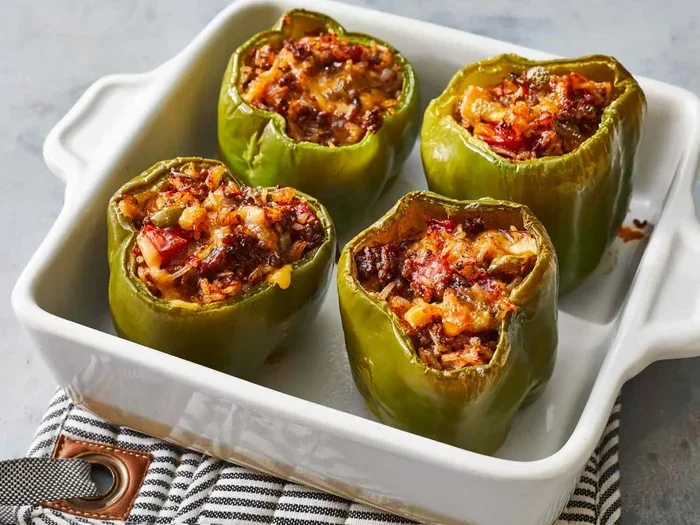
Knowing the visual and tactile cues helps you pull the dish out at the right moment. The pepper walls should be tender but not collapsing. When you press gently, they should give slightly but hold their shape. The filling should be bubbling around the edges, and any cheese on top should be melted and golden brown.
The most reliable sign is the internal temperature. Insert a meat thermometer into the center of the filling. You want it to read 165°F. This is especially important for meat-based stuffed peppers. If you don’t have a thermometer, cut one pepper open and check that the rice or meat is fully cooked and hot.
Best Stuffed Pepper Fillings and How They Affect Baking
The filling you choose changes everything about the baking process. A heavy meat filling behaves differently than a light vegetarian mix. Understanding these differences helps you set the right temperature and time.
Meat-Based Fillings
Ground beef stuffed peppers are a favorite for good reason. Beef, turkey, or sausage add rich flavor and protein. But raw meat inside a pepper needs careful handling. The oven must cook the meat thoroughly while the pepper softens. That’s why pre-cooking the meat mixture is almost always necessary.
Brown your ground meat in a skillet with onions and garlic before stuffing. Drain excess grease so the filling doesn’t become soggy. Mix the cooked meat with rice, tomato sauce, and seasonings. This pre-cooked filling heats through quickly in the oven, which means you can bake at 375°F for a standard 35 to 40 minutes.
Vegetarian and Rice-Based Fillings
Rice stuffed peppers are a lighter, equally delicious option. Black beans, quinoa, corn, and cheese make a satisfying vegetarian filling. Because the rice is often pre-cooked on the stove, it needs less time in the oven. A rice-based filling can be fully heated in 25 to 35 minutes at 375°F.
Vegetarian fillings also benefit from a slightly higher temperature if you want a crispy cheese top. The 400°F setting works well here because the filling is already safe to eat. The heat just needs to melt the cheese and warm the vegetables through.
Should You Pre-Cook Your Filling?
Almost always yes. Pre-cooking ensures that the filling reaches a safe internal temperature without over-baking the peppers. It also lets you build flavor by sautéing onions, garlic, and spices before mixing them into the filling. A quick tip: cook the filling until it’s about 80% done, then stuff the peppers and finish baking in the oven.
This method works for both meat and veggie fillings. It’s the secret to juicy, evenly cooked stuffed peppers every time. If you skip pre-cooking, you’ll need to increase the baking time significantly, which can dry out the pepper walls.
Step-by-Step Guide to Baking Stuffed Peppers
Now that you know the temperature and timing, let’s walk through the full process. Follow these steps for perfectly baked stuffed peppers every time.
Step 1: Prep the Peppers
Start by washing your bell peppers and cutting off the tops. Scoop out the seeds and membranes. You want a clean hollow shell. Some cooks blanch the peppers in boiling water for 2 to 3 minutes before stuffing. This softens the pepper walls slightly and helps them bake more evenly. If you’re short on time, you can skip blanching, but the peppers may need a few extra minutes in the oven.
Quick Tip: Save the pepper tops! You can use them as lids, which gives the peppers a fun presentation and helps trap steam during the first part of baking.
Step 2: Prepare and Pack the Filling
Mix your cooked filling in a large bowl. Taste it before stuffing, because the peppers won’t add much salt during baking. Fill each pepper generously, but don’t pack it too tight. The filling expands as it heats, and overstuffing causes it to burst out the sides. Leave about half an inch of space at the top.
If you’re using cheese, reserve a small portion for the top. Sprinkle it on after the peppers are baked for the best melt and color.
Step 3: Place in Baking Dish and Add Liquid
Stand the stuffed peppers upright in a baking dish. If they wobble, trim the bottoms slightly so they sit flat. Pour about a cup of water, broth, or tomato sauce into the bottom of the dish. This liquid creates steam, which keeps the peppers moist and helps cook the filling from the bottom up.
Cover the dish tightly with aluminum foil. The foil traps the steam and prevents the pepper tops from drying out. This is a crucial step for tender, juicy results.
Step 4: Bake and Uncover
Place the covered dish in the oven at 375°F. Bake for 25 to 30 minutes. Then remove the foil and continue baking for another 10 to 15 minutes. This uncovered phase lets the tops brown and the surface set. If you’re using 400°F, reduce the covered time to 20 minutes and the uncovered time to 10 minutes.
When the peppers are done, let them rest for 5 minutes before serving. This allows the filling to firm up slightly, making them easier to handle and more flavorful when you eat them.
Common Mistakes That Ruin Stuffed Peppers
Even experienced cooks make mistakes with stuffed peppers. Knowing what to avoid saves time and disappointment.
Overfilling the Peppers
It’s tempting to pack in as much filling as possible, but too much filling causes the peppers to burst open in the oven. The expanding rice or meat pushes against the pepper walls, and you end up with a messy dish. Stick to the recommended fill level and you’ll have neat, picture-perfect stuffed peppers.
Skipping the Foil Cover
Some people skip the foil to save time, but this often leads to dry pepper tops and undercooked filling. The foil creates a mini steam oven that gently cooks the pepper from the inside. Without it, the top dries out long before the center is hot. Always use foil for the first half of baking.
Using Raw Meat Inside
Putting raw ground meat directly into the pepper and hoping the oven will cook it through is risky. The pepper takes longer to heat than the meat, so the meat can sit in the danger zone for too long. Always pre-cook your meat mixture. It’s a simple step that guarantees food safety and better texture.
Not Letting Them Rest
Fresh out of the oven, the filling is loose and liquid. If you cut into them immediately, the filling spills out. Let the peppers rest for 5 to 10 minutes. The filling sets, the flavors meld, and the peppers hold their shape when you serve them.
Pro Tips for Perfect Stuffed Peppers Every Time
These extra insights will take your stuffed peppers from good to great.
Use a Meat Thermometer
A meat thermometer is the single best tool for checking doneness. Insert the probe into the thickest part of the filling, avoiding the pepper wall. You want an internal temperature of 165°F. This is especially important for chicken or pork stuffed peppers. If you don’t have a thermometer, cut a small slit in one pepper and check that everything is hot and cooked through.
Add Cheese at the End
If you want a perfect melted cheese topping, add the cheese during the last 5 minutes of baking. This prevents the cheese from overcooking and turning greasy. A mix of mozzarella and Parmesan gives great flavor and a beautiful golden finish.
Choose the Right Pepper Variety
Large bell peppers are the classic choice, but don’t be afraid to experiment. Poblano peppers have a rich, earthy flavor and roast beautifully. Banana peppers are milder and great for a crowd. Anaheim peppers offer a slightly smoky taste. Any pepper that holds its shape when cut works well for stuffing.
Expert Insight: Chef Maria recommends using a mix of short-grain rice and black beans for a creamier texture that bakes evenly. The rice absorbs the sauce without becoming mushy, and the beans add protein and body.
Quick Tips for Better Stuffed Peppers
- Use a rack: Place a wire rack inside the baking dish to allow air to circulate under the peppers. This prevents the bottoms from getting soggy.
- Make extra filling: Leftover filling can be baked in a separate dish as a side. It’s just as delicious.
- Freeze before baking: If you’re meal prepping, stuff the peppers and freeze them unbaked. Add 10 minutes to the baking time when you cook them from frozen.
- Fresh herbs at the end: Sprinkle chopped cilantro or parsley after baking for a burst of fresh flavor.
Key Takeaways for Baking Stuffed Peppers
- The ideal temperature is 375°F for even, juicy cooking.
- Use 400°F for a crispier top if you pre-cook the filling.
- Large peppers need 35–45 minutes; small ones need 20–25 minutes.
- Always pre-cook meat and check the internal temperature with a thermometer.
- Cover with foil for the first half, then uncover to brown.
- Rest the peppers for 5 minutes before serving.
Conclusion
Baking stuffed peppers in the oven is easier than most people think. The secret lies in picking the right temperature and giving the dish enough time. Now you know exactly what temp to bake stuffed peppers in the oven, and you have all the tools to get it right. Whether you stick with the reliable 375°F or push for a crispier 400°F finish, the results will be delicious.
Remember to pre-cook your filling, use foil to trap steam, and let the peppers rest before serving. These small steps make a big difference. Next time you’re in the kitchen, try these tips and watch your stuffed peppers turn out perfectly every time. You’ve got this, and your family is going to love the results.
Frequently Asked Questions
Can I bake stuffed peppers at 350°F?
Yes, you can bake stuffed peppers at 350°F, but they will need more time. Expect large peppers to take 45 to 55 minutes. The lower temperature cooks them more gently, which can be nice for delicate fillings, but it’s slower. If you use 350°F, check the internal temperature to make sure the filling is fully cooked.
Should I boil the peppers before baking them?
Boiling is not required, but a quick blanch in boiling water for 2 to 3 minutes helps soften the pepper walls. This ensures the peppers bake evenly and stay tender. If you skip blanching, just add a few extra minutes to the baking time and make sure the filling is pre-cooked.
Can I freeze baked stuffed peppers?
Yes, you can freeze baked stuffed peppers. Let them cool completely, then wrap each pepper tightly in plastic wrap and foil or place them in a freezer bag. To reheat, unwrap and bake at 350°F for 20 to 25 minutes until heated through. Freezing works best if the filling is already fully cooked.
What’s the best cheese for stuffed peppers?
Mozzarella melts beautifully and gives a classic stretchy top. Cheddar adds a sharp flavor, and Parmesan adds a salty, nutty finish. A blend of mozzarella and Parmesan is a popular choice that delivers both melt and taste. Add the cheese in the last 5 minutes of baking for the best result.
How do I keep stuffed peppers from getting soggy?
Sogginess usually comes from too much liquid or overfilling. Use a wire rack in the baking dish to allow air to circulate. Don’t skip the foil, but also don’t cover the peppers the entire time. The final uncovered bake helps evaporate excess moisture and firms up the top.
Can I use other peppers besides bell peppers?
Absolutely. Poblano, Anaheim, banana peppers, and even small sweet mini peppers all work well for stuffing. Just adjust the baking time based on the pepper size. Thinner-walled peppers may bake faster, so keep an eye on them to prevent overcooking.