How To Bake A Bagel In The Oven A Step By Step Guide
Baking bagels in the oven is the easiest way to enjoy fresh, chewy homemade bagels without a special steamer or equipment. This step by step guide shows you how to make perfect oven baked bagels using simple ingredients and basic kitchen tools. You will learn the dough recipe, boiling technique, and baking bagels in the oven tips that deliver bakery quality results at home.
There is something deeply satisfying about pulling a tray of warm, fresh bagels out of your oven. The smell alone can fill your entire kitchen and make your morning feel instantly better. If you have ever wondered how to make homemade bagels without investing in fancy equipment, you are in the right place.
This guide walks you through how to bake a bagel in the oven from start to finish. Whether you love classic plain bagels, everything bagels, or seeded varieties, you will find everything you need here. The process is simpler than most people think, and the results are far better than anything from a store shelf.
Baking bagels in the oven gives you full control over the texture, size, and flavor. You can make them as chewy or soft as you like. You can add exactly the toppings you prefer. And you can bake as many or as few as you need. No more settling for stale supermarket bagels when a great batch is just one oven cycle away.
Key Takeaways
- Oven baking is simple: You do not need a bagel steamer or special equipment to make great bagels at home.
- Boiling before baking is key: This step creates the chewy crust and dense interior that makes bagels unique.
- Use the right temperature: Baking at high heat (425-450°F) gives bagels their signature golden brown crust.
- Homemade bagel dough is easy: With just a few basic ingredients like flour, yeast, and sugar, you can make a batch in under two hours.
- Toppings go on before baking: Adding seeds, salt, or everything seasoning before the bagels go in the oven ensures they stick and toast beautifully.
- Freshly baked bagels freeze well: You can make a big batch and store them for later enjoyment.
📑 Table of Contents
- Why Baking Bagels In The Oven Is The Best Method
- Ingredients You Need For Perfect Bagels
- How To Prepare The Bagel Dough
- Shaping And Boiling Your Bagels
- Baking Bagels In The Oven Step By Step
- Toppings And Serving Ideas
- Common Mistakes To Avoid
- Expert Tips For Perfect Oven Baked Bagels
- Frequently Asked Questions
- Conclusion
Why Baking Bagels In The Oven Is The Best Method
Oven Baked Bagels Vs Store Bought
Store bought bagels often taste like dense bread rolls with a thin coating of glaze. Homemade bagels have a completely different texture. The crust is crisp and shiny, while the inside is chewy and slightly tangy. This difference comes from the boiling step and the high heat of oven baking.
When you bake bagels in the oven, the dry heat surrounds each bagel evenly. This creates that signature crust that is hard to replicate in a toaster or microwave. The oven also gives you the flexibility to bake multiple batches and experiment with different flavors.
Equipment You Will Need
One of the best things about baking bagels at home is that you need very little equipment. Here is what you will want to have ready:
- A large mixing bowl for the dough
- A baking stone or inverted baking sheet
- A pot for boiling the bagels
- A slotted spoon or spider strainer
- Parchment paper or a silicone baking mat
- A sharp knife or pizza cutter for shaping
You do not need a bagel baking pan or a special steamer. A standard oven baked bagel setup works perfectly. A baking stone helps distribute heat evenly, but a regular baking sheet works too. The most important tool is really your oven, and most people already have one of those.
Ingredients You Need For Perfect Bagels
The Base Dough Recipe
Great homemade bagels start with a simple dough. The ingredients are pantry staples that most people already have on hand. Here is what you will need for a batch of about 8 to 10 bagels:
- 3 1/2 cups bread flour (all purpose flour works too)
- 1 packet active dry yeast
- 1 1/2 cups warm water
- 2 tablespoons sugar or honey
- 1 1/2 teaspoons salt
- 1 tablespoon vegetable oil or melted butter
Bread flour gives bagels a better chew because it has more protein. But do not worry if you only have all purpose flour. Your bagels will still turn out well. The yeast, sugar, and warm water work together to create a yeast dough that rises beautifully.
Optional Add Ins And Flavor Boosters
One of the joys of making homemade bagels is customizing them to your taste. Here are some ideas to mix into the dough or sprinkle on top:
- Everything bagel seasoning for a savory kick
- Poppy seeds or sesame seeds on top
- Garlic powder or onion flakes mixed into the dough
- Dried herbs like rosemary or thyme
- Cinnamon and raisins for a sweet bagel variation
- Cheddar cheese folded into the dough for savory cheese bagels
These bagel toppings and add ins make each batch feel unique. You can even make a half batch with plain bagels and a half batch with seeds. The options are endless when you bake bagels in the oven at home.
How To Prepare The Bagel Dough
Mixing The Dough
Start by activating your yeast. Stir the warm water, sugar, and yeast together in a small bowl. Let it sit for about 5 to 10 minutes until it becomes foamy. This tells you the yeast is alive and ready to work.
In a large mixing bowl, combine the flour and salt. Make a well in the center and pour in the yeast mixture and oil. Stir with a wooden spoon or your hands until a shaggy dough forms. Turn it out onto a lightly floured surface and knead for about 8 to 10 minutes.
The dough should become smooth, elastic, and slightly tacky. It should not stick to your hands too much. If it feels too dry, add a teaspoon of water. If it is too sticky, sprinkle in a little more flour. Kneading bagel dough properly is one of the most important steps for getting the right chewiness.
Letting The Dough Rise
Place the dough in a lightly oiled bowl and cover it with a damp towel or plastic wrap. Let it rise in a warm spot for about 1 to 1 1/2 hours. The dough should roughly double in size.
Some sourdough bagel recipes use a overnight cold ferment instead. This slow rise develops more flavor and a slightly tangy taste. If you have the time, this is a wonderful technique to try. Just refrigerate the dough overnight and let it come to room temperature before shaping.
Shaping And Boiling Your Bagels
Shaping The Dough Into Rings
Once the dough has risen, punch it down gently and divide it into 8 to 10 equal pieces. Roll each piece into a ball and then use your thumb or finger to poke a hole through the center. Stretch the hole gently until it is about 2 inches wide. Place the shaped bagels on a lightly floured tray.
Cover them loosely with a towel and let them rest for 15 to 20 minutes. This second rest makes the dough easier to handle and helps the bagels hold their shape during boiling and baking.
The Boiling Step
This is the step that makes a bagel a bagel. Boiling the dough before baking creates the chewy crust and dense interior that New York style bagels are famous for.
Bring a large pot of water to a rolling boil. Add a tablespoon of sugar or honey to the water. Gently drop 2 to 3 bagels into the pot at a time. Boil each side for about 30 to 60 seconds. Use a slotted spoon to flip them carefully.
After boiling, place the bagels on a parchment lined tray to drain. This step might seem optional, but skipping it will give you results that look and taste more like dinner rolls than bagels. The boiling water step is what sets bagels apart from other bread.
Adding Toppings After Boiling
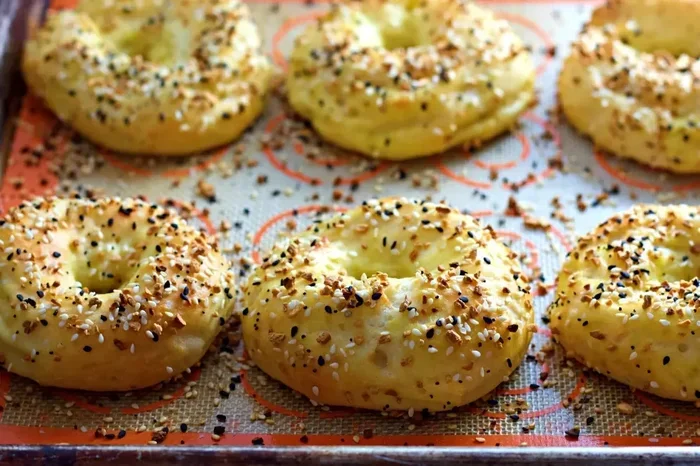
Now is the perfect time to add your bagel toppings. While the bagels are still wet from boiling, sprinkle on seeds, salt, or everything bagel seasoning. The moisture helps the toppings stick without needing egg wash. This is a simple trick that makes homemade bagels look professional and bakery quality.
Baking Bagels In The Oven Step By Step
Preheating Your Oven
Preheat your oven to 425°F (220°C). If you have a baking stone, place it on the middle rack while the oven heats up. The baking stone absorbs heat and transfers it directly to the bagels, which helps create a crispier crust. If you do not have a stone, an inverted baking sheet works just as well.
Make sure your oven is fully preheated before the bagels go in. A properly heated oven is essential for baking bagels in the oven with the right texture. The high heat sets the crust quickly while the inside stays soft and chewy.
The Baking Process
Place your boiled and topped bagels on the preheated baking stone or parchment lined baking sheet. Leave a little space between each bagel so the heat can circulate. Bake for 20 to 25 minutes, rotating the tray halfway through for even browning.
The bagels are done when they are deep golden brown on top and sound hollow when you tap the bottom. This hollow sound is a classic sign that the bagel baking temperature was right and the inside is properly cooked.
Here is a quick reference for oven settings:
- Oven temperature: 425°F to 450°F (220°C to 230°C)
- Bake time: 20 to 25 minutes
- Rack position: Middle rack
- Tray rotation: Halfway through baking
- Doneness indicator: Deep golden brown and hollow sounding
Cooling And Storing
Let the bagels cool on a wire rack for at least 20 minutes before slicing. Cutting into a hot bagel can make the inside gummy. Once cooled, homemade bagels can be stored in a paper bag for 2 to 3 days or in an airtight container for up to 5 days.
If you want to keep them longer, freeze bagels after they are completely cool. Wrap each one in plastic wrap and place them in a freezer bag. They will keep for up to 3 months. To reheat, toast from frozen in the oven at 350°F for 5 to 8 minutes. This brings back the fresh baked texture beautifully.
Toppings And Serving Ideas
Classic Bagel Combinations
Now that your oven baked bagels are ready, it is time to enjoy them. Here are some classic serving ideas that never go wrong:
- Plain bagel with cream cheese and smoked salmon
- Everything bagel with butter and honey
- Plain bagel with peanut butter and banana slices
- Sesame bagel with scrambled eggs and cheese
- Garlic bagel with whipped cream cheese and herbs
- Plain bagel with butter and jam for a sweet treat
The beauty of baking bagels at home is that you can make any flavor you want. Want a cinnamon raisin bagel? Add cinnamon and raisins to the dough. Want a blueberry bagel? Fold in fresh or frozen blueberries. Your kitchen, your rules.
Making Bagel Bites For Entertaining
Smaller bagel bites are perfect for parties and gatherings. Simply cut your boiled and baked bagels into quarters or thirds before baking. These bagel bites bake faster (about 15 minutes) and are easy for guests to grab and enjoy. Top them with mini toppings like micro herbs, tiny cheese cubes, or a smear of herbed cream cheese.
You can also make mini bagels using the same dough. Just use less dough per bagel and reduce the boiling time to about 20 seconds per side. These bite sized treats disappear fast at any party.
Common Mistakes To Avoid
Skipping The Boiling Step
The biggest mistake people make when how to bake a bagel in the oven is skipping the boil. Without boiling, you just get bread rolls. The boiling step is non-negotiable if you want real bagels with that chewy texture and glossy crust.
Using Too Much Flour
Adding too much flour makes bagels dense and heavy. The dough should be slightly tacky but not sticky. If you find yourself adding cup after cup of extra flour, your bagels will turn out more like bricks than the light, chewy treats you are aiming for.
Not Letting The Dough Rest Enough
Rushing the rising process leads to tough bagels with poor flavor. Give the dough enough time to rise properly. If you are in a hurry, use warm water and a warm spot in your kitchen. But do not skip the rest time entirely.
Baking At Too Low A Temperature
Baking bagels in the oven at a low temperature will give you pale, soft bagels that lack the signature crust. Use high heat and bake for the full recommended time. The golden brown color is your best indicator of success.
Expert Tips For Perfect Oven Baked Bagels
Use A Baking Stone For The Best Crust
A baking stone makes a noticeable difference in the crust quality. It stores heat and transfers it directly to the bottom of the bagel. If you do not have one, a cast iron skillet or an inverted heavy baking sheet can work as a substitute.
Add A Tray Of Water For Steam
Placing a tray of water on the bottom rack of your oven while baking adds steam. Steam helps create an extra crispy, shiny crust on your oven baked bagels. This is a technique used by professional bakers and it works wonderfully at home too.
Experiment With Different Flours
Try using a mix of bread flour and whole wheat flour for a nuttier flavor. You can also use rye flour for a more traditional Eastern European style homemade bagel. Each flour brings its own character to the final product.
Make A Big Batch And Freeze
Once you master the basic technique, make larger batches. Freeze bagels individually so you can toast one or two at a time whenever you want fresh bagels for breakfast. This saves time during busy mornings and ensures you always have fresh bagels on hand.
Frequently Asked Questions
Can I Bake Bagels Without Boiling Them First?
You can skip the boiling step, but the results will be more like dinner rolls than bagels. Boiling is what gives bagels their signature chewy texture and glossy crust. If you want authentic homemade bagels, do not skip this step.
How Long Do Fresh Baked Bagels Last?
Freshly baked bagels stay at their best for 2 to 3 days when stored in a paper bag at room temperature. In an airtight container, they last up to 5 days. For longer storage, wrap them tightly and freeze for up to 3 months.
What Temperature Should I Bake Bagels At?
Bake bagels in the oven at 425°F to 450°F (220°C to 230°C). This high heat creates the crispy golden brown crust while keeping the inside chewy and soft. Make sure your oven is fully preheated before the bagels go in.
Can I Use All Purpose Flour Instead Of Bread Flour?
Yes, you can use all purpose flour if you do not have bread flour. The bagels will be slightly less chewy but still delicious. Bread flour has more protein which gives bagels their signature dense, chewy texture, but all purpose flour works well for beginners.
How Do I Know When Bagels Are Done Baking?
The best way to tell is by color and sound. Oven baked bagels should be deep golden brown on top. Tap the bottom of a bagel, and it should sound hollow. If it sounds dense or flat, give it a few more minutes in the oven.
Can I Make Bagels Without Yeast?
Traditional bagels rely on yeast for their rise and texture. You can make quick bagel versions using baking powder, but they will not have the same chewy, dense texture. For authentic homemade bagels, yeast is the way to go.
Conclusion
How to bake a bagel in the oven is a skill that anyone can learn with a little practice. The process is straightforward, the ingredients are simple, and the results are incredibly rewarding. From mixing the dough to boiling and baking, each step builds toward that perfect chewy, golden brown bagel fresh from your oven.
Once you try baking bagels at home, you will never go back to store bought. The flavor, the texture, and the satisfaction of pulling a tray of warm bagels out of your oven is unbeatable. Start with a basic plain batch, get comfortable with the process, and then experiment with flavors and toppings.
Remember that great homemade bagels come from patience and attention to detail. Do not rush the rising time. Do not skip the boiling step. And make sure your oven is hot enough. Follow these guidelines and you will be enjoying bakery quality bagels in your own kitchen in no time.