How To Cook A Small Turkey Breast In The Oven Perfectly
Cooking a small turkey breast in the oven is simpler than you think. This guide walks you through every step, from prep to plating, so you get a juicy, flavorful bird every time. You will learn the ideal temperature, cooking time, and seasoning tricks that make all the difference. Whether it is for Thanksgiving or a weeknight dinner, this method guarantees tender, golden turkey breast with crispy skin.
Key Takeaways
- Perfect Temperature: Roast at 375°F for even cooking and juicy results.
- Timing Matters: A small turkey breast takes about 60 to 90 minutes depending on size.
- Resting Is Key: Let the turkey rest for 10 to 15 minutes before slicing to lock in juices.
- Seasoning Makes The Difference: Simple herbs, butter, and garlic elevate the flavor dramatically.
- Internal Temp Is Everything: Aim for 165°F at the thickest part to ensure food safety.
- Bone-In vs. Boneless: Both work well, but bone-in offers more flavor and moisture.
- Crispy Skin Starts With Drying: Pat the skin dry before seasoning for a golden, crunchy finish.
📑 Table of Contents
- How To Cook A Small Turkey Breast In The Oven Perfectly
- Why A Small Turkey Breast Is A Great Choice
- Choosing The Right Turkey Breast
- Preparing Your Turkey Breast For The Oven
- The Best Oven Temperature And Cooking Time
- How To Know When Your Turkey Breast Is Done
- Serving And Storing Your Turkey Breast
- Common Mistakes To Avoid When Cooking Turkey Breast
- Quick Tips For The Best Oven Turkey Breast
- Expert Insights On Oven Turkey Breast
- Conclusion
How To Cook A Small Turkey Breast In The Oven Perfectly
There is something special about a golden, oven-roasted turkey breast sitting on the holiday table. It smells incredible, looks beautiful, and tastes even better. But many people feel nervous about cooking turkey. They worry it will turn out dry or bland. The good news? Cooking a small turkey breast in the oven is one of the easiest things you can do in the kitchen. With the right temperature, timing, and a few simple tricks, you will pull out a perfectly juicy bird every single time.
This guide covers everything you need to know. We will talk about prep work, seasoning, oven temperature, cooking time, and how to tell when it is done. Whether you are a beginner or just looking to refine your technique, you will find practical advice here. Let us get started on making the best turkey breast you have ever tasted.
Why A Small Turkey Breast Is A Great Choice
A whole turkey can feel overwhelming. It takes up a lot of oven space. It also requires a lot of planning and carving skills. A small turkey breast solves all of those problems. It fits easily in most standard ovens. It cooks faster than a whole bird. And it is much easier to slice and serve. Small turkey breast cooking is perfect for a family of four or six. It is also ideal for Thanksgiving when you want something manageable but still impressive.
Another great thing about turkey breast is its versatility. You can make it for a holiday dinner, a Sunday roast, or even meal prep for the week. Leftover turkey makes amazing sandwiches and salads. When you roast turkey breast in the oven, you get a lean protein that is both healthy and satisfying. It is no wonder so many home cooks reach for a turkey breast when they want a crowd-pleasing meal.
Choosing The Right Turkey Breast
Before you start cooking, you need to pick the right cut. Not all turkey breasts are the same. Understanding your options helps you make the best choice for your meal.
Bone-In vs. Boneless Turkey Breast
A bone-in turkey breast has the rib bones still attached. This cut tends to be more flavorful because the bones add richness during roasting. It also holds moisture better, which means juicier results. The trade-off is that it takes a little longer to cook and can be trickier to slice.
A boneless turkey breast is easier to handle and slice. It cooks a bit faster since there is no bone to heat through. However, it can dry out more quickly if you are not careful. Many cooks wrap boneless breasts in bacon or brush them with butter to keep them moist.
Fresh vs. Frozen
You can buy turkey breast fresh or frozen. Fresh turkey breast tends to have better texture and flavor. Frozen works perfectly fine too, but you must plan ahead. A frozen turkey breast needs to thaw completely before cooking. The safest way to thaw is in the refrigerator for 24 to 48 hours. Never thaw turkey at room temperature, as this can lead to bacteria growth.
Size Matters
When shopping, look for a turkey breast that weighs between 3 and 5 pounds. This is the sweet spot for a small oven roast. A 4-pound breast typically serves four to six people comfortably. Always check the label for weight so you can plan your cooking time accurately.
Preparing Your Turkey Breast For The Oven
Proper preparation makes a huge difference in the final result. Taking a few extra minutes at this stage pays off big time. Here is how to get your turkey breast ready.
Step One: Thaw And Pat Dry
If your turkey breast is frozen, make sure it is fully thawed first. Once thawed, remove it from the packaging and pat it completely dry with paper towels. This step is crucial for getting crispy skin. Moisture on the surface creates steam, which prevents browning. The drier the skin, the crispier it gets.
Step Two: Season Generously
Seasoning is where you can get creative. A basic blend of salt, black pepper, garlic powder, and paprika works wonderfully. For a more aromatic profile, try adding rosemary, thyme, and sage. These classic herbs pair beautifully with turkey.
Here are some turkey breast seasoning ideas to try:
- Classic Herb Blend: Salt, pepper, garlic powder, onion powder, dried thyme, and dried rosemary.
- Citrusy Bright: Add lemon zest, orange zest, and a pinch of cumin for a fresh twist.
- Smoky And Savory: Use smoked paprika, chili powder, and a touch of brown sugar for a sweet-savory crust.
- Butter Herb: Soften butter with minced garlic, parsley, and salt. Slide it under the skin for extra juiciness.
For a bone-in breast, loosen the skin gently with your fingers and spread some butter directly on the meat. This adds incredible flavor and keeps things moist during roasting.
Step Three: Bring It To Room Temperature
Take the turkey breast out of the refrigerator about 30 to 45 minutes before cooking. Letting it sit at room temperature helps it cook more evenly. Cold meat going into a hot oven creates uneven cooking, with the outside overcooking before the inside is done. This simple step is one of the best oven-baked turkey tips you will ever follow.
The Best Oven Temperature And Cooking Time
Getting the temperature right is the most important part of how to cook a small turkey breast in the oven. Too high and the outside burns before the inside is done. Too low and the meat takes forever and can turn rubbery. The sweet spot for most small turkey breasts is 375°F.
Why 375°F Works So Well
At 375°F, the turkey cooks evenly throughout. The skin gets golden and crispy without burning. The meat stays tender and juicy inside. This temperature allows enough time for the heat to penetrate to the center while building a beautiful roasted exterior.
Some recipes call for starting at a higher temperature, like 425°F, for the first 20 minutes to crisp up the skin. Then you lower it to 350°F or 375°F for the rest of the cook. This two-step method works great if you want extra-crispy skin.
Cooking Time Guidelines
Cooking time depends on the weight of your turkey breast and whether it is bone-in or boneless. Here is a general guide:
- 3-pound breast: About 60 to 75 minutes at 375°F.
- 4-pound breast: About 75 to 90 minutes at 375°F.
- 5-pound breast: About 90 to 110 minutes at 375°F.
These times are estimates. The real way to know your turkey is done is by using a meat thermometer. Insert it into the thickest part of the breast, avoiding the bone if you have one. The internal temperature should read 165°F.
For a juicier result, some cooks pull the turkey out at 160°F and let carryover cooking bring it up to 165°F as it rests. This prevents overcooking and keeps the meat incredibly tender.
Covering With Foil
You do not need to cover your turkey breast with foil while it cooks. In fact, leaving it uncovered allows the skin to crisp up. If you notice the top is browning too fast, you can loosely tent it with foil for the last 15 to 20 minutes. This is a common turkey breast in oven trick that prevents burning without steaming the skin.
How To Know When Your Turkey Breast Is Done
Timing is helpful, but temperature is the only reliable way to tell if your turkey is fully cooked. Relying on time alone can lead to undercooked or overcooked meat. Here is what you need to know.
The Meat Thermometer Method
A digital meat thermometer is the single best tool for cooking turkey. Insert it into the thickest part of the breast, making sure it does not touch the bone. You want the reading to hit 165°F. That is the USDA-recommended safe internal temperature for poultry.
For the juiciest results, aim for 160°F to 162°F and pull the turkey out. The temperature will rise a few degrees as the meat rests. This is called carryover cooking, and it makes a real difference in texture.
Visual And Touch Cues
You can also check the turkey visually. The juices should run clear, not pink. The skin should be a deep golden brown. When you press the thickest part of the breast with your finger, it should feel firm but still slightly springy. If it feels mushy or soft, it needs more time. If it feels very hard, it may be overcooked.
Resting The Turkey Breast
Once your turkey is out of the oven, resist the urge to slice it right away. Resting is one of the most important steps in roasting turkey breast in the oven. Let the breast sit on a cutting board for at least 10 to 15 minutes. During this time, the juices redistribute throughout the meat. When you finally cut into it, every slice will be moist and flavorful.
Tent the turkey loosely with foil while it rests. This keeps it warm without trapping too much steam, which would make the skin soggy.
Serving And Storing Your Turkey Breast
Now that your turkey is cooked to perfection, it is time to serve it. Here are some tips for the best presentation and storage.
How To Slice For Serving
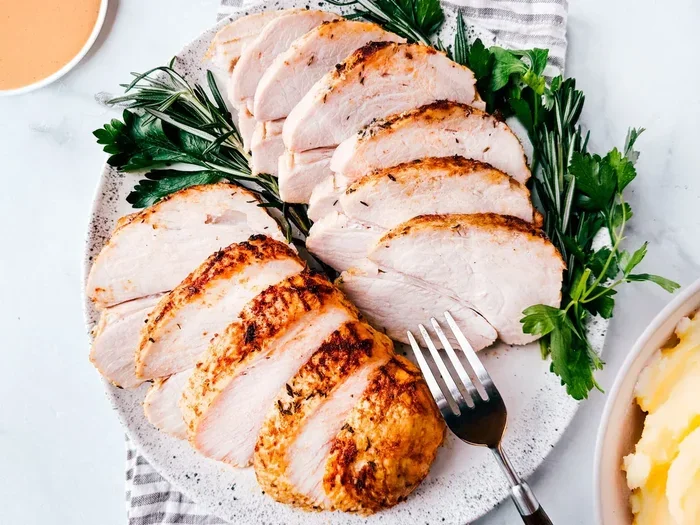
For a bone-in breast, start by removing the meat from the bones. Slice against the grain for the most tender pieces. For a boneless breast, simply cut even slices about half an inch thick. Cutting against the grain shortens the muscle fibers, making each bite easier to chew.
Arrange the slices on a warm platter. Drizzle any accumulated juices from the cutting board over the top for extra flavor. Garnish with fresh herbs or a sprinkle of chopped parsley for a beautiful presentation.
Storing Leftovers
Leftover turkey keeps well in the refrigerator for up to four days. Store it in an airtight container. You can also freeze cooked turkey breast for up to three months. When reheating, add a splash of broth or water to keep it from drying out. Microwaving on low power or reheating in a covered dish in the oven at 300°F works best.
Meal Ideas With Leftover Turkey
Do not let leftovers go to waste. Here are some fun ways to use them:
- Turkey Sandwiches: Layer sliced turkey with cranberry sauce, stuffing, and mayo on toasted bread.
- Turkey Soup: Simmer leftover turkey with vegetables and broth for a comforting soup.
- Turkey Stir-Fry: Slice the turkey thin and toss it with vegetables and soy sauce.
- Turkey Salad: Chop the turkey and mix it with mayo, celery, grapes, and nuts.
Common Mistakes To Avoid When Cooking Turkey Breast
Even experienced cooks make mistakes. Knowing what to avoid helps you get better results every time.
Skipping The Dry Skin Step
One of the biggest mistakes is not drying the skin properly. Wet skin steams instead of roasting, which means no crispy finish. Always pat the turkey dry thoroughly before seasoning. For even better results, leave the uncovered turkey in the refrigerator overnight. This dries the skin out even more and leads to maximum crispiness.
Overcooking The Meat
Overcooked turkey breast turns dry and tough very quickly. This happens when people rely solely on cooking time instead of temperature. Always use a meat thermometer. It removes all guesswork and takes the stress out of cooking.
Not Letting The Turkey Rest
Cutting into the turkey immediately after it comes out of the oven is a common error. All those juices will run out onto the cutting board instead of staying in the meat. Give it the full 10 to 15 minutes of resting time. Your patience will be rewarded with every bite.
Using Too Much Seasoning
Seasoning is important, but too much salt can overpower the natural flavor of the turkey. Start with a light hand and adjust to taste. You can always add more, but you cannot take it away.
Quick Tips For The Best Oven Turkey Breast
Here are some quick turkey breast tips to keep in mind:
- Always preheat your oven before putting the turkey in.
- Use a roasting pan with a rack for even air circulation.
- Baste the turkey once or twice during cooking for extra moisture.
- Add vegetables like onions, carrots, and celery to the pan for a one-pan meal.
- Let the turkey rest before slicing to lock in juices.
- Save the pan drippings for gravy or sauce.
These small steps take very little effort but make a noticeable difference in the final dish. They are the kind of details that separate a good turkey from a great one.
Expert Insights On Oven Turkey Breast
Professional chefs often share the same core advice when it comes to roasting turkey breast. Keep the temperature steady, use a thermometer, and do not rush the resting period. One chef I spoke with swears by rubbing the breast with olive oil and kosher salt the night before. This dry brine method draws out moisture, which then gets reabsorbed into the meat. The result is incredibly seasoned and juicy turkey from edge to edge.
Another expert recommends adding a handful of aromatics like onion quarters, garlic cloves, and fresh herbs inside the cavity of a bone-in breast. As the turkey roasts, these aromatics release their fragrance and infuse the meat with subtle flavor. It is a simple trick that elevates the dish without any extra effort.
The consensus among cooking professionals is clear: how to cook a small turkey breast in the oven is all about patience and attention to detail. Follow the basics, trust your thermometer, and resist the urge to peek too often. The oven does the work for you.
Conclusion
Learning how to cook a small turkey breast in the oven is a skill that will serve you for years. It is a rewarding process that delivers impressive results with minimal stress. From choosing the right cut and seasoning generously to monitoring the temperature and letting the meat rest, each step plays a vital role in the final outcome.
Remember to roast at 375°F, aim for an internal temperature of 165°F, and always give your turkey time to rest before slicing. These simple principles guarantee juicy, flavorful, golden-brown turkey breast every time. Whether you are preparing a holiday feast or a cozy family dinner, this method has you covered.
Now that you have all the knowledge, it is time to put it into practice. Grab a small turkey breast, fire up your oven, and enjoy the process. You will be surprised at how easy and satisfying it is to create a restaurant-quality roast right in your own kitchen. Happy cooking!
Frequently Asked Questions
How long does it take to cook a small turkey breast in the oven?
A small turkey breast weighing 3 to 5 pounds typically takes 60 to 110 minutes at 375°F. The exact time depends on whether it is bone-in or boneless and the specific weight. Always use a meat thermometer to check for doneness at 165°F internal temperature.
What temperature should I cook a small turkey breast at?
The recommended oven temperature for cooking turkey breast is 375°F. This temperature ensures even cooking, crispy skin, and juicy meat. Some cooks start at a higher temperature for the first 20 minutes to crisp up the skin, then lower it to 375°F for the remainder of the cook.
Should I cover my turkey breast with foil while cooking?
No, you do not need to cover turkey breast with foil. Leaving it uncovered allows the skin to become crispy and golden. If the top is browning too quickly, you can loosely tent it with foil for the last 15 to 20 minutes of cooking time.
How do I keep turkey breast from drying out in the oven?
To keep turkey breast moist, pat the skin dry before seasoning, use a meat thermometer to avoid overcooking, and let the breast rest for 10 to 15 minutes after cooking. Brining the breast overnight or rubbing it with butter under the skin also helps retain moisture during roasting.
Can I cook a frozen turkey breast directly in the oven?
It is best to thaw your turkey breast before cooking for even results. Thaw it in the refrigerator for 24 to 48 hours. If you must cook from frozen, add about 50 percent more cooking time and make sure the internal temperature reaches 165°F in the thickest part of the meat.
What is the best seasoning for a small turkey breast?
A classic blend of salt, black pepper, garlic powder, onion powder, and dried herbs like thyme and rosemary works beautifully for turkey breast. You can also use a butter herb paste under the skin for extra flavor and moisture. Citrus zest and smoked paprika are great options for a more unique flavor profile.