Can You Cook With Glass In The Oven Without Breaking It
Can You Cook With Glass In The Oven safely by choosing oven-safe, tempered glass bakeware and avoiding sudden temperature changes. Yes, you can cook with glass in the oven, but it requires the right type of glass and careful handling. This guide will show you exactly how to use glass dishes without breaking them, including temperature limits and best practices.
Can You Cook With Glass In The Oven? The short answer is yes, but only if you follow a few simple rules. Glass bakeware has been a kitchen staple for decades, and many home cooks love the even heating and easy cleanup it provides. However, a wrong move can turn a perfect recipe into a shattered mess. This article will walk you through everything you need to know about using glass in the oven safely.
Whether you are baking a casserole, roasting vegetables, or making a cake, the right glass dish can make your meal better. The key is understanding which glass is safe, how to handle it, and what mistakes to avoid. I will share practical tips, expert insights, and common pitfalls so you can bake with confidence. By the end, you will know exactly how to use glass in the oven without breaking it.
Let us dive into the world of oven-safe glass and find out how to keep your bakeware intact for years to come.
Key Takeaways
- Only oven-safe glass belongs in a hot oven: Check for labels like “oven-safe” or “tempered” before baking.
- Avoid thermal shock at all costs: Never move glass from the fridge to a preheated oven or vice versa.
- Respect temperature limits: Most glass bakeware handles up to 350–400°F (175–200°C), but always verify.
- Preheat the oven with the dish inside: This helps the glass heat gradually and reduces breakage risk.
- Inspect for chips or cracks first: Even tiny flaws can cause glass to shatter under heat.
- Use glass for even browning: Glass pans promote steady heat, making them great for casseroles and desserts.
📑 Table of Contents
Why Glass Bakeware Is So Popular
Glass pans have a special place in many kitchens. They look beautiful on the table, and they serve food right from the oven to the dining table. You do not need to transfer your dish to a different container. That alone saves time and dishes.
Another big reason people love glass bakeware is the way it cooks food. Glass heats up slowly but holds heat well. This gives you even browning on the bottom and sides of your dish. Many bakers say a glass baking dish makes the crispiest lasagna or the most golden brownies. You can also see through the glass, which helps you watch your food without opening the oven door and losing heat.
Glass is also non-reactive. Unlike some metals, it will not change the taste of acidic foods like tomatoes or lemon sauce. That makes it a great choice for casserole dishes and baked pasta. Plus, most glass bakeware goes straight from the oven to the dishwasher, which makes cleanup a breeze.
The Appeal of Glass Pans
Here is why so many home cooks reach for a glass pan:
- Attractive serving: You can bake and serve in the same dish.
- Even cooking: Glass provides steady, consistent heat.
- Non-reactive surface: Safe for acidic foods.
- Easy to clean: Most are dishwasher safe.
- Transparency: You can check browning without opening the door.
How Glass Heats Food Differently
Metal pans heat up fast and cool down quickly. Glass takes longer to warm up, but it stays hot longer. This means your food keeps cooking a little after you take it out of the oven. That can be a good thing for casseroles that need to stay warm at the table. However, it also means you need to adjust your baking time slightly. Many recipes written for metal pans will need a few extra minutes in a glass dish. Keep that in mind when you are baking cookies or cakes.
Can You Cook With Glass In The Oven? Only If You Pick the Right Glass
Can You Cook With Glass In The Oven? The answer depends entirely on the type of glass. Not all glass is created equal. Some glass can handle high oven temperatures, while other glass will crack or shatter the moment it heats up. So how do you know which one is safe?
Tempered Glass vs. Regular Glass
Tempered glass is the gold standard for oven use. It is made through a special heating and cooling process that makes it much stronger. Tempered glass can handle temperatures up to 400–450°F (200–230°C). It also resists thermal shock better than regular glass. If you see a label that says “tempered” or “toughened,” you are likely safe to use it in the oven.
Regular glass (also called soda-lime glass) is not designed for high heat. It will break easily when exposed to high temperatures or sudden changes in heat. You should never put a regular glass dish, a glass jar, or a drinking glass in a hot oven. Even if it looks sturdy, it can explode from the heat.
Another type to know about is borosilicate glass. This is the material used in high-quality laboratory glass and some premium bakeware brands. Borosilicate glass has a very low coefficient of thermal expansion, which means it barely expands when heated. That makes it extremely resistant to thermal shock. Some brands like Pyrex Original (the older formula) used borosilicate glass. Today, many Pyrex products in the US are made of tempered soda-lime glass, but they are still oven-safe up to 425°F. Always check the product label.
Oven-Safe Labels and Brands
When you shop for glass bakeware, look for clear oven-safe labels. The packaging or the bottom of the dish will tell you the maximum temperature. Trusted brands include Pyrex, Anchor Hocking, and Libbey. These companies test their glass specifically for oven use. If a dish does not have an oven-safe label, do not assume it is safe. When in doubt, contact the manufacturer or choose a different dish.
Here is a quick list of what to look for:
- Oven-safe up to 350°F or 400°F: Most standard glass bakeware handles this range.
- Tempered or toughened glass: Always safe for oven use.
- Borosilicate glass: Premium and highly heat-resistant.
- No label or “decorative glass”: Do not put it in the oven.
The Science of Thermal Shock
Thermal shock is the number one enemy of glass bakeware. It happens when different parts of the glass expand or contract at different rates because of a sudden temperature change. This creates stress inside the glass, and the glass cracks or shatters.
What Causes Glass to Break
Imagine placing a cold glass dish straight into a hot oven. The outside of the glass heats up fast and tries to expand, while the inside is still cold and tight. That uneven expansion causes tiny fractures. The same thing happens when you take a hot glass dish and set it on a cold, wet countertop. The bottom cools instantly while the top stays hot. The glass contracts too fast, and it breaks.
Even placing a hot glass dish in water to cool it down quickly can cause thermal shock. I know it is tempting to speed up cooling, but it is not worth the risk. Glass needs time to adjust to temperature changes. That is why gradual heating is so important.
Temperature Limits and Safe Ranges
Most oven-safe glass bakeware can handle temperatures up to 350–400°F (175–200°C). Some brands claim their dishes are safe up to 450°F, but it is always best to stay at or below 400°F for everyday baking. Here is a simple guide:
- 350°F (175°C): Safe for almost all oven-safe glass.
- 400°F (200°C): Safe for most tempered glass bakeware.
- 450°F (230°C): Only for borosilicate glass or specific high-temp brands.
- Broiler or direct flame: Never use glass under a broiler or on a stovetop burner.
The oven temperature matters, but so does the starting temperature of the dish. Always let your glass dish come to room temperature before placing it in the oven.
Expert Insight: “I always tell my cooking students to treat glass like a guest at a party. You do not want to throw it into a hot environment suddenly. Let it warm up gradually, and it will behave beautifully,” says Chef Maria Torres, a baking instructor with over 15 years of experience.
How to Cook With Glass in the Oven Without Breaking It
Can You Cook With Glass In The Oven without breaking it? Absolutely. The secret is all in the preparation and handling. Follow these simple steps every time, and your glass bakeware will last for years.
Step-by-Step Guide
- Check the label: Make sure your dish is marked oven-safe. Look for the maximum temperature rating.
- Inspect the glass: Hold the dish up to the light and look for chips, cracks, or scratches. Even a tiny chip can grow into a big crack when heated. If you see any damage, do not use the dish.
- Bring the dish to room temperature: Take it out of the cabinet or pantry. If it has been stored in a cold garage or basement, let it sit on the counter for 15–20 minutes.
- Place the dish in a cold oven: This is a key step. Put your empty or filled glass dish into the oven before you turn it on. Then set the oven to the desired temperature. As the oven heats up, the glass heats up with it. This is called preheating oven with the dish inside, and it prevents thermal shock.
- Use a dry, flat surface: When you take the dish out, place it on a dry oven mitt, a wooden board, or a folded towel. Never set hot glass on a cold, wet, or metal surface.
- Let it cool naturally: Allow the glass dish to cool to room temperature before washing it or putting it away. Do not run cold water over a hot glass dish.
Quick Tips for Success
- Add liquid to the bottom of the dish: If you are baking a dry dish like a casserole, a small amount of liquid at the bottom helps distribute heat evenly.
- Do not use glass under the broiler: The direct, intense heat from the broiler element will almost certainly break the glass.
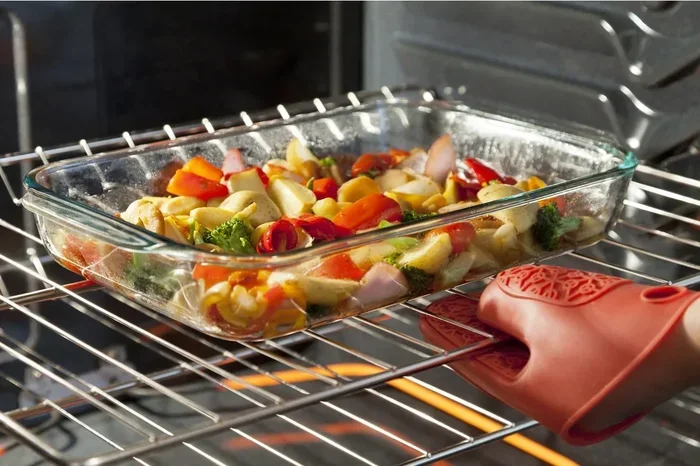
- Use oven mitts: Glass handles get just as hot as the dish. Always use thick, dry oven mitts.
- Avoid sudden temperature swings: Do not move a glass dish from the oven to a cold countertop or near a drafty window.
- Replace old glass: Glass becomes more fragile over time, especially if it has been dropped or knocked. Replace any dish that has been in the family for many years and shows signs of wear.
Common Mistakes That Break Glass Bakeware
Even with the best glass dish, one wrong move can cause a disaster. Here are the most common mistakes home cooks make, and how to avoid them.
Cold-to-Hot Shocks
This is the biggest mistake. You pull a glass baking dish out of the refrigerator, place it in a preheated 400°F oven, and walk away. Within minutes, the glass cracks from the shock. The same thing happens if you take a hot dish and put it on a cold, wet surface. Always let the dish come to room temperature before it goes into the oven. And always set hot glass on a heat-safe surface.
Overheating Empty Pans
Heating an empty glass dish in the oven can cause it to overheat and break. Glass needs the food or liquid inside to absorb and distribute heat evenly. If you preheat an empty glass pan, you risk thermal stress. If you must preheat a pan, add a small amount of oil or water first.
Using the Wrong Size or Shape
Glass dishes with very high sides or small bases can heat unevenly. The corners and edges get hotter than the center. Stick to dishes with low to medium sides for even baking. Also, never place a glass dish directly on a burner or heating element. Glass is not designed for direct stovetop heat.
Ignoring the Manufacturer’s Instructions
Every glass bakeware brand has specific guidelines. Some say “oven-safe up to 350°F,” while others say “safe up to 450°F.” Ignoring these instructions is a recipe for breakage. When you buy a new glass baking dish, keep the box and the instructions. They contain valuable information about maximum temperature and safe use.
Glass vs. Metal: Which Is Better for Baking?
Many bakers wonder whether they should use glass or metal pans. Both have advantages and disadvantages. The best choice depends on what you are cooking and what you prefer.
Pros and Cons of Glass Bakeware
- Pros: Even heat distribution, attractive for serving, non-reactive, easy to see the bottom of your dish, dishwasher safe.
- Cons: Slower to heat up, can break if mishandled, not safe under the broiler, may need longer baking times.
Pros and Cons of Metal Pans
- Pros: Heats up quickly, great for browning and crisping, durable, safe under the broiler, lightweight.
- Cons: Can react with acidic foods, may cause uneven browning if the pan is dark, dents easily, often not dishwasher safe.
When to Use Each
Use a glass baking dish when you want even cooking and easy serving. It is perfect for casseroles, lasagna, cobblers, and baked eggs. Use a metal pan when you want a crispy crust on a pie or a quick sear on roasted vegetables. For cakes, both work well, but glass gives you a more even bake, while metal gives you a darker crust.
| Feature | Glass Bakeware | Metal Pan |
|---|---|---|
| Heat Distribution | Even and steady | Fast, can be uneven |
| Browning | Moderate, lighter bottom | Excellent, darker crust |
| Durability | Can break or shatter | Dents but does not shatter |
| Weight | Heavier | Lighter |
| Oven-Safe Temperature | Up to 400°F (200°C) | Up to 500°F+ (260°C+) |
| Ease of Cleaning | Dishwasher safe, non-reactive | May need hand washing |
| Broiler Safe | No | Yes |
Ultimately, the best choice is the one that fits your recipe and your comfort level. Many experienced cooks own both glass and metal pans and use them for different jobs. Can You Cook With Glass In The Oven and get great results? Yes, as long as you pick the right dish and treat it with care.
Conclusion
Using glass in the oven is safe and rewarding when you follow a few simple rules. Can You Cook With Glass In The Oven without breaking it? Absolutely. Choose oven-safe, tempered or borosilicate glass. Always let the dish come to room temperature. Place it in a cold oven and allow it to heat gradually. Never subject it to sudden temperature changes, and never use it under the broiler. Inspect your glass bakeware for damage before each use, and replace old or chipped dishes. With these practices, your glass dishes will serve you well for many years of delicious, even baking.
Remember, glass bakeware is a wonderful tool in the kitchen. It gives you beautiful, even results and makes serving a breeze. Treat it with respect, and it will never let you down. Happy baking!
Frequently Asked Questions
Can any glass dish go in the oven?
No, only glass that is specifically labeled as oven-safe should go in the oven. Regular glass, decorative glass, and glass jars are not designed for high heat and can shatter. Always check the manufacturer’s label before using any glass dish in the oven.
What temperature can glass bakeware withstand?
Most oven-safe glass bakeware can handle temperatures up to 350–400°F (175–200°C). Some borosilicate glass dishes can withstand up to 450°F (230°C). Always check the product label for the specific maximum temperature rating.
Why did my glass pan crack in the oven?
The most common reason is thermal shock. This happens when the glass experiences a sudden temperature change, such as moving from the fridge to a hot oven or placing a hot pan on a cold surface. Gradual heating and cooling prevent this.
Is it safe to put a glass lid in the oven?
Yes, if the lid is made of oven-safe glass and is rated for the temperature you are using. Glass lids from brands like Pyrex and Anchor Hocking are generally safe for oven use up to 350–400°F. Always check the lid’s heat rating before using it.
Can I use a glass dish on the stovetop?
No, glass bakeware is not designed for direct stovetop heat. Placing a glass dish on a burner or heating element can cause it to crack or shatter instantly. Glass is meant for oven use only, and should never be used on the cooktop.
How do I clean glass bakeware without damaging it?
Let the dish cool completely before washing. Most glass bakeware is dishwasher safe, but hand washing with warm soapy water is also fine. Avoid using abrasive scrubbers or pouring cold water over a hot dish, as these can cause thermal shock and micro-cracks over time.