How Ling To Bake Bacon In Oven For Perfect Crispy Results
Discover how Ling to bake bacon in oven and enjoy perfectly crispy strips without any mess or stress. This complete guide walks you through everything from choosing the right pan to nailing the ideal oven temperature. Whether you are a beginner or a seasoned cook, you will find simple tips and tricks that make oven-baked bacon foolproof and delicious every single time.
Key Takeaways
- Low and slow wins: Baking bacon at 400°F gives you even, crispy results without watching the pan.
- Line your sheet pan: Using foil or parchment makes cleanup a breeze and prevents sticking.
- Single layer matters: Spacing bacon strips out ensures every piece crisps up evenly.
- Drain on a rack: Lifting bacon off the pan while it cools keeps the bottom nice and crunchy.
- Save the grease: Bacon fat is gold for cooking eggs, potatoes, and more.
- Timing is flexible: Thinner bacon takes 12-15 minutes, while thick-cut needs 18-22 minutes.
- Practice makes perfect: Once you try oven-baked bacon, you will never go back to the stovetop.
📑 Table of Contents
- Why Baking Bacon In The Oven Is The Best Method
- What You Need To Bake Bacon In Oven
- Step By Step Guide To Bake Bacon In Oven
- Temperature And Time Settings For Perfect Bacon
- Tips For Getting Ultra Crispy Bacon Every Time
- Common Mistakes To Avoid When Baking Bacon
- How To Clean Up After Baking Bacon
- How To Store And Reheat Oven Baked Bacon
- Frequently Asked Questions About Baking Bacon
- Final Thoughts On Baking Bacon In The Oven
Why Baking Bacon In The Oven Is The Best Method
There is something deeply satisfying about pulling a tray of golden, crispy bacon out of the oven. If you have ever stood over a hot skillet, splattering grease everywhere, you know the struggle. How Ling to bake bacon in oven changes all of that.
Oven-baked bacon is hands down the easiest way to cook bacon for a crowd. You lay the strips out, pop the tray in, and let the oven do the work. No flipping. No monitoring. No splatter burns on your wrists. It is truly one of the best kitchen shortcuts you can learn.
Another big win is even cooking. When bacon cooks on a stovetop, the edges often burn while the middle stays floppy. In the oven, heat surrounds every strip equally. This means crispy bacon from edge to edge, every single time.
Many home cooks swear by the oven method once they try it. It is faster than frying batches on the stove, and you can cook a full pound of bacon at once. Whether you are making breakfast for family or prepping for a weekend brunch, oven baked bacon saves time and energy.
The best part? You barely have to think about it. Set a timer, walk away, and come back to perfectly cooked strips. Once you master this method, you will wonder how you ever cooked bacon any other way.
Who Should Learn This Method
Anyone who cooks bacon regularly benefits from the oven approach. Busy parents love it because it frees up stovetop space. Meal preppers appreciate being able to cook a large batch at once. And if you hate cleaning greasy pans, the oven method is a game changer.
What You Need To Bake Bacon In Oven
Before you start, gather a few simple supplies. You do not need any fancy equipment. Most people already have everything in their kitchen right now.
Essential Tools And Ingredients
- Baking sheet: A standard half-sheet pan works perfectly. Go for a rimmed sheet to catch any drips.
- Aluminum foil or parchment paper: Both work great for lining the pan. Parchment is slightly better for easy cleanup.
- Bacon strips: Any brand or type works. Thick-cut and thin-cut both bake beautifully.
- A cooling rack (optional but recommended): This helps drain excess grease while the bacon cools.
- Tongs: Handy for moving hot bacon strips safely.
Choosing The Right Bacon
Not all bacon is created equal. Thin-cut bacon bakes faster and gets extra crispy. Thick-cut bacon takes a bit longer but stays chewier in the middle. Applewood-smoked bacon adds a lovely flavor, and hickory-smoked bacon brings a stronger, smokier taste.
If you like your bacon very crispy, go with thin-sliced. If you prefer a chewier bite, thick-cut is the way to go. You can even try turkey bacon in the oven, though it behaves a little differently and cooks faster.
Step By Step Guide To Bake Bacon In Oven
Now let us get into the actual process. How Ling to bake bacon in oven is simpler than you think. Follow these steps and you will have perfect results.
Step 1: Preheat Your Oven
Turn your oven to 400°F (200°C). This is the sweet spot for most bacon recipes. Preheating ensures the oven is at the right temperature before the bacon goes in. This leads to more even cooking from the start.
Step 2: Line Your Baking Sheet
Take your half-sheet pan and line it with foil or parchment paper. This step is not optional if you hate scrubbing baked-on grease. Lining the pan also prevents the bacon from sticking, which makes transferring the strips much easier later.
Step 3: Arrange The Bacon Strips
Lay the bacon strips out in a single layer. Do not overlap them. Each strip should have its own space on the pan. Overlapping causes some pieces to steam instead of crisp, and you end up with uneven results.
If your pan is small, cook the bacon in two batches. It is better to wait a few extra minutes than to crowd the pan and ruin the texture.
Step 4: Place In The Oven
Slide the baking sheet onto the middle oven rack. This position allows hot air to circulate evenly around the bacon. If you place it too high or too low, you risk uneven cooking or burning on one side.
Step 5: Set A Timer And Walk Away
Set a timer for about 15 minutes. Oven baked bacon does not need constant attention. You can check on it at the 12-minute mark to see how it is progressing. Every oven runs a little differently, so keep an eye on it the first few times you try this method.
Step 6: Check For Doneness
At 15 minutes, look at the bacon. It should be golden brown and the edges should be starting to curl. If you like your bacon extra crispy, give it another 2-3 minutes. If you prefer it slightly chewy, pull it out now.
Step 7: Drain And Cool
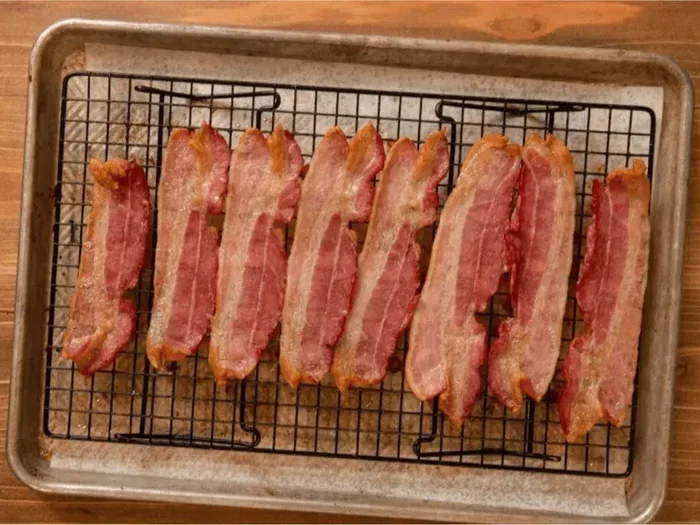
Remove the baking sheet from the oven. Use tongs to transfer the strips to a plate lined with paper towels. This absorbs excess grease from the bottom. For even better results, place the cooled bacon on a wire rack set over a sheet pan. The air circulates underneath, keeping the bottom crispy too.
Temperature And Time Settings For Perfect Bacon
Getting the temperature and timing right is the key to perfect crispy bacon. Here is a simple breakdown to guide you.
| Bacon Type | Temperature | Time Range | Texture |
|---|---|---|---|
| Thin-cut bacon | 400°F | 12-15 minutes | Very crispy |
| Regular-cut bacon | 400°F | 15-18 minutes | Golden and crispy |
| Thick-cut bacon | 400°F | 18-22 minutes | Crispy edges, chewy center |
| Turkey bacon | 375°F | 10-12 minutes | Crispy but lighter |
These times are starting points. Your oven may run hot or cool. The first time you try this method, check the bacon a couple of minutes early. You can always put it back for more time, but you cannot undo burnt bacon.
Why 400°F Works So Well
The 400°F temperature hits a sweet spot. It is hot enough to render the fat quickly and create that satisfying crunch, but not so hot that the bacon burns before the fat has a chance to melt out. Lower temperatures like 350°F work too, but they take longer and can result in flabbier strips.
If you want to experiment, try 375°F for a gentler cook. This works well for thick-cut bacon where you want the edges crispy but the center still slightly chewy. Some bakers even go up to 425°F for super thin bacon, but this requires closer monitoring.
Adjusting For Your Oven
Every oven has hot spots and cold zones. Convection ovens cook faster, so drop the temperature by about 25°F. If your oven runs hot, reduce the time slightly. If it runs cool, add a couple of minutes. After two or three batches, you will know exactly how your oven handles bacon oven recipes.
Tips For Getting Ultra Crispy Bacon Every Time
Everyone has their own idea of what perfect bacon looks like. Some people want it shatteringly crispy, while others like a gentle crunch with a bit of chew. Here are some tips to help you dial in your ideal texture.
Rinse The Bacon Before Cooking
This sounds unusual, but it works wonders. Rinse the bacon strips under cold water and pat them dry before laying them on the pan. This removes excess surface sugar and salt, which helps the bacon cook more evenly and reduces curling. The result is a flatter, more evenly crispy strip.
Use A Wire Rack
Instead of placing bacon directly on the sheet pan, set a wire cooling rack on top of the pan. The hot air flows underneath the bacon, cooking the bottom evenly too. This is the secret to uniformly crispy oven baked bacon without any soggy spots.
Do Not Overcrowd The Pan
It can be tempting to fit as many strips as possible on the pan. Resist this urge. Overlapping strips trap steam, which creates soft, chewy spots instead of crispy edges. Give each strip room to breathe.
Let The Bacon Rest On Paper Towels
As soon as the bacon comes out of the oven, transfer it to paper towels. This absorbs excess surface grease and keeps the bacon from getting soggy on the bottom. If you leave it sitting on the pan, the trapped steam will soften the crispy edges.
Save And Reheat Leftover Bacon
Got leftover crispy bacon? You can reheat it in the oven at 350°F for about 5 minutes. This brings back the crunch without drying it out. Microwaving works in a pinch, but the oven method keeps the texture much better.
Common Mistakes To Avoid When Baking Bacon
Even though oven-baked bacon is simple, a few common mistakes can trip you up. Here is what to watch out for.
Skipping The Parchment Or Foil
Some people skip lining the pan to save time. Do not do this. Bacon grease will bond to the bare metal, and scrubbing it off is miserable work. A quick layer of foil or parchment saves you serious cleanup time.
Setting The Temperature Too High
Cranking the oven up to 450°F or higher sounds like a shortcut, but it usually leads to burnt bacon. The fat has no time to render properly, and the edges turn black before the center is cooked. Stick with 400°F for the best balance of crispy and delicious.
Not Checking Early Enough
Every oven is different. Do not assume the timer will give you perfect results without a check. Start peeking at the 12-minute mark. This way you catch the bacon at exactly the right moment of golden-brown perfection.
Forgetting To Drain The Grease
Bacon produces a lot of rendered fat. If you leave the strips sitting in their own grease, they become soggy and lose that satisfying crunch. Always drain on paper towels or a wire rack after cooking.
Overcooking The Bacon
It is easy to get distracted and come back to find charcoal strips. Bacon continues to crisp as it cools, so pull it off the pan just before it reaches your ideal level of doneness. It will firm up as it sits on the paper towels.
How To Clean Up After Baking Bacon
One of the biggest advantages of baking bacon in oven is the easy cleanup. But you still need to handle the pan properly to keep it in good shape.
Let the baking sheet cool before you try to clean it. Hot grease is dangerous, and it can also stick more stubbornly to the pan if you rush the process. Once it is cool, the foil or parchment lifts right off, taking most of the grease with it.
If you forgot to line the pan, do not panic. Pour a small amount of hot water into the pan to loosen the hardened grease. Let it sit for 10-15 minutes, then wipe it clean. A little dish soap and a non-scratch sponge will handle the rest.
For the paper towels, simply throw them away. The grease-soaked towels go straight into the trash. Some people like to pour the collected bacon grease into a jar for cooking later. Bacon fat is amazing for frying eggs or roasting vegetables.
Repurposing Bacon Grease
Do not toss that rendered bacon fat! Strain it through a fine mesh sieve into a clean jar. Store it in the fridge, and you have a flavorful cooking fat ready for your next meal. Fry potatoes, sauté onions, or even use it to make scrambled eggs. It adds a rich, smoky depth that is hard to replicate with other fats.
How To Store And Reheat Oven Baked Bacon
Making a big batch of oven baked bacon is great, but what do you do with the leftovers? Proper storage keeps your bacon tasting great for days.
Let the bacon cool completely before storing it. Place the strips in an airtight container or zip-lock bag. Refrigerated bacon stays fresh for up to 5 days. You can also freeze it for up to 3 months. Just lay the strips flat on a baking sheet, freeze them until solid, and then transfer them to a freezer bag.
When you are ready to eat the leftover bacon, reheat it in the oven at 350°F for 4-5 minutes. This brings back the crunch much better than microwaving. The microwave tends to make bacon chewy and limp, while the oven restores that crispy texture you loved the first time around.
Using Leftover Bacon In Recipes
Extra bacon is never really wasted. Chop it up and toss it into salads, pasta, or mac and cheese. Crumble it over burgers or soups for added crunch. You can even blend it into breakfast burritos or fold it into a quiche. The possibilities are endless with leftover crispy bacon.
Frequently Asked Questions About Baking Bacon
Can You Bake Bacon At 350°F Instead Of 400°F?
Yes, you absolutely can. 350°F works well and gives you a slightly chewier result. It takes about 5-7 minutes longer than baking at 400°F, so plan accordingly. This lower temperature is a good choice if you prefer thicker-cut bacon with a tender center and crispy edges.
Do You Need To Flip Bacon When Baking It In The Oven?
No, you do not need to flip bacon in the oven. The heat circulates evenly around the strips, cooking both sides at the same time. This is one of the biggest advantages of the oven method compared to stovetop cooking. Just lay the strips out, set the timer, and let the oven do the work.
How Long Does It Take To Bake Bacon At 400°F?
Most bacon takes 15-18 minutes at 400°F. Thin-cut bacon may be done in 12-14 minutes, while thick-cut bacon can take up to 22 minutes. Start checking at the 12-minute mark and adjust based on your oven and the bacon thickness you prefer.
Is Parchment Paper Better Than Foil For Baking Bacon?
Both work well, but parchment paper has a slight edge. It prevents sticking more effectively and makes cleanup even easier. Foil works fine too, but bacon grease can sometimes bond to the foil, making it a bit harder to clean. Either option is a huge improvement over not lining the pan at all.
Can You Cook Frozen Bacon In The Oven?
Yes, you can bake frozen bacon in the oven. Just increase the cooking time by about 5 minutes. There is no need to thaw it first. The oven heat will cook it through just fine. Just make sure the bacon reaches an internal temperature of 145°F for food safety. Check the middle of the thickest strip to confirm it is fully cooked.
Why Does My Bacon Curl Up In The Oven?
Bacon curls because the fat renders out and the meat shrinks. This is completely normal. To reduce curling, you can rinse the bacon under cold water before cooking and pat it dry. Another trick is to press the strips down lightly with a second sheet of foil or a wire rack on top. This keeps the bacon flatter as it bakes and promotes more even crisping.
Final Thoughts On Baking Bacon In The Oven
Learning how Ling to bake bacon in oven is one of the simplest kitchen upgrades you can make. It is easy, reliable, and produces consistently crispy, delicious results. Once you try this method, you will never go back to standing over a hot skillet again.
The beauty of oven-baked bacon lies in its simplicity. You need very little equipment, almost no hands-on time, and you get a perfect batch every time. Whether you are cooking for one or feeding a crowd, this method scales effortlessly. A single sheet pan handles a full pound of bacon with room to spare.
Start with the basic steps outlined in this guide. Experiment with different temperatures and times to find your personal perfect texture. Try thick-cut for a hearty chew or thin-cut for maximum crunch. Once you find your sweet spot, you will have a go-to breakfast staple that never fails.
Remember to line your pan, use a wire rack for best results, and always save that delicious bacon grease. It is a free flavor booster that elevates all kinds of dishes. And when you have leftover crispy bacon, store it properly so you can enjoy it for days.
Oven baked bacon is more than just a recipe. It is a lifestyle upgrade for anyone who loves breakfast. So preheat your oven, lay out those strips, and enjoy the easy, satisfying process of cooking bacon the smart way. Your taste buds and your cleanup routine will both thank you.