How To Clean Enamel Oven With Baking Soda And Vinegar
Learning how to clean enamel oven with baking soda and vinegar is the simplest and most affordable way to restore your oven’s shine. This natural method tackles grease, baked-on food, and stubborn stains without harsh chemicals. You will discover a safe, effective cleaning routine that protects your oven’s enamel coating. The process requires only two common household ingredients and about 30 minutes of active work. Read on to master the easiest oven cleaning hack that actually works.
Your oven works hard every day. It bakes your favorite meals, roasts Sunday dinners, and crisps up snacks. But all that cooking leaves behind a mess. Grease splatters, food spills, and carbonized grime build up inside over time. If you own an enamel oven, you know the struggle of keeping it looking clean.
The good news? You do not need expensive chemical cleaners. Baking soda and vinegar are two of the most effective and affordable cleaning agents available. They work together to break down tough stains, dissolve grease, and leave your oven smelling fresh. This guide walks you through every step of the process.
Whether you are dealing with light residue or baked-on food that has been there for months, this method delivers real results. Let us dive into the simplest and safest way to bring your oven back to life.
Key Takeaways
- Baking soda and vinegar are safe, natural cleaners that effectively dissolve grease and grime from enamel ovens without damaging the surface.
- The paste method is the most powerful technique for lifting tough baked-on stains and carbonized food residue from oven walls.
- Regular maintenance prevents buildup and makes deep cleaning sessions faster and far less frustrating.
- Never use abrasive scrubbers on enamel as they can scratch and permanently damage the protective coating.
- Cleaning oven racks separately ensures thorough results and extends the life of your entire appliance.
- Vinegar activates the baking soda reaction to create a bubbling action that lifts dirt from hard-to-reach corners.
- A monthly cleaning schedule keeps your oven fresh, odor-free, and performing at its best.
📑 Table of Contents
- Why Baking Soda And Vinegar Work Best For Enamel Ovens
- What You Need Before You Start
- Step-By-Step Guide To Cleaning Your Enamel Oven
- How To Tackle Stubborn Stains And Grease
- Cleaning The Oven Door And Racks
- Tips To Keep Your Enamel Oven Sparkling
- Common Mistakes To Avoid When Cleaning Your Enamel Oven
- Comparison Table: Baking Soda And Vinegar Vs Commercial Cleaners
- How Often Should You Clean Your Enamel Oven
- Frequently Asked Questions
- Final Thoughts
Why Baking Soda And Vinegar Work Best For Enamel Ovens
Before you start scrubbing, it helps to understand why these two ingredients are so effective. Baking soda is a mild alkali that breaks down grease and dirt. It is gentle enough for enamel surfaces but strong enough to lift stubborn stains. When mixed with water, it forms a thick paste that clings to oven walls and does the heavy lifting.
Vinegar is a natural acid that cuts through grease and dissolves mineral deposits. When you spray vinegar onto baking soda paste, the fizzing reaction creates tiny bubbles. These bubbles work into crevices and corners, lifting dirt and grime effortlessly. Together, they form a powerful natural oven cleaner that is safe for your family and your appliance.
Unlike commercial oven cleaners, this combination does not emit toxic fumes. It is non-toxic, biodegradable, and inexpensive. You probably already have both ingredients in your kitchen pantry. That makes this the most convenient oven cleaning hack you will ever use.
Understanding Enamel Coating
Enamel ovens have a smooth, glass-like interior coating. This coating is designed to resist stains and make cleaning easier. However, it is not indestructible. Harsh chemical cleaners and rough scrubbers can damage the enamel over time. That is why choosing a gentle method matters so much.
Enamel coating care starts with using the right cleaning agents. Baking soda is non-abrasive when used correctly. Vinegar is mild and safe. Together, they clean effectively without scratching or dulling the surface. This makes them the ideal choice for regular enamel oven cleaning routines.
What You Need Before You Start
One of the best things about this method is how simple it is to set up. You do not need special tools or expensive products. Here is your complete shopping and preparation list.
Ingredients And Supplies
- Baking soda — about half a cup for a standard oven
- White vinegar — one cup, preferably undiluted
- Warm water — two cups for making the paste
- Spray bottle — for applying vinegar evenly
- Soft cloth or sponge — microfiber works best
- Rubber gloves — to protect your hands
- Plastic spatula or scraper — for lifting dried grime
- Old towel or newspaper — to line the oven bottom
Quick Prep Steps
Start by removing the oven racks. Set them aside for separate cleaning. Place old towels or newspaper on the oven floor to catch any drips. Make sure your oven is completely cool before you begin. Working on a warm oven can cause the paste to dry too quickly and reduce its effectiveness.
Step-By-Step Guide To Cleaning Your Enamel Oven
Now that you have everything ready, let us walk through the actual cleaning process. Follow these steps in order for the best results.
Step One: Make The Baking Soda Paste
In a mixing bowl, combine half a cup of baking soda with a few tablespoons of warm water. Stir slowly until you get a thick, spreadable consistency. The paste should be similar to toothpaste in texture. If it is too thick, add a little more water. If it is too runny, add more baking soda.
This paste is your homemade oven cleaner. It will sit on the oven walls and break down grease and grime over time. The longer it sits, the easier the cleaning becomes.
Step Two: Apply The Paste To The Oven Interior
Using your hands or a spatula, spread the baking soda paste evenly across the oven walls. Focus on areas with heavy grease or baked-on food. Avoid spreading paste directly on the heating elements. Cover the back wall, side walls, and the bottom of the oven. Leave the top of the door for last.
Tip: Use a soft brush or old toothbrush to spread paste into corners and crevices. This ensures every dirty spot gets covered.
Step Three: Let The Paste Sit
Now comes the waiting game. Let the paste sit for at least four to six hours. For best results, apply it before bed and let it work overnight. The baking soda needs time to penetrate and break down the grease and food residue. Do not skip this step. The longer contact time means less scrubbing later.
If you are dealing with tough oven stains, you can leave the paste for up to twelve hours. It will not harm the enamel coating.
Step Four: Spray Vinegar And Watch The Magic
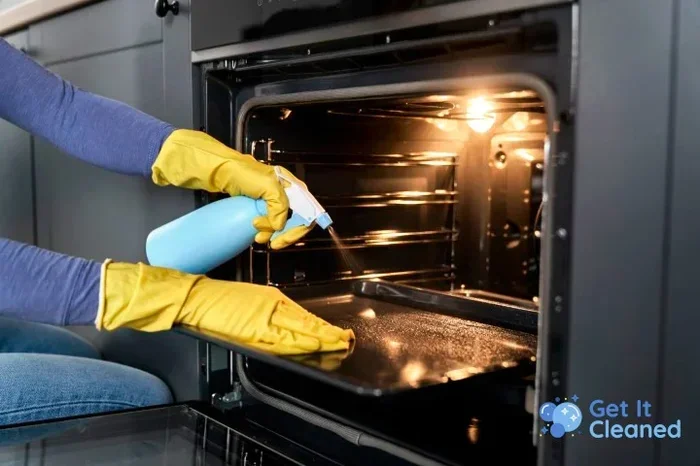
After the paste has had time to work, fill your spray bottle with white vinegar. Lightly mist the entire interior of the oven where you applied the baking soda. You will see a fizzing reaction start immediately. This is the acid in vinegar reacting with the alkaline baking soda. The bubbling action helps lift dirt and grime from the surface.
Do not be alarmed by the fizzing. It is completely normal and a sign that the cleaning process is working. Let the vinegar sit for about ten to fifteen minutes.
Step Five: Wipe Everything Clean
Put on your rubber gloves. Take a damp soft cloth or sponge and start wiping the interior. The baking soda paste should wipe away easily, taking the dissolved grease and grime with it. For stubborn spots, use a plastic scraper gently. Never use metal scrapers or steel wool on enamel.
Rinse your cloth frequently in clean water and continue wiping. You may need to go over the interior two to three times to remove all residue. The oven should feel smooth and look visibly cleaner after this step.
Step Six: Clean The Oven Door
The oven door often accumulates the most visible grease and grime. Apply the remaining baking soda paste to the door glass and metal frame. Let it sit for thirty minutes. Then spray vinegar and wipe clean with a damp cloth.
For the glass window on the door, the baking soda paste works especially well on baked-on food residue and oven burn marks. Use circular motions with a soft cloth for a streak-free finish.
Step Seven: Rinse And Dry
Once all the paste and grime are removed, use a clean damp cloth to wipe away any remaining baking soda residue. Vinegar helps neutralize any remaining baking soda smell. After wiping, use a dry towel to dry the interior completely. Leaving moisture inside can lead to rust or odor buildup over time.
How To Tackle Stubborn Stains And Grease
Sometimes, regular cleaning is not enough. Heavy grease buildup and long-standing stains require extra attention. Here are proven techniques for the toughest situations.
The Double Application Method
For extremely dirty ovens, apply the baking soda paste twice. After your first cleaning session, you may still see some stains. Apply a second layer of paste and let it sit overnight again. The second application softens remaining grime significantly. This method works wonders on ovens that have not been cleaned in a long time.
Using Heat To Boost The Cleaning Power
For a more intensive approach, you can use gentle heat to activate the cleaning solution. After applying the baking soda paste, set your oven to its lowest temperature for about five minutes. Then turn the oven off and let the paste sit for several hours. The mild heat helps the paste penetrate deeper into the grease. This is an excellent self-cleaning oven alternative that avoids the harsh fumes of automatic self-cleaning cycles.
Targeting Specific Problem Areas
Certain areas in your oven tend to collect more grime than others. The bottom of the oven near the heating element is a prime spot. The corners where walls meet collect dripping grease. The area around the oven door seal traps food particles. Pay extra attention to these zones with the baking soda paste and a toothbrush for detailed cleaning.
Expert Insight: According to appliance care specialists, cleaning your oven every four to six weeks prevents heavy buildup. Regular oven maintenance tips like wiping spills immediately after cooking save you from deep cleaning sessions later.
Cleaning The Oven Door And Racks
The oven door and racks are often the dirtiest parts of the entire appliance. They accumulate grease, food particles, and smoke residue. Cleaning them separately ensures thorough oven interior cleaning results.
Oven Door Cleaning
Remove the oven door if your model allows it. Most oven doors have hinges that release with a simple latch. Lay the door flat on a towel. Apply the baking soda paste to both sides of the glass and the frame. Let it sit for thirty minutes, then spray vinegar and wipe clean.
For the glass window, make a thinner paste with more water. Apply it and let it sit for fifteen minutes. The gentle abrasion of baking soda removes oven grease removal from glass without scratching. Rinse with a damp cloth and dry thoroughly before reattaching the door.
Oven Racks Cleaning
Soak your oven racks in a bathtub or large sink filled with hot water. Add half a cup of baking soda and one cup of vinegar to the water. Let the racks soak for two to three hours. The combination will loosen baked-on food and grease effectively.
After soaking, scrub the racks with a non-abrasive sponge. Rinse them thoroughly with clean water and dry completely before placing them back in the oven. This method delivers excellent oven racks cleaning results without the need for harsh chemical soak products.
Tips To Keep Your Enamel Oven Sparkling
Cleaning is only half the battle. Prevention plays a huge role in keeping your oven looking great. Follow these simple habits to reduce the need for deep cleaning sessions.
Clean Spills Immediately
When food spills or grease splatters occur during cooking, wait until the oven cools enough to touch safely. Then wipe the mess with a damp cloth. Removing spills right away prevents them from hardening into baked-on residue. This one habit dramatically reduces your cleaning workload over time.
Use Oven Liners
Oven liners are inexpensive sheets that sit on the bottom of your oven. They catch drips and spills before they reach the enamel surface. Replace liners regularly. This simple addition makes kitchen appliance cleaning much faster and easier.
Run A Monthly Vinegar Rinse
Once a month, place a bowl of white vinegar in the oven and heat it on low for ten minutes. The steam loosens light grease and freshens the interior. Afterward, wipe the walls with a damp cloth. This quick oven odor removal routine keeps your oven smelling fresh between deep cleanings.
Avoid Abrasive Cleaners
Never use steel wool, harsh scouring pads, or abrasive commercial cleaners on your enamel oven. These products scratch the protective coating and create surfaces where grease sticks more easily. Stick to gentle methods like baking soda and vinegar for long-lasting enamel coating care.
Common Mistakes To Avoid When Cleaning Your Enamel Oven
Even with the best intentions, people make mistakes that can damage their ovens or reduce cleaning effectiveness. Here are errors to watch out for.
- Using vinegar on heating elements — vinegar can corrode metal heating elements. Always avoid spraying vinegar directly on them.
- Skipping the soaking time — the baking soda paste needs hours to work. Rushing the process means more scrubbing and worse results.
- Using too much water — excess moisture can damage oven components. Use damp cloths, not soaking wet ones.
- Ignoring the door seal — the rubber seal around the door collects hidden grime. Wipe it gently with a damp cloth during each cleaning session.
- Reusing dirty cleaning cloths — always use a clean cloth when wiping. Reusing dirty cloths just smears grease back onto the surfaces.
Comparison Table: Baking Soda And Vinegar Vs Commercial Cleaners
Many people wonder whether natural methods really work as well as store-bought products. Here is a direct comparison to help you decide.
| Feature | Baking Soda And Vinegar | Commercial Oven Cleaners |
|---|---|---|
| Cost per use | Very low (pennies) | Moderate to high ($8-$15 per can) |
| Toxicity level | Non-toxic and food-safe | Contains harsh chemicals and fumes |
| Enamel safety | Safe and gentle | Can damage enamel over time |
| Effectiveness on tough stains | Excellent with overnight treatment | Good but with stronger fumes |
| Availability | Already in most kitchens | Requires store trip |
| Environmental impact | Biodegradable and eco-friendly | Chemical runoff harms environment |
| Ease of use | Simple, no ventilation needed | Requires gloves and ventilation |
The comparison clearly shows that baking soda and vinegar offer a safer, cheaper, and more environmentally friendly approach. Commercial cleaners may work faster on extreme buildup, but the risks to your health and your oven are not worth it for routine maintenance.
How Often Should You Clean Your Enamel Oven
Frequency depends on how often you cook. For casual cooks who use the oven a few times a week, a deep clean every two months works well. For frequent cooks or anyone who regularly roasts, bakes, or broils, monthly cleaning is ideal.
The key is consistency. Regular oven cleaning hacks like the monthly vinegar steam rinse keep heavy buildup from forming. This means your deep cleaning sessions are shorter and easier every time. Think of it as maintaining your oven rather than fixing a big problem after it gets out of hand.
Frequently Asked Questions
Can I leave baking soda in my oven overnight?
Yes, leaving baking soda paste in your oven overnight is actually the best approach for tough stains. The extended contact time allows the paste to penetrate deep into grease and carbonized food. Just make sure your oven is completely cool before applying the paste and that you remove it thoroughly the next morning.
Is vinegar safe for all types of oven interiors?
Vinegar is safe for enamel and glass oven interiors. However, avoid spraying vinegar directly on metal heating elements, as the acid can cause corrosion over time. For ovens with special coatings, always check the manufacturer’s cleaning recommendations first.
Will baking soda scratch my enamel oven?
No, baking soda is a gentle, non-abrasive cleaner when used as a paste with a soft cloth or sponge. It will not scratch enamel surfaces. The key is to avoid using hard scrub brushes, steel wool, or abrasive pads that can damage the protective coating.
How do I get rid of the vinegar smell after cleaning?
The vinegar smell typically dissipates within a few hours after cleaning. To speed it up, leave the oven door open and let air circulate. You can also place a bowl of baking soda inside the oven for a few hours to absorb any remaining odor. The smell is harmless and fades completely.
Can I use apple cider vinegar instead of white vinegar?
White vinegar is preferred because it is clear and has a consistent acidity level. Apple cider vinegar works in a pinch but may leave a slight residue due to its color and natural sugars. Stick with white distilled vinegar for the best and cleanest results.
What if the baking soda paste does not remove all the stains?
Repeat the process with a fresh paste and let it sit for a longer period, ideally overnight. For extremely stubborn stains, you can apply a thin layer of paste, mist with vinegar, and then use a plastic scraper gently to lift the loosened grime. Patience and repetition are your best tools for oven grease removal on baked-on stains.
Final Thoughts
How to clean enamel oven with baking soda and vinegar is one of the simplest and most effective cleaning routines you can adopt. This natural method is safe, affordable, and delivers outstanding results. You do not need to rely on harsh chemicals or expensive products to keep your oven in great shape.
By following the step-by-step process outlined in this guide, you can tackle grease, baked-on food, and stubborn stains with confidence. The key is consistency. Clean regularly, treat stains promptly, and give your paste enough time to work. Your enamel oven will stay sparkling clean for years to come.
Start today. Gather your baking soda and vinegar, set aside thirty minutes, and experience the satisfaction of a truly clean oven. Once you see the results, you will never go back to expensive chemical cleaners again. Your oven will thank you, and so will your kitchen.