How Much Time For Lasagna In Oven A Complete Guide
Learning how much time for lasagna in oven depends on several key factors like whether it is homemade or frozen, the oven temperature, and the number of layers. A standard homemade lasagna typically bakes for 25 to 45 minutes at 375°F to 400°F, while frozen lasagna may need 60 to 90 minutes. This guide covers everything from prep time to resting time so you can bake lasagna like a pro.
Making lasagna is one of the most rewarding things you can do in the kitchen. But if you have ever pulled a pan out and found soggy noodles or a cold center, you know the frustration. The question how much time for lasagna in oven is not just about setting a timer and walking away. There is a sweet spot that gives you bubbly cheese, tender noodles, and a rich, flavorful center every single time.
In this complete guide, we will walk you through everything you need to know about lasagna bake time. Whether you are making a classic meat lasagna, a veggie-packed version, or heating up leftovers, timing matters. We will cover homemade lasagna timing, frozen lasagna cook time, and even how long to let it rest before cutting. By the end, you will feel confident enough to bake lasagna without checking the clock every five minutes.
The good news is that once you understand the basics, it all becomes second nature. Let us dive in and take the guesswork out of your next lasagna night.
Key Takeaways
- Standard Homemade Lasagna: Most recipes call for 25 to 45 minutes of bake time at 375°F to 400°F when assembled and ready to go.
- Frozen Lasagna Needs More Time: A frozen lasagna typically requires 60 to 90 minutes, and you should always follow the package instructions as a baseline.
- Resting Time Matters: Letting lasagna rest for 15 to 20 minutes after baking helps it set and makes slicing much easier.
- Covered vs. Uncovered Baking: Covering with foil for the first half keeps moisture in, while uncovering the last 10 to 15 minutes creates a golden crust.
- Internal Temperature Is Key: The lasagna is done when it reaches 165°F in the center, regardless of the clock time.
- Oven Variations Matter: Every oven heats differently, so use a thermometer and visual cues to confirm doneness.
- Reheating Leftovers: Reheated lasagna takes only 15 to 25 minutes at 350°F, covered with foil to retain moisture.
📑 Table of Contents
- How Much Time For Lasagna In Oven – The Short Answer
- Factors That Affect Lasagna Baking Time
- Step-by-Step Guide to Baking Lasagna
- Frozen Lasagna vs. Homemade Lasagna Timing
- Common Mistakes That Mess Up Your Lasagna Timing
- Expert Tips for Perfect Lasagna Every Time
- How Long Should Lasagna Rest Before Serving
- How to Know When Your Lasagna Is Done
- Frequently Asked Questions
- Conclusion
How Much Time For Lasagna In Oven – The Short Answer
The answer to how much time for lasagna in oven depends on what kind of lasagna you are making. Here is a quick breakdown to give you a starting point:
- Fresh Homemade Lasagna (assembled, ready to bake): 25 to 45 minutes at 375°F to 400°F
- Frozen Homemade Lasagna (from frozen): 60 to 90 minutes at 375°F
- Refrigerated Leftover Lasagna (reheating): 15 to 25 minutes at 350°F
- Store-Bought Frozen Lasagna: Follow the package instructions, usually 60 to 75 minutes
These numbers are general guidelines. The actual lasagna oven time can shift based on your oven, the depth of the pan, and how many layers you are stacking. We will get into all of that below.
Factors That Affect Lasagna Baking Time
Not all lasagnas are created equal. Several factors can change the total time you need in the oven. Understanding these will help you adjust your lasagna cook time with confidence.
Oven Temperature
The temperature you set your oven to plays a huge role in how long to bake lasagna. Most recipes call for 375°F or 400°F. A higher temperature cooks faster but can also brown the top too quickly. A lower temperature takes longer but gives you a more even cook from edge to center. If your oven tends to run hot, drop the temperature by 10 to 15 degrees and add a few extra minutes.
Number of Layers
A simple three-layer lasagna will bake faster than a deep six-layer masterpiece. More layers mean more mass, which means heat needs more time to reach the middle. If you are building a tall lasagna, plan for the longer end of the lasagna baking time range.
Pan Size and Material
A wide, shallow pan lets heat reach the center faster than a deep, narrow one. Glass pans tend to bake slower than metal pans because glass heats up more gradually. If you switch from a metal pan to a glass dish, add about 5 to 10 minutes to your estimated time.
Whether the Lasagna Is Covered or Uncovered
Covering your lasagna with aluminum foil traps steam and keeps the top from drying out. Most bakers recommend covering the lasagna for the first 20 to 30 minutes, then removing the foil for the last 10 to 15 minutes to let the cheese lasagna topping get golden and bubbly. Skipping the covered phase can lead to a dry top before the inside is fully cooked.
Room Temperature vs. Cold Ingredients
Lasagna assembled from cold ingredients straight out of the fridge will take longer to heat through than lasagna built with room-temperature ricotta and sauce. Taking 20 to 30 minutes to let your assembled lasagna sit on the counter before baking can shave off several minutes of oven-baked lasagna time.
Altitude
High-altitude bakers know that cooking times change at elevation. Lower air pressure means liquids evaporate faster and foods take longer to cook through. If you live above 3,000 feet, you may need to add 5 to 10 minutes to your standard lasagna preparation time and consider covering the pan more tightly to retain moisture.
Step-by-Step Guide to Baking Lasagna
Now that you know what affects the time, let us walk through the actual process. Following these steps will help you nail the perfect homemade lasagna recipe every time.
Step 1: Prepare Your Ingredients
Before you turn on the oven, make sure everything is ready. Cook your lasagna noodles until just al dente (they will finish cooking in the oven). Prepare your meat sauce or veggie sauce. Mix your ricotta filling with egg, Parmesan, and seasoning. Having everything prepped and measured means you can assemble and get the lasagna into the oven quickly, which helps maintain the right lasagna internal temperature from the start.
Step 2: Assemble the Lasagna
Start with a thin layer of sauce on the bottom of your baking dish. This prevents the noodles from sticking. Then layer noodles, ricotta mixture, sauce, and mozzarella. Repeat until your dish is full, ending with a layer of sauce and a generous amount of cheese on top. A well-layered lasagna cooks more evenly than a haphazard one.
Step 3: Preheat the Oven
Always preheat your oven to the recommended temperature before the lasagna goes in. Most oven-baked lasagna recipes call for 375°F or 400°F. Preheating ensures the lasagna starts cooking immediately and evenly, which is essential for getting the right lasagna cook time.
Step 4: Bake Covered
Cover the dish tightly with aluminum foil and place it in the center rack. For a standard homemade lasagna, bake for 25 to 30 minutes covered. The foil traps steam, which gently cooks the noodles and heats the filling through without drying out the top layer of cheese.
Step 5: Uncover and Finish
Remove the foil and continue baking for another 10 to 15 minutes. This uncovered phase lets the top turn golden brown and slightly crispy. You will know it is close to done when you see bubbles forming around the edges and the cheese looks set and lightly browned.
Step 6: Check the Internal Temperature
Use a food thermometer to check the center of the lasagna. The lasagna internal temperature should read 165°F. If it is not there yet, cover the top loosely with foil and bake for another 5 to 10 minutes. Do not skip this step, especially with deep, multi-layer lasagnas.
Step 7: Let It Rest
This is the step most people skip, and it is the most important. Let the oven-baked lasagna rest for 15 to 20 minutes before cutting. Resting allows the layers to set and the sauce to thicken slightly. When you cut into a rested lasagna, each slice holds its shape beautifully instead of sliding apart into a soupy mess.
Frozen Lasagna vs. Homemade Lasagna Timing
One of the biggest questions home cooks ask is about the difference between baking a frozen lasagna and a freshly assembled one. The answer is straightforward: frozen lasagna takes significantly longer.
When you bake a frozen lasagna straight from the freezer, the heat has to penetrate through the frozen block before the inside starts to cook. This extra step adds 20 to 45 minutes to the total lasagna bake time. Here is a side-by-side comparison:
| Type of Lasagna | Oven Temp | Approximate Time | Covered? |
|---|---|---|---|
| Fresh Homemade (assembled) | 375°F – 400°F | 25 – 45 minutes | First 20–30 min |
| Frozen Homemade (from frozen) | 375°F | 60 – 90 minutes | Entire time, then uncover last 15 min |
| Store-Bought Frozen | Varies by brand | 60 – 75 minutes | Per package instructions |
| Refrigerated Leftovers (reheating) | 350°F | 15 – 25 minutes | Covered with foil |
If you are in a rush, you can thaw a frozen lasagna in the fridge overnight. A thawed frozen lasagna will bake closer to the fresh homemade time of 30 to 40 minutes. But if you forget to thaw it, do not worry. Just add extra time and check the internal temperature to be sure the center is fully heated through.
For those who love the convenience of store-bought frozen lasagna, the package directions are your best friend. However, many home cooks find that extending the uncovered bake time by 5 to 10 minutes gives the top a better golden finish. Just watch it closely so it does not burn.
Common Mistakes That Mess Up Your Lasagna Timing
Even experienced cooks can run into trouble with lasagna oven time. Here are the most common mistakes and how to avoid them.
Opening the Oven Door Too Often
Every time you open the oven door, you let out a burst of heat. This can add 5 to 10 minutes to your total how much time for lasagna in oven because the oven has to recover the lost heat. Resist the urge to peek. Use the oven light to check on the progress instead.
Using a Pan That Is Too Small
A pan that is too small forces the layers to stack too high. This creates a situation where the outside is overcooked while the center is still cold. Choose a pan that allows your layers to spread out without overflowing. A 9×13-inch pan is the standard for most cheese lasagna recipe versions.
Skipping the Resting Period
We mentioned this before, but it deserves repeating. Cutting into hot lasagna right out of the oven is tempting, but it will fall apart. The 15 to 20 minute rest period is not optional if you want clean, picture-perfect slices. Think of it as the final step of the lasagna preparation time.
Not Adjusting for Your Oven
Ovens vary widely in their actual temperature versus what the dial says. Some ovens run 25°F hot, while others run cool. An inexpensive oven thermometer can be a game-changer. Place it inside your oven and compare it to the dial. Once you know your oven’s true temperature, you can adjust the lasagna bake time accordingly.
Overfilling with Sauce
Too much sauce makes the lasagna watery and extends the bake time. The noodles will absorb some sauce during baking, but if there is too much liquid in the pan, it will take longer for everything to set. Use a moderate amount of sauce and spread it evenly across the layers.
Expert Tips for Perfect Lasagna Every Time
Want to take your lasagna from good to great? These expert-level tips will help you master the lasagna oven time and get consistent results every time you bake.
Use a Meat Thermometer for the Center
A food thermometer is the single best tool for checking doneness. Insert it into the very center of the lasagna, avoiding the edges where it will be hotter. When it reads 165°F, your oven-baked lasagna is done. This takes all the guesswork out of the equation.
Let the Lasagna Cool Slightly Before Slicing
After the resting period, use a sharp knife to cut your first slice. A serrated knife works well on the cheesy layers. Wipe the blade between cuts for the cleanest presentation. A properly rested lasagna will hold its shape and look beautiful on the plate.
Add a Layer of Bechamel for Extra Richness
Traditional Italian lasagna often uses a white sauce called bechamel instead of ricotta. If you want to try this variation, note that bechamel-based lasagna may need a slightly shorter bake time because the moisture content is different. Keep an eye on it and adjust your lasagna cook time as needed.
Make Ahead and Freeze for Later
Lasagna is one of the best make-ahead meals you can prepare. Assemble it the night before, cover it tightly, and refrigerate. It will bake just fine the next day with no change in lasagna bake time. You can also assemble and freeze it for up to three months. Just add 15 to 20 minutes to the bake time when cooking from frozen.
Reheat Leftovers Properly
Leftover lasagna reheats beautifully, but you need to do it right to keep the moisture balance. Cover the individual portion or the whole pan with foil and warm it at 350°F for 15 to 25 minutes. Remove the foil for the last 5 minutes if you want the top to crisp up again. This brings back that fresh-from-the-oven feel without drying out the noodles.
How Long Should Lasagna Rest Before Serving
The resting phase after baking is just as important as the baking phase itself. When you take the lasagna out of the oven, the cheese is molten and the sauce is loose. Cutting too soon means your slices will slide and fall apart on the plate.
Give your lasagna a full 15 to 20 minutes of rest on the counter. This allows the layers to firm up as the cheese sets and the sauce thickens. The lasagna preparation time includes this resting window, so factor it into your overall plan when serving guests. A well-rested lasagna is easier to cut, easier to serve, and tastes better because the flavors have had time to meld together.
If you are serving a large crowd, you can rest the lasagna for up to 30 minutes without any problem. Just cover it loosely with foil to keep it warm. The internal temperature will stay in the safe zone, and the lasagna will still slice beautifully.
How to Know When Your Lasagna Is Done
Time is just one indicator of doneness. Here are the signs that your lasagna oven time is complete and your dish is ready to come out:
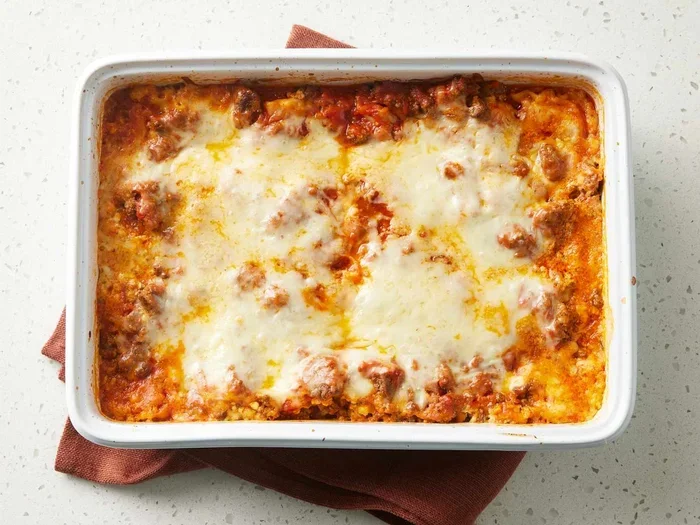
- The cheese on top is golden brown and slightly bubbly
- You see sauce bubbling around the edges of the pan
- A toothpick or knife inserted into the center comes out hot
- The internal temperature reads 165°F at the center
- The top layer of cheese looks set and does not jiggle when you gently shake the pan
Using a combination of these cues gives you the best results. The clock is a helpful guide, but your senses and a thermometer are the real judges of doneness.
Frequently Asked Questions
Can I bake lasagna at 350°F instead of 375°F or 400°F?
Yes, you can bake lasagna at 350°F, but it will take longer. Expect to add 10 to 15 minutes to the standard lasagna bake time. The lower temperature means the heat takes longer to reach the center of the dish. Just make sure to check the internal temperature to confirm it reaches 165°F in the middle before serving.
How long does it take to bake a frozen lasagna at 375°F?
A frozen lasagna typically needs 60 to 90 minutes at 375°F. If it is a store-bought frozen lasagna, always start with the package instructions as your baseline. For homemade frozen lasagna, cover it with foil for the entire time and uncover for the last 15 minutes to brown the top. Check the internal temperature to make sure the center is fully heated through.
Should I cover lasagna with foil while baking?
Yes, covering lasagna with foil for the first 20 to 30 minutes of baking helps trap steam and keeps the top from drying out. After that, remove the foil and let the last 10 to 15 minutes of lasagna oven time run uncovered so the cheese gets golden and the surface sets properly.
How can I tell if my lasagna is done without a thermometer?
Look for bubbling around the edges of the pan, a golden-brown and set top layer of cheese, and a knife or toothpick inserted in the center that comes out hot. The lasagna should also not jiggle much when you gently shake the pan. These visual and tactile cues work well even without a thermometer.
Can I leave lasagna in the oven to rest?
Yes, you can leave lasagna in the turned-off oven with the door cracked open for up to 30 minutes. This is a great trick for entertaining because it keeps the lasagna warm while it rests and sets. The residual heat continues to gently finish cooking the center without over-baking the top.
How long does homemade lasagna last in the fridge?
Homemade lasagna keeps well in the refrigerator for 3 to 5 days when stored in an airtight container or tightly wrapped with plastic wrap. Reheat individual portions or the whole pan at 350°F covered with foil for 15 to 25 minutes. Adding a splash of water or extra sauce before reheating helps bring back moisture and keeps the noodles from drying out.
Conclusion
Understanding how much time for lasagna in oven is the key to serving a perfect, beautiful lasagna every time. Whether you are working with a fresh homemade lasagna, a frozen store-bought version, or reheating last night’s leftovers, the right timing makes all the difference. Remember that most homemade lasagnas bake for 25 to 45 minutes at 375°F to 400°F, frozen lasagna needs 60 to 90 minutes, and reheating takes just 15 to 25 minutes at 350°F.
Pay attention to the factors that affect bake time, including oven temperature, pan material, number of layers, and whether you are covering the dish. Use a food thermometer to confirm the center reaches 165°F, and always let your lasagna rest for 15 to 20 minutes before cutting. These small steps turn a good lasagna into a great one.
Now that you have all the timing guidelines and expert tips, it is time to put them into practice. Preheat your oven, gather your ingredients, and enjoy the process of creating a warm, comforting meal that everyone will love. Lasagna baking is as much about patience as it is about technique, and with this guide, you are fully equipped to get it right. Happy cooking.