How To Remove Odors From Your Microwave Oven Quickly
Discover the fastest and easiest ways to remove odors from your microwave oven using household items you already have. From lemon steam cleaning to baking soda deodorizing, these microwave odor removal methods work in minutes and keep your kitchen smelling fresh every day.
Key Takeaways
- Steam cleaning with lemon or vinegar loosens grime and eliminates microwave smell fast
- Baking soda is a powerful odor absorber that neutralizes stubborn food odors overnight
- Regular microwave maintenance prevents buildup and keeps your appliance odor-free
- Natural remedies are safer and cheaper than commercial chemical cleaners
- Wiping spills immediately stops odors from setting in and becoming harder to remove
- Coffee grounds and vanilla extract offer surprising microwave deodorizing power
📑 Table of Contents
- Why Your Microwave Develops Unpleasant Odors
- Quick Fixes For Immediate Relief
- Deep Cleaning Methods That Actually Work
- Preventing Microwave Odors In The Future
- Common Mistakes People Make When Cleaning Their Microwave
- When Should You Replace Your Microwave
- Expert Insights On Microwave Odor Control
- Quick Reference Comparison Table
- Key Takeaways
- Final Thoughts
Why Your Microwave Develops Unpleasant Odors
We have all opened the microwave and been hit with a wave of bad smell. Sometimes it is leftover pizza from last week. Other times it is something boiled-over that has baked onto the walls. Either way, a stinking microwave is nobody’s friend.
The truth is, microwave oven odors happen to everyone. Food splatters, steam, and grease build up inside the cavity over time. These residues break down and release funky smells. The small, enclosed space of a microwave traps odors more easily than a regular oven.
Understanding why smells happen is the first step to fixing them. Most odors come from three sources. The first is food particles that have burned onto surfaces. The second is steam that carries grease particles and deposits them on walls. The third is forgotten leftovers that sit too long.
The good news? Removing odors from microwave oven is simple and does not require expensive products. You can use things already in your kitchen. Let us walk through every method you need.
The Science Behind Microwave Smells
When you heat food, steam carries volatile compounds into the air inside the microwave. These compounds stick to surfaces. Over time, they build up and create a persistent kitchen odor problem. The turntable, ceiling, and walls all collect residue. Even the door seal can trap smells.
Moisture plays a big role too. Wet food splatters dry and become hard to wipe off. They bond with the surfaces and create a breeding ground for bacteria. That bacteria is what causes the worst smells. This is why regular microwave cleaning tips matter so much.
Quick Fixes For Immediate Relief
If you need results right now, these fast methods work wonders. They take less than ten minutes and use items you probably have at home.
The Lemon Steam Method
This is the most popular microwave deodorizer trick, and for good reason. It is fast, smells amazing, and cuts through grease.
Here is how you do it. Squeeze the juice of one lemon into a microwave-safe bowl. Add the lemon halves too. Fill the bowl with water until it is about halfway full. Place it inside the microwave and run on high for three to five minutes. The steam will loosen grime and neutralize odors.
After the timer beeps, do not open the door right away. Let the bowl sit for two minutes. The trapped steam works on the grime even after the microwave stops. Then carefully remove the bowl and wipe the interior with a clean cloth. You will be shocked at how easy the grime wipes away.
The Vinegar And Water Hack
White vinegar is a powerhouse for food odor removal. It breaks down grease and kills bacteria that cause bad smells.
Mix one cup of white vinegar with one cup of water in a bowl. Place it in the microwave and heat on high for four minutes. The vinegar steam penetrates stuck-on grime and eliminates stale food smell at the same time.
After heating, let the door stay closed for a couple of minutes. Then wipe everything down with a damp sponge. The vinegar smell fades quickly as it dries. Your microwave will smell clean and neutral instead.
The Baking Soda Paste Trick
For light surface odors, a baking soda paste works well. Mix two tablespoons of baking soda with a little water until it forms a thick paste. Spread it on the inside walls of the microwave. Let it sit for fifteen minutes. Then wipe it off with a damp cloth.
Baking soda absorbs odors rather than just masking them. This makes it one of the best odor absorber options for your appliance. It is also completely safe and non-toxic.
Deep Cleaning Methods That Actually Work
Quick fixes handle surface smells. But for deep, embedded odors, you need a more thorough approach. These methods go beyond the surface and tackle the root cause.
The Steam And Wipe Deep Clean
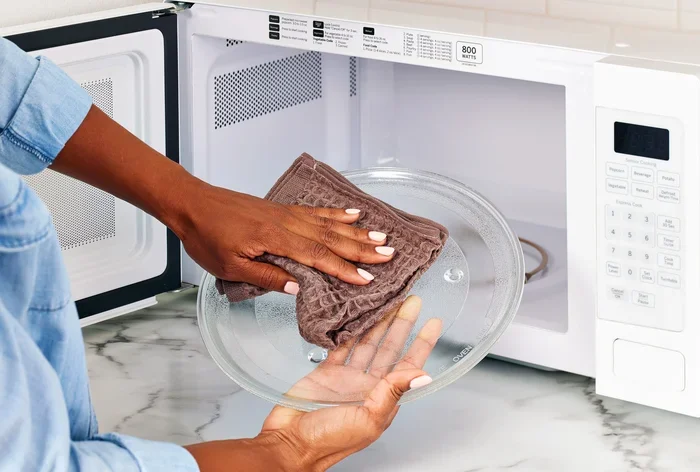
This method takes a bit longer but delivers serious results. Start by removing the turntable and the roller ring. Wash these separately in warm soapy water. Set them aside to dry.
Next, fill a large microwave-safe bowl with two cups of water. Add two tablespoons of dish soap. Heat this on high for five minutes. The soapy steam will loosen baked-on food particles from the walls and ceiling.
After the cycle ends, leave the door shut for five minutes. This lets the steam continue working. Then remove the bowl and use a soft cloth to wipe every surface. For tough spots, use a non-abrasive sponge. The grime should come off easily now.
Dry the interior with a clean towel before replacing the turntable. This method is one of the most effective microwave interior cleaning techniques you can use.
Using Cornstarch To Absorb Stubborn Odors
Cornstarch is an underrated microwave deodorizer. It works similarly to baking soda but has a slightly different texture that helps it cling to surfaces.
Mix three tablespoons of cornstarch with a few drops of water to form a paste. Spread it generously on the inside walls. Let it sit for thirty minutes. The cornstarch will absorb grease and odor molecules from the surfaces.
Wipe it away with a damp cloth. You may need to repeat this for really strong stale food smell issues. But for most cases, one treatment does the job beautifully.
The Citrus Peel Soak
Instead of lemon juice, you can also use citrus peels. Orange, lime, or grapefruit peels all work well. Place the peels in a bowl of water and microwave for five minutes on high.
The natural oils in the peels release a fresh scent while the steam cleans. This is a gentle method that works well for regular microwave maintenance. Use it once a week to prevent odors from building up in the first place.
Coffee Grounds As A Natural Deodorizer
This might surprise you. Coffee grounds are excellent at absorbing odors. Place a small bowl of dry, used coffee grounds inside your microwave overnight. The grounds will soak up lingering smells by morning.
This is a great trick for appliance odor that has been lingering for days. It works slowly but effectively. Plus, your kitchen will smell like a coffee shop instead of last night’s fish.
Vanilla Extract Refresh
For a pleasant scent after cleaning, put a few drops of vanilla extract on a cotton ball. Place the cotton ball inside the microwave and run it on low for thirty seconds. The warm vanilla scent will linger and leave your microwave smelling fresh.
This is a wonderful finishing step after any deep clean. It adds a cozy, welcoming scent to your kitchen. Many people use this as part of their regular microwave hygiene routine.
Preventing Microwave Odors In The Future
Cleaning is great, but prevention is even better. A few simple habits can keep your microwave smelling fresh every single day.
Cover Your Food Every Time
This is the single most important habit. Use a microwave-safe lid, a microwave-safe plate, or a paper towel to cover your food. This prevents steam and splatter from reaching the walls and ceiling.
When food splatters, the grease and particles become embedded over time. They create the perfect environment for microwave smell to develop. A simple cover stops this before it starts.
Wipe Spills Immediately
If something does spill, clean it up right away. Do not let it sit. The longer food sits in the microwave, the harder the stain becomes to remove and the stronger the odor gets.
Keep a damp cloth near your microwave for quick wipe-downs. Even a thirty-second cleanup after each use makes a huge difference. This is the easiest quick microwave fix you can adopt.
Run A Steam Clean Weekly
Make the lemon steam method a weekly habit. It takes only five minutes and keeps your microwave in top condition. Regular steam cleaning prevents buildup and eliminates early-stage odors before they become problems.
Set a reminder on your phone if you need to. After a few weeks, it becomes second nature. Your microwave will always smell fresh and ready to use.
Use The Right Containers
Always use microwave-safe containers. Some plastics can melt or release chemicals when heated. These contribute to bad smells and are also a health concern.
Glass and ceramic are the best options for microwave use. They do not absorb odors or leach chemicals. They are also easy to clean. Avoid using paper bags or recycled paper products, as they can catch fire or release inks.
Keep The Door Seal Clean
The rubber seal around the microwave door traps grime and food particles. Over time, this builds up and causes persistent odors. Wipe the seal with a damp cloth at least once a week.
Use a cotton swab to get into the tiny grooves. This small step makes a big difference in overall microwave cleaning and odor prevention.
Store Food Properly
Never store food inside the microwave. Even covered leftovers will eventually develop odors. The enclosed space is not designed for long-term food storage.
Always transfer leftovers to proper containers and store them in the refrigerator. This simple habit eliminates a major source of kitchen odor and keeps your microwave clean.
Common Mistakes People Make When Cleaning Their Microwave
Even with the best intentions, people make mistakes that reduce cleaning effectiveness. Here are the ones to avoid.
Using Harsh Chemical Cleaners
Many people reach for heavy-duty spray cleaners. These are too harsh for microwave interiors. The chemicals can leave residues that contaminate your food the next time you heat something.
Stick to natural cleaners like vinegar, baking soda, and lemon. They are just as effective and completely food-safe. Your microwave hygiene matters, especially when the appliance heats your food directly.
Scrubbing With Abrasive Sponges
Steel wool and rough scrubbers scratch the interior surface. These scratches trap food particles and grease. Over time, the scratches become a permanent source of odor.
Use soft sponges or microfiber cloths instead. They clean effectively without damaging the surface. A non-abrasive sponge is all you need for most odor removal tasks.
Skipping The Turntable And Roller Ring
Many people only clean the walls and forget the turntable. But food spills land on the turntable too. The roller ring collects crumbs and grime that contribute to smells.
Remove both parts and wash them separately. Use warm soapy water and a soft brush. This simple step is often overlooked but makes a big impact on overall freshness.
Not Letting Steam Work Long Enough
Some people run the microwave for steam cleaning and immediately start wiping. This wastes the most important part of the process. The steam needs time to loosen the grime.
Always wait two to five minutes after the heating cycle. Let the trapped steam continue breaking down the stuck-on food. Then wipe with ease. Patience is the secret ingredient in every microwave odor removal method.
When Should You Replace Your Microwave
Sometimes odors persist no matter how much you clean. This could mean your microwave needs replacing. Here are the signs to watch for.
If you notice a burning smell every time you use the microwave, the internal components may be failing. If the door seal is damaged or warped, it cannot trap odors or heat properly. If the microwave is more than ten years old and cleaning no longer helps, it might be time for an upgrade.
Modern microwaves come with better materials that resist staining and odor absorption. A new appliance can make a noticeable difference in your kitchen’s overall freshness. Look for models with easy-clean interiors and stainless steel cavities that resist odor retention.
Expert Insights On Microwave Odor Control
Professional cleaners agree that consistency is key. A five-minute weekly routine prevents the need for deep cleaning sessions. The steam and wipe method is their go-to recommendation for everyday maintenance.
Experts also emphasize the importance of ventilation. After cooking in the microwave, leave the door open for a few minutes. This allows steam to escape and prevents moisture from settling on surfaces. It is a small habit that makes a big difference in long-term microwave maintenance.
Another expert tip is to keep a dedicated microwave cleaning cloth. Use it after every session to quickly wipe any splatters. This prevents the buildup that leads to persistent smells. Many homeowners swear by this simple habit for keeping their appliance fresh.
Quick Reference Comparison Table
| Method | Time Required | Best For | Effectiveness |
|---|---|---|---|
| Lemon Steam | 5 minutes | Light to moderate odors | High |
| Vinegar Steam | 5 minutes | Greasy residue and smells | High |
| Baking Soda Paste | 15 minutes | Surface-level odor absorption | Medium |
| Cornstarch Paste | 30 minutes | Stubborn embedded odors | High |
| Coffee Grounds | Overnight | Persistent multi-day smells | Medium-High |
| Vanilla Extract | 30 seconds | Fresh scent after cleaning | Low (scent only) |
Use this table to pick the right method for your situation. Combine methods for the best results. For example, start with a steam clean and finish with coffee grounds for overnight odor absorption.
Key Takeaways
- Steam cleaning with lemon or vinegar loosens grime and eliminates microwave smell fast
- Baking soda is a powerful odor absorber that neutralizes stubborn food odors overnight
- Regular microwave maintenance prevents buildup and keeps your appliance odor-free
- Natural remedies are safer and cheaper than commercial chemical cleaners
- Wiping spills immediately stops odors from setting in and becoming harder to remove
- Coffee grounds and vanilla extract offer surprising microwave deodorizing power
- Prevention through daily habits saves time and keeps your microwave fresh consistently
Final Thoughts
Dealing with microwave oven odors does not have to be a chore. With the right methods, you can have your microwave smelling fresh in minutes. The lemon steam method alone can transform a stinking appliance into something pleasant to use.
The key is consistency. A quick wipe after each use and a weekly deep clean will keep odors from ever becoming a problem. Natural remedies like vinegar, baking soda, and cornstarch work incredibly well and cost almost nothing.
Remember to address the root cause of odors. Cover your food, clean spills immediately, and ventilate after use. These small habits make the biggest difference over time. Your microwave will stay fresh and ready for whatever you need to heat next.
Now that you know all these microwave odor removal techniques, pick the ones that work best for you. Start today and enjoy a fresh-smelling kitchen every time you open that microwave door. Your nose will thank you.
Frequently Asked Questions
What is the fastest way to remove odors from a microwave oven?
The lemon steam method is the fastest way to remove odors from microwave oven interiors. It takes only five minutes and uses items you already have. The steam loosens grime while the lemon neutralizes the smell.
Can I use apple cider vinegar instead of white vinegar?
Yes, apple cider vinegar works for microwave cleaning too. However, white vinegar is more effective for odor removal because it has a stronger acetic acid concentration. Apple cider vinegar may leave a slight scent that some people find unpleasant.
How often should I clean my microwave to prevent odors?
A quick wipe after every use is ideal. For a deeper clean, run the steam method once a week. This microwave maintenance routine prevents buildup and keeps your appliance smelling fresh all the time.
Is it safe to use bleach inside a microwave?
No, bleach is not safe for microwave interiors. The chemicals can leave harmful residues that contaminate your food. Stick to natural cleaners like vinegar, baking soda, and lemon for safe and effective microwave sanitizing.
Why does my microwave still smell after cleaning?
Persistent smells usually mean odor-causing bacteria are still present. Try the cornstarch paste method or leave coffee grounds inside overnight. Also check the door seal and turntable area for trapped food particles that may be the source.
Can I use scented candles or air fresheners to mask microwave odors?
Air fresheners only mask the problem temporarily. They do not remove the source of the odor. Natural deodorizers like baking soda and vanilla extract actually neutralize the smell rather than just covering it up.