How To Slide Pizza Into Oven For The Perfect Results
Sliding pizza into the oven correctly is the secret to a perfect bake. Whether you use a pizza peel, baking sheet, or pizza stone, the right technique prevents sticking and ensures an even crust. This guide covers every tool, step, and mistake to avoid for homemade pizza that rivals your favorite pizzeria.
Making great pizza at home feels amazing. The smell of baking pizza fills your kitchen, and you know you are about to enjoy something special. But here is the part that trips up so many home cooks: getting that pizza into the oven.
How To Slide Pizza Into Oven safely and smoothly is a skill that separates good pizza from great pizza. A wobbly transfer means toppings slide off, dough sticks to the pan, or your beautiful crust gets ruined before it even hits the heat. But with the right tools and a simple technique, you can slide your pizza into the oven like a trained pizza maker.
This guide walks you through everything you need to know. From choosing the right kitchen tools to avoiding the mistakes that ruin a perfect pizza, you will find clear steps and practical advice. By the end, you will feel confident every time you load a pizza into your hot oven.
Let us start with the basics and build your knowledge step by step. No jargon, no fluff, just real tips that work.
Key Takeaways
- Use a pizza peel: A wooden or metal peel makes sliding pizza into oven safe and easy every time.
- Preheat your oven and stone: A hot oven and preheated pizza stone create that crispy, golden crust you love.
- Use cornmeal or flour: Dusting your peel prevents the dough from sticking during the transfer.
- Avoid common mistakes: Shaking too hard, using a cold stone, or overloading toppings are top errors to dodge.
- Master the quick slide: A confident, swift motion gets your pizza onto the stone without dragging or sticking.
- Choose the right tools: A baking sheet, pizza screen, or parchment paper each offer different benefits for oven baking.
- Practice makes perfect: Even pros rehearse their pizza transfer technique before the big bake.
📑 Table of Contents
- Why Sliding Pizza Into the Oven the Right Way Matters
- Essential Tools To Slide Pizza Into Oven
- Step-by-Step: How To Slide Pizza Into Oven
- Comparison: Best Methods To Slide Pizza Into Oven
- Common Mistakes to Avoid When Sliding Pizza Into Oven
- Expert Tips For Sliding Pizza Into Oven Like a Pro
- Quick Tips and Tricks for Better Pizza Baking
- Why Practice Makes Perfect
Why Sliding Pizza Into the Oven the Right Way Matters
You might wonder why sliding a pizza into an oven needs its own guide. Can you not just pop a tray on the rack and call it done? Well, yes and no. A store-bought frozen pizza is simple enough. But when you are working with fresh pizza dough and handmade pizza sauce, every step counts.
The way you transfer your pizza affects the crust, the cheese melt, and the overall bake. A clumsy slide can stretch the dough unevenly, tear the base, or shift all your toppings to one side. On the other hand, a smooth transfer preserves the shape and lets the pizza bake evenly on the oven rack or pizza stone.
Think about a wood-fired oven. Professional pizza makers use a long-handled peel to launch the pizza onto the hot stone with a quick, confident flick. You can replicate that same motion at home with the right setup. The goal is to get the pizza from your prep surface to the oven surface in one clean move.
When you get this right, the results speak for themselves. You get a crispy crust that is golden and bubbly on top. The cheese melts evenly. The bottom does not stay soggy. It is the difference between a good weeknight dinner and a pizza night that everyone remembers.
So let us look at the tools you need before we dive into the steps. Having the right gear makes the whole process much easier.
Essential Tools To Slide Pizza Into Oven
Before you start shaping your dough, gather your tools. Having everything ready means you can focus on the transfer without scrambling. Here is what you need.
The Pizza Peel
A pizza peel is the most important tool for sliding pizza into oven. It is a flat, shovel-like tool that slides under the pizza and supports it during the transfer. There are two main types:
- Wooden peels: These look classic and are great for shaping dough on. The wood grain helps prevent sticking. However, they can be thicker and harder to slide under the pizza on a hot stone.
- Metal peels: Usually made of aluminum or stainless steel, these are thinner and lighter. They slide under the pizza more easily and are the go-to choice for many home pizza baking enthusiasts.
Choose a peel that is at least 12 inches wide. A larger surface gives you more room to maneuver the pizza. If you are just starting out, a metal peel is the most versatile option.
Pizza Stone or Baking Steel
A pizza stone or baking steel goes inside your oven and absorbs heat. When your pizza hits the hot stone, the bottom crisps up fast. This mimics the effect of a wood-fired oven in your regular home oven.
Place the stone on the middle or lower rack. Let it preheat for at least 30 to 45 minutes. A cold stone will stick to your dough and ruin the transfer. A hot stone releases the pizza more easily and gives you that perfect crispy crust.
Cornmeal or Flour
Dust your peel with cornmeal or flour before placing the pizza on it. The cornmeal acts as a little cushion and creates a barrier between the dough and the wood or metal. This makes the slide onto the stone much smoother.
Some people use semolina flour, which is coarser than regular flour and works even better. It does not burn at high temperatures and helps the pizza glide off the peel without sticking.
Baking Sheet and Parchment Paper
If you do not have a pizza peel, a baking sheet works as a great alternative. You can shape your pizza right on the sheet and slide the whole thing into the oven. For an even easier cleanup, line the sheet with parchment paper.
The parchment paper method is especially helpful for beginners. It prevents sticking and makes the transfer less stressful. Just be sure to use parchment rated for high heat, since oven temperatures for pizza baking can reach 450 to 500 degrees Fahrenheit.
Pizza Screen
A pizza screen is a wire mesh disk that lets air circulate under the pizza. It works well for thinner crusts and is easy to slide into the oven. Some people prefer screens because they promote an even crispier bottom compared to a solid baking sheet.
Step-by-Step: How To Slide Pizza Into Oven
Now that you have your tools ready, here is the process for how to slide pizza into oven like a pro. Follow these steps every time for consistent results.
Step 1: Prepare Your Pizza on the Peel
Start by dusting your peel with cornmeal or flour. Place your stretched pizza dough on the peel. Add your pizza sauce, mozzarella cheese, and toppings. Keep the toppings light to medium. Too many toppings make the pizza heavy and harder to slide.
Give the peel a gentle shake to make sure the pizza moves freely. If it sticks, lift the edges and add more cornmeal underneath. The pizza should glide easily on the peel before you attempt the oven transfer.
Step 2: Preheat the Oven and Stone
Turn your oven to its highest setting, usually 475 to 500 degrees Fahrenheit. Place the pizza stone or baking steel on the middle or lower rack. Let the oven preheat for at least 30 minutes. The stone needs to be fully saturated with heat before the pizza goes on.
A hot stone is critical. If the stone is not hot enough, the pizza will stick and the crust will be soggy. Patience here pays off big time in your final pizza slide results.
Step 3: Position the Peel at the Back of the Stone
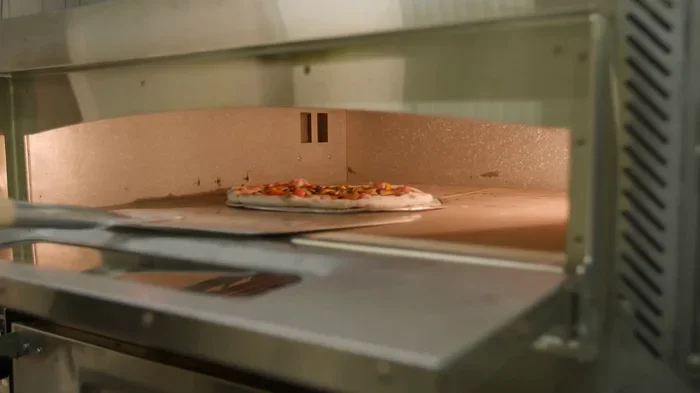
Open the oven and pull out the rack slightly. Position the peel so it is angled back toward you, with the pizza facing up. The back edge of the peel should be right at the back of the pizza stone or oven rack.
Keep your movements steady and confident. Hesitation is your enemy here. The longer you hover, the more likely the pizza is to stick or lose its shape.
Step 4: Give a Quick, Confident Slide
This is the moment that matters. Push the peel forward with a quick, smooth motion. Do not jerk or yank. Just a steady, forward push releases the pizza onto the stone.
The cornmeal or flour between the dough and the peel helps the pizza release cleanly. Once the pizza is on the stone, pull the peel out quickly and smoothly. A slight jerk or hesitation can drag the pizza off center.
Step 5: Close the Oven and Bake
Close the oven door gently. You do not want to slam it, as that can shift the pizza on the stone. Set a timer for 10 to 15 minutes, depending on your oven temperature and crust thickness.
Watch the pizza through the oven window if you can. You are looking for a golden-brown crust and bubbly cheese. When it looks done, pull the rack out and use the peel to slide the pizza out of the oven.
Step 6: Let It Cool and Slice
Transfer the pizza to a cutting board. Let it rest for 2 to 3 minutes before slicing. This lets the cheese set slightly and makes it easier to cut clean slices with a pizza cutter.
And there you have it. One beautiful, homemade pizza bake that slid into the oven like a dream.
Comparison: Best Methods To Slide Pizza Into Oven
Not every kitchen setup is the same. Different methods work better depending on your tools and experience level. Here is a comparison of the most popular ways to slide pizza into oven.
| Method | Best For | Ease of Use | Result |
|---|---|---|---|
| Pizza Peel with Stone | Experienced home bakers | Medium | Crispy, professional-style crust |
| Baking Sheet with Parchment | Beginners and quick bakes | Easy | Even bake, softer bottom |
| Pizza Screen | Thin crust lovers | Easy | Extra crispy bottom |
| Inverted Baking Sheet | No peel, no stone | Medium | Good crisp, easy cleanup |
| Cast Iron Pan | Deep dish or thick crust | Easy | Crispy edges, soft center |
Each method has its strengths. The peel and stone combo gives you the closest thing to a wood-fired oven experience. The baking sheet method is the most forgiving for beginners. Choose the one that fits your setup and comfort level.
Common Mistakes to Avoid When Sliding Pizza Into Oven
Even with the best tools, mistakes happen. Here are the most common errors people make when sliding pizza into oven and how to avoid them.
Skipping the Preheat
This is the number one mistake. Putting pizza on a cold or lukewarm stone guarantees sticking. Always preheat your oven and stone for at least 30 minutes. The stone needs to be screaming hot before the pizza goes on.
Overloading the Pizza
Too many toppings make the pizza heavy and floppy. A heavy pizza is harder to slide and more likely to tear. Keep your toppings moderate and spread them evenly so the pizza cooks uniformly.
Not Dusting the Peel Enough
Skipping the cornmeal or flour is a recipe for disaster. Without a release layer, the dough sticks to the peel and tears when you try to slide it. Always dust generously and shake the peel to confirm the pizza moves freely.
Moving Too Slowly
Hesitation during the slide causes the pizza to drag or fold. Once you start the push, commit to it with a quick, smooth motion. Think of it like a firm but gentle shove, not a careful inch-by-inch movement.
Using a Wet Dough
Wet dough sticks to everything. Make sure your pizza dough is properly rested and not too sticky. If the dough is sticking to your work surface, let it rest for a few minutes. A well-rested dough stretches more easily and slides better.
Opening the Oven Too Often
Every time you open the oven door, you lose heat. This affects your bake time and can cause the pizza to cook unevenly. Check on the pizza quickly through the window and limit how often you open the door.
Expert Tips For Sliding Pizza Into Oven Like a Pro
Here are some insider tips that experienced pizza makers use to make every transfer flawless.
Use a Second Peel or Flat Surface
Some pros use two peels. One holds the prepared pizza, and the second one is used to help guide the pizza onto the stone. This is especially helpful for larger pizzas or thin crusts that are more fragile.
Tap the Back of the Peel
Just before the slide, give the back of the peel a few gentle taps on the counter. This settles the toppings and helps the pizza settle into its final shape. It also confirms that the pizza is ready to go.
Work Quickly but Calmly
Speed matters, but panic does not. Move with purpose and confidence. If you rush and fumble, the pizza will suffer. Take a breath, position the peel, and execute the slide with a smooth motion.
Rotate the Pizza Halfway
Most home ovens have hot spots. About halfway through the bake, pull the rack out and rotate the pizza 180 degrees. This ensures even browning on all sides. Use the peel or tongs to do this gently.
Experiment with Different Flours
Not all flours behave the same. Bread flour gives a chewier crust, while all-purpose flour makes a lighter base. Try different flour types for your pizza dough and see which one slides best off the peel and bakes best in your oven.
Keep a Spare Peel or Baking Sheet Ready
If your first pizza tears during the transfer, you do not want to scramble to re-stretch the dough while the stone is cooling. Have a backup peel or baking sheet ready so you can launch the next pizza without losing heat.
Quick Tips and Tricks for Better Pizza Baking
Here are some quick bites of wisdom that make a big difference when how to slide pizza into oven becomes second nature.
- Use a pizza cutter for clean slices after baking. A sharp wheel makes cutting easier and keeps the crust shape intact.
- Let the dough rest at room temperature for 30 minutes before stretching. Cold dough is stiff and harder to work with.
- Season your pizza stone over time. The more you use it, the better it performs. Do not wash it with soap; just scrape off residue after cooling.
- Keep a spray bottle of water nearby. A light mist on the oven walls can create steam, which helps develop a crispier crust.
- Preheat on the top rack for a few minutes before moving the stone to the lower rack. This gets the stone extra hot for a better initial bake.
- Practice with a test pizza before serving to guests. Use a simple dough and minimal toppings to perfect your technique.
- Clean your peel between uses to prevent old dough and burnt bits from building up. A clean surface ensures smooth transfers every time.
These small adjustments add up. Over time, you will notice that your pizza baking becomes faster, smoother, and more consistent. The pizza slide will feel natural, and you will spend less time worrying about the transfer and more time enjoying the process.
Why Practice Makes Perfect
The truth is, even the best pizza makers practiced their pizza transfer technique many times before getting it right. Your first few attempts might not be flawless, and that is okay. Every pizza you bake teaches you something new about how your dough behaves, how your oven distributes heat, and how your peel moves on the stone.
Try making a few test pizzas before a big pizza night. Experiment with different amounts of cornmeal, different peel angles, and different slide speeds. You will quickly find what works best for your specific setup.
Once you nail the technique, you will wonder how you ever managed without it. The confidence of a smooth, clean transfer changes the whole pizza making experience. You move from worrying about the transfer to focusing on the fun part: choosing toppings and enjoying the process.
Remember, the goal is not just to get the pizza into the oven. The goal is to get it there in a way that preserves all your hard work. The dough, the sauce, the cheese, and the toppings all matter. But the slide is the final act that brings it all together.
So the next time you pull out that pizza peel and shape another round of dough, take a moment to appreciate the process. You are not just cooking dinner. You are mastering a skill that brings joy to everyone at the table.
How To Slide Pizza Into Oven with confidence comes from preparation, the right tools, and a little practice. You now have all the knowledge you need to make every bake a success. Trust your tools, trust your technique, and most importantly, trust yourself. Your homemade pizza is about to be the best one yet.
Frequently Asked Questions
What is the best tool to slide pizza into the oven?
A pizza peel is the best tool for sliding pizza into the oven. It is a flat, shovel-shaped tool designed specifically for this purpose. You can choose between wooden or metal peels, but metal peels are thinner and slide more easily under the pizza on a hot stone.
Can I use a baking sheet instead of a pizza peel?
Yes, you absolutely can. A baking sheet works well as an alternative to a pizza peel. Line it with parchment paper for easier cleanup and less sticking. Just make sure the baking sheet is oven-safe and can handle high temperatures.
Why does my pizza stick to the peel?
Pizza sticks to the peel when there is not enough cornmeal or flour underneath. The dough needs a release layer to glide smoothly. Also, make sure your dough is not too wet. A slightly sticky dough will cause more problems during the pizza transfer than a well-floured, properly rested dough.
How long should I preheat the pizza stone?
Preheat your pizza stone for at least 30 to 45 minutes at your oven’s highest setting. A fully heated stone ensures the pizza releases easily and the bottom crust gets crispy right away. A cold or lukewarm stone is the main cause of sticking and soggy bottoms.
Is parchment paper safe to use in a hot oven for pizza?
Yes, most parchment paper is safe up to 420 to 450 degrees Fahrenheit. Since most pizza baking happens between 450 and 500 degrees, check the label on your parchment. If your oven runs hotter, skip the parchment and use cornmeal directly on the peel or stone instead.
How do I get the pizza off the peel without tearing it?
To avoid tearing, dust the peel generously with cornmeal or semolina flour. Shake the peel gently to confirm the pizza slides freely before you attempt the oven transfer. Use a quick, smooth, forward motion when sliding the pizza onto the stone. Hesitation or jerky movements are the most common causes of tears.
=== CONCLUSION ===
How To Slide Pizza Into Oven successfully comes down to preparation, the right tools, and a little confidence. From choosing your pizza peel and preheating your pizza stone to mastering the quick, smooth slide, every step matters. You now have the knowledge to avoid the common mistakes and use the techniques that real pizza makers rely on.
Remember to dust your peel, keep your oven hot, and move with purpose during the transfer. Practice these steps, and soon enough, sliding pizza into the oven will feel effortless. You will spend less time worrying and more time enjoying the delicious results of your hard work.
So grab your pizza dough, fire up the oven, and give it a try. Your next homemade pizza could be the best one you have ever made. Happy baking!