Do You Need To Flip Bacon In The Oven For Crispy Results
No, you do not need to flip bacon in the oven. The no-flip method uses a wire rack and a hot oven to crisp bacon evenly on both sides without any flipping. It is a simple, hands-off approach that yields perfectly crispy bacon with minimal cleanup.
Key Takeaways
- No flipping required: The oven’s dry heat circulates around the bacon, crisping both sides evenly.
- Wire rack is essential: It lifts the bacon off the pan, allowing grease to drip away for crunchier results.
- Low and slow wins: Baking at 400°F (200°C) for 18-25 minutes prevents burning and gives consistent texture.
- Parchment paper simplifies cleanup: It catches excess grease and makes washing up a breeze.
- Convection ovens work great: The fan helps crisp bacon faster, but you may need to check it a few minutes early.
- You can customize crispiness: Thinner slices crisp faster, while thicker cuts need a bit more time.
📑 Table of Contents
- The Short Answer: Do You Need To Flip Bacon In The Oven?
- Why Oven-Baked Bacon Is A Game-Changer
- The Right Tools For No-Flip Bacon
- Step-By-Step: How To Bake Bacon In The Oven Without Flipping
- Crispy vs Chewy: Finding Your Perfect Bacon Texture
- Common Mistakes And How To Fix Them
- Expert Insights: Why No-Flip Bacon Works So Well
- Conclusion: Enjoy Hands-Off, Crispy Bacon Every Time
The Short Answer: Do You Need To Flip Bacon In The Oven?
If you have ever stood over a sizzling skillet, flipping bacon strips every few minutes, you know the drill. It is messy, hot, and requires constant attention. The oven method changes all of that. Do you need to flip bacon in the oven? No, you do not. The oven’s steady, surrounding heat does the work for you. This is the core reason so many home cooks switched to oven-baked bacon. It is a true hands-off bacon technique.
When you place bacon on a wire rack set over a baking sheet, hot air flows all around each strip. The top side crisps while the bottom side crisps at the same time. There is no need to rotate or flip. You simply pull the tray out when the timer goes off. The result is crispy bacon with even browning from edge to edge. No-flip bacon is not just a convenience; it is a better way to cook bacon.
Many people worry that bacon will cook unevenly without flipping. They imagine one side burnt and the other still flabby. But that only happens with direct, uneven heat like a stovetop flame. An oven provides uniform heat distribution. The bacon oven method leverages this to deliver consistent crispy edges and a satisfying snap every time. Once you try it, you will never go back to the skillet.
Why Oven-Baked Bacon Is A Game-Changer
Hands-Off Cooking frees you up
The biggest advantage of oven-baked bacon is that you can walk away. While the bacon cooks, you can prep eggs, chop veggies, or set the table. Stovetop bacon demands your presence. You must watch it closely to avoid flare-ups. With the oven, you set a timer and relax. This hands-off bacon approach is perfect for busy mornings or feeding a crowd.
Even Cooking and Consistent Texture
Every strip gets the same amount of heat. There are no hot spots from a burner. The oven temperature stays constant, so the bacon fat rendering happens slowly and evenly. This means no twisted, burnt edges and no floppy centers. You get crispy bacon from the first strip to the last. The bacon grease drips away into the pan, leaving you with leaner, crunchier strips.
Easier Cleanup
Stovetop bacon leaves splatter on your stovetop, backsplash, and even the ceiling. The oven method contains the mess. You line a baking sheet with parchment paper, add a wire rack, and let the grease fall away. After baking, you simply toss the parchment or wipe the tray. Cleanup takes seconds. This alone makes the oven method a favorite for many home cooks.
Perfect for Large Batches
Need to cook bacon for a family breakfast or a party? The oven handles a full sheet pan easily. You can fit more strips than a skillet allows. This makes oven-baked crispy bacon the go-to method for meal prep or holiday mornings. You can bake multiple trays back-to-back without worrying about overcrowding a pan.
The Right Tools For No-Flip Bacon
You do not need fancy equipment, but a few key tools make no-flip bacon foolproof. Here is what you should have ready before you start.
Wire Rack
A wire cooling rack is the single most important tool. It holds the bacon above the baking sheet, allowing air to circulate underneath. This creates crispy bacon on both sides. You can use a standard 9×13-inch rack or a smaller one that fits your pan. Avoid using a solid baking sheet alone, as that will trap steam and make the bacon soggy.
Baking Sheet and Parchment Paper
A rimmed baking sheet catches the rendered grease. Lining it with parchment paper prevents sticking and makes cleanup effortless. The parchment also helps the bacon cook evenly. Some people use a baking tray with a drip pan, which is a great option for very large batches.
Oven Thermometer
Not all ovens run at the exact temperature they display. An oven thermometer ensures your oven temperature is accurate. This small tool removes guesswork and helps you achieve perfect bacon doneness every time. It is especially useful if you have an older oven.
Tongs and Paper Towels
You will need tongs to transfer the hot bacon to a plate lined with paper towels. The paper towels absorb excess grease and keep the bacon crispy. A bacon rack or a plate with a wire cooling rack can also drain grease while keeping the bacon off the surface.
Step-By-Step: How To Bake Bacon In The Oven Without Flipping
Follow these simple steps for perfect no-flip bacon. The process is so easy, anyone can do it.
Step 1: Preheat the Oven
Set your oven to 400°F (200°C). Let it fully preheat before the bacon goes in. A hot oven is crucial for starting the bacon fat rendering process quickly. This high heat helps the edges crisp up while the center stays slightly chewy or fully crisp, depending on your preference.
Step 2: Prep the Baking Sheet
Line a baking sheet with parchment paper. Place the wire rack on top. This creates a two-layer setup that allows grease to fall through. If you do not have a wire rack, you can use a baking tray with a wire cooling rack or even a bacon rack that fits directly into the pan.
Step 3: Arrange the Bacon Strips
Lay the bacon strips flat on the wire rack. Do not overlap them. Leave a small gap between each strip so hot air can flow freely. Overcrowding leads to steaming, which prevents crispy edges from forming. For very thick-cut bacon, you might need a slightly longer cooking time.
Step 4: Bake Without Touching It
Place the tray in the oven on the middle rack. Set a timer for 18 to 25 minutes. The exact bacon cooking time depends on your oven, the thickness of the bacon, and how crispy you like it. Do not open the oven door during the first 15 minutes. The temperature drop can cause the bacon to cook unevenly. This is the key to no-flip bacon success.
Step 5: Check for Doneness
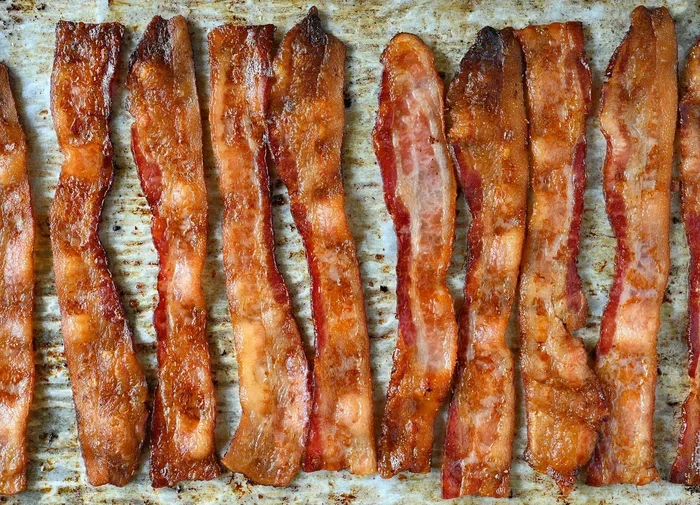
After 18 minutes, check the bacon. Look for deep golden-brown color and crispy edges. The bacon will have shrunk slightly and the fat will look rendered and slightly bubbly. If you prefer chewy bacon, pull it out a couple of minutes early. For extra crispy bacon, add 2-3 more minutes. Keep a close eye on it during the last few minutes to prevent burning.
Step 6: Drain and Serve
Use tongs to transfer the bacon to a plate lined with paper towels. Let it cool for a minute. The bacon will continue to crisp up as it rests. Serve immediately, or store in an airtight container once fully cooled. Oven-baked crispy bacon stays crunchy longer than stovetop bacon because it is not sitting in its own grease.
Crispy vs Chewy: Finding Your Perfect Bacon Texture
One of the joys of oven-baked bacon is that you can dial in your preferred texture. The same basic method produces very different results with small adjustments. Here is how to get exactly what you want.
For Ultra-Crispy Bacon
Use thin-sliced bacon and bake at 400°F for 22-25 minutes. Let the bacon cool completely on the wire rack. The bacon fat rendering will be thorough, and the strips will snap when you bend them. This is the style perfect for sandwiches, salads, or topping burgers. Crispy bacon made in the oven has a more uniform crunch than stovetop versions.
For Chewy, Flexible Bacon
Choose thick-cut bacon and reduce the oven temperature to 375°F (190°C). Bake for 16-18 minutes. Pull the bacon out when it is still slightly pliable. The chewy bacon will have a rich, porky flavor and a tender bite. This style is ideal for wrapping around scallops or layering on a breakfast sandwich. No-flip bacon works beautifully for chewy textures too, as the gentle heat renders fat slowly without toughening the meat.
Comparison Table: Crispy vs Chewy
- Texture: Crispy = firm and snaps; Chewy = flexible and tender.
- Bacon type: Thin-sliced for crispy; Thick-cut for chewy.
- Temperature: 400°F for crispy; 375°F for chewy.
- Time: 22-25 minutes for crispy; 16-18 minutes for chewy.
- Best uses: Crispy for toppings and snacks; Chewy for sandwiches and wraps.
Common Mistakes And How To Fix Them
Even with a simple method, small errors can affect your oven-baked crispy bacon. Here are the most common bacon mistakes and how to avoid them.
Overcrowding the Pan
Placing too many bacon strips touching each other traps steam. The bacon steams instead of baking, resulting in floppy, unevenly cooked strips. Always leave space between the bacon slices. If you need to cook a large batch, use two baking sheets and rotate them halfway through. This ensures even cooking and crispy edges on every strip.
Skipping the Wire Rack
Laying bacon directly on a parchment-lined baking sheet is a common shortcut. It works, but the bacon will not be as crispy. The bottom side sits in its own grease, becoming soft and flabby. The wire rack is what makes no-flip bacon truly crispy. It lifts the bacon, allowing the hot air to reach the bottom surface. Without it, you lose the signature crunch of oven-baked bacon.
Opening the Oven Door Too Often
Every time you open the oven door, you drop the temperature significantly. This can cause the bacon to cook unevenly and extend the total bacon cooking time. Trust the process and keep the door closed for at least the first 15 minutes. Use the oven light to check on the bacon if you need to. This patience pays off with perfectly crispy bacon.
Using the Wrong Temperature
Too low a temperature and the bacon will burn before the fat fully renders. Too high and the edges turn black while the center stays raw. 400°F (200°C) is the sweet spot for most bacon oven recipes. If you have a convection oven, you can drop the temperature by 25°F, as the fan circulates heat more efficiently. Convection oven bacon often cooks 2-4 minutes faster, so start checking early.
Not Draining the Bacon Properly
Leaving crispy bacon on a hot tray will continue to cook and can become brittle or even burnt. Transfer it to a plate with paper towels right away. If you want to keep it warm, place it on a wire cooling rack set over a baking sheet in a warm oven (200°F) for up to 10 minutes. This keeps the bacon crisp without overcooking it.
Expert Insights: Why No-Flip Bacon Works So Well
Professional chefs and food scientists agree that oven-baked bacon is superior for even cooking. The principle is simple: hot air surrounds the food from all directions. On a stovetop, the flame heats the bottom of the pan, which then heats the bacon. The top side relies on radiant heat and rendered fat. This creates a temperature gap. In the oven, the bacon strips are suspended in a uniform heat environment. The bacon fat rendering happens simultaneously on both sides, leading to crispy edges and a consistent texture throughout. This is the science behind no-flip bacon, and it is why the results are so reliable.
Another expert tip is to use a baking tray with a drip pan for extra insurance against grease fires. The drip pan sits below the wire rack and catches all the rendered fat. This is especially helpful when cooking large quantities. It also makes cleanup a breeze, as you can simply discard the cooled grease or save it for cooking. Many breakfast lovers keep a dedicated bacon tray in their kitchen for this purpose.
Finally, remember that bacon doneness continues after you remove it from the oven. The strips will firm up as they cool. If you pull them out when they look slightly underdone, they will reach the perfect crispy bacon stage on the plate. This carryover cooking is a valuable trick for oven-baked crispy bacon that always hits the mark.
Conclusion: Enjoy Hands-Off, Crispy Bacon Every Time
Do you need to flip bacon in the oven? Absolutely not. The no-flip bacon method is the easiest, most reliable way to get crispy bacon at home. With a wire rack, a baking sheet, and a hot oven, you can walk away and let the heat do the work. The result is evenly cooked bacon with crispy edges and a perfect snap in every bite. Whether you love extra crispy bacon or slightly chewy strips, the oven delivers consistent, delicious results every single time.
This oven-baked bacon technique saves you time, reduces mess, and frees you up to focus on the rest of breakfast. It is a simple upgrade that any home cook can make. Once you try no-flip bacon, you will wonder why you ever stood over a hot skillet flipping strips. Give it a try this weekend, and enjoy the easiest crispy bacon you have ever made.
Frequently Asked Questions
Do You Need To Flip Bacon In The Oven If You Use Parchment Paper?
No, parchment paper does not change the need to flip. The no-flip method works with or without parchment paper. The parchment paper simply catches grease and prevents sticking. The hot air still circulates around the bacon on the wire rack, so you get crispy bacon without flipping.
What Is The Best Oven Temperature For No-Flip Bacon?
400°F (200°C) is the ideal oven temperature for oven-baked crispy bacon. It renders the fat quickly and creates crispy edges without burning. If you prefer chewier bacon, drop the temperature to 375°F and add a few extra minutes. Always use an oven thermometer to ensure accuracy.
Can You Use A Regular Oven Or Do You Need A Convection Oven For No-Flip Bacon?
A regular oven works perfectly fine for no-flip bacon. The convection setting can speed up cooking and promote even crispiness, but it is not required. If you use a convection oven, reduce the temperature by 25°F and check the bacon a few minutes early. Both types of oven deliver excellent hands-off bacon results.
How Long Does It Take To Bake Bacon Without Flipping?
The typical bacon cooking time is 18 to 25 minutes at 400°F. Thin-sliced bacon may be done in 18 minutes, while thick-cut bacon might need the full 25 minutes. The bacon doneness depends on your oven, the bacon thickness, and how crispy you like it. Start checking at 18 minutes to avoid overcooking.
Why Is My Oven Bacon Not Crispy?
The most common reason is skipping the wire rack. Without it, the bacon steams on the baking sheet and stays soft. Overcrowding the pan or opening the oven door too often can also prevent crispy edges. Make sure the oven is fully preheated, leave space between strips, and resist the urge to peek too early. These small adjustments will give you perfectly crispy bacon.
Can You Save And Reheat Oven-Baked Bacon?
Yes, oven-baked crispy bacon stores well and reheats beautifully. Let it cool completely, then store in an airtight container at room temperature for up to 5 days. To reheat, place the strips on a wire rack in a 350°F oven for 3-5 minutes. This restores the crunch without making the bacon soggy. It is a great tip for meal prep or making large batches ahead of time.