How Long To Cook Beef Rump Roast In Oven The Right Way
Cooking a beef rump roast in the oven takes about 3 to 4 hours at 325°F for a tender, flavorful result. The exact time depends on roast size, oven temperature, and your desired doneness. This guide walks you through every step so you can cook beef rump roast in oven like a pro.
There is something truly special about a beef rump roast in the oven. It fills your kitchen with a rich, savory smell that makes everyone gather around the table. But if you have never made one before, you might wonder, “How long to cook beef rump roast in oven?” The answer is not as simple as just setting a timer. The time depends on the size of your roast, the oven temperature, and how done you like your meat.
In this guide, we will walk you through everything you need to know. We will cover the right temperature, the best timing, and simple steps to get a tender, juicy roast every single time. Whether you are a beginner or just need a refresher, this article will help you cook beef rump roast in oven with confidence.
Key Takeaways
- Plan for 3 to 4 hours: A 3 to 4 pound beef rump roast needs about 3 to 4 hours at 325°F.
- Use a meat thermometer: The internal temp tells you when your roast is perfectly done.
- Sear first, then roast: Searing locks in juices and adds a rich, deep flavor.
- Let it rest: Resting your roast for 15 to 20 minutes keeps it juicy when you slice it.
- Avoid common mistakes: Skipping the sear, cutting too early, and using the wrong temp are top errors.
- Season simply: Salt, pepper, garlic, and herbs go a long way with a beef rump roast.
📑 Table of Contents
- How Long To Cook Beef Rump Roast In Oven
- Choosing The Right Beef Rump Roast
- Best Oven Temperature And Time Settings
- Step-by-Step Guide To Cooking Your Roast
- How To Know When The Roast Is Done
- Resting, Slicing, And Serving Your Roast
- Common Mistakes To Avoid
- Quick Tips For A Perfect Beef Rump Roast
- Expert Insights On Oven Roasting
- Conclusion
How Long To Cook Beef Rump Roast In Oven
The short answer is about 3 to 4 hours for a standard 3 to 4 pound roast at 325°F. But there is more to it than just time. The beef rump roast cooking time changes based on a few key factors that we will break down below.
Why Size Matters
A smaller roast, around 2 pounds, might only need 2 to 2.5 hours. A larger roast, say 5 to 6 pounds, could take 4.5 to 5 hours. The weight of your roast is the biggest factor in how long it will cook. Always use a kitchen scale to check the weight before you start.
The Role of Oven Temperature
Most recipes call for 325°F, which is a sweet spot for slow roasting. Some cooks prefer 300°F for an even slower, more tender result. Higher temps like 350°F will cook the roast faster but can dry it out. Low and slow cooking is the best approach for a beef rump roast because it breaks down the tough fibers and makes the meat fall-apart tender.
What About Different Doneness Levels
Your preferred level of doneness also affects the time. A rare roast pulls off the heat sooner than a well-done one. Here is a quick look at how temperature and time connect:
- Rare (125°F): About 3 hours for a 3-pound roast
- Medium Rare (135°F): About 3.5 hours for a 3-pound roast
- Medium (145°F): About 4 hours for a 3-pound roast
- Well Done (160°F): About 4.5 hours for a 3-pound roast
These times are estimates. Always use an oven-safe meat thermometer to check the internal temperature. This is the only way to know for sure.
Choosing The Right Beef Rump Roast
Not all beef rump roasts are the same. The cut, size, and quality of the meat all matter when you are planning your cook time.
What Cut Should You Buy?
The beef rump roast comes from the rear section of the cow. It is a tough cut with a lot of connective tissue, which makes it perfect for slow oven cooking. When the meat cooks low and slow, those tough fibers break down and turn into juicy, tender meat. This is why beef rump roast is such a great choice for oven roasting.
How Big Should Your Roast Be?
For most families, a 3 to 4 pound roast works well. It feeds about 6 to 8 people. If you are cooking for a smaller group, a 2-pound roast is plenty. Here are some quick tips for choosing the right size:
- 2 pounds: Feeds 3 to 4 people, cooks in about 2 to 2.5 hours
- 3 to 4 pounds: Feeds 6 to 8 people, cooks in about 3 to 4 hours
- 5 to 6 pounds: Feeds 10 to 12 people, cooks in about 4.5 to 5 hours
Quality and Marbling
Look for a roast with good marbling. Those white streaks of fat melt during cooking and keep the meat moist. A lean roast can dry out fast, so pick one with a nice layer of fat on the outside too. Your butcher can help you pick a great piece of meat.
Best Oven Temperature And Time Settings
Getting the temperature right is the most important part of cooking beef rump roast in oven. Too hot and the outside burns before the inside is done. Too low and it takes forever without the right texture.
The 325°F Standard
Most cooking experts agree that 325°F is the best temperature for a beef rump roast. It cooks the meat evenly and gives you time for the flavors to develop. At this temperature, a 3 to 4 pound roast will be done in about 3 to 4 hours.
Can You Cook at 300°F?
Yes, you can. Cooking at 300°F takes a bit longer but can give you an even more tender result. The lower heat lets the collagen in the meat dissolve slowly, which makes the roast super soft. Just add about 30 to 60 extra minutes to your cook time.
What About 350°F?
350°F is faster, but it comes with risks. The outside of the roast can overcook and dry out before the inside reaches the right temperature. If you use 350°F, check the roast more often and use a meat thermometer to avoid overcooking.
Quick Comparison Table
| Oven Temp | Roast Size | Approx. Cook Time | Best For |
|---|---|---|---|
| 300°F | 3 to 4 lbs | 4 to 5 hours | Extra tender, fall-apart texture |
| 325°F | 3 to 4 lbs | 3 to 4 hours | Most roasts, balanced result |
| 350°F | 3 to 4 lbs | 2.5 to 3 hours | Faster cook, watch closely |
As you can see, the oven temperature for roast beef you choose changes everything. Pick the one that fits your schedule and what you want the roast to feel like.
Step-by-Step Guide To Cooking Your Roast
Now that you know the time and temperature, let us walk through the actual steps. This is the part where your roast goes from raw to restaurant-quality.
Step 1: Prep the Roast
Take your beef rump roast out of the fridge about 30 minutes before cooking. Letting it come to room temperature helps it cook more evenly. Pat it dry with paper towels. This step is important because dry meat sears better.
Step 2: Season It Well
Keep it simple. Salt, pepper, and minced garlic work wonders. You can also add dried rosemary, thyme, or oregano. Rub the seasoning all over the roast, including the sides. The beef rump roast seasoning does not need to be complicated. A little salt and pepper go a long way.
Step 3: Sear the Roast
Heat a large oven-safe skillet or Dutch oven over medium-high heat. Add a bit of oil and place the roast in the pan. Sear it on all sides until you get a nice brown crust. This should take about 2 to 3 minutes per side. Searing creates a flavor barrier that locks in the juices. Skipping this step is one of the most common beef roast cooking mistakes.
Step 4: Add Liquids and Aromatics
After searing, add beef broth, a splash of red wine, or even water to the pan. Toss in some chopped onions, carrots, and celery if you like. These aromatics add flavor to the roast and make a great pan sauce later. You do not need to submerge the roast. Just add enough liquid to cover the bottom of the pan.
Step 5: Cover and Place in the Oven
Cover the pan tightly with aluminum foil or a lid. This traps moisture and creates a steaming effect that keeps the roast juicy. Put it in the preheated oven and set your timer.
Step 6: Check the Temperature
Start checking the internal temperature about 30 minutes before you expect it to be done. Insert the thermometer into the thickest part of the roast, avoiding bone or fat pockets. Here are the target temps for different levels of doneness:
- Rare: 125°F
- Medium Rare: 135°F
- Medium: 145°F
- Well Done: 155°F to 160°F
Remember that the temperature will rise about 5 to 10 degrees after you take the roast out. This is called carryover cooking and it is something every home cook should know about.
Step 7: Rest and Slice
This step is just as important as the cooking itself. We will cover it in detail in the next section.
How To Know When The Roast Is Done
Timing gives you a rough idea, but the only real way to know is with a meat thermometer. Relying on time alone can lead to an overcooked or undercooked roast.
Using a Meat Thermometer
A good kitchen thermometer is an inexpensive tool that changes everything. Digital thermometers with a probe give you fast, accurate readings. Insert it into the center of the thickest part of the roast. Make sure the probe does not touch the pan or any bone, as that can give you a false reading.
Visual and Touch Clues
If you do not have a thermometer, you can use touch and sight as rough guides. Press the center of the roast with your finger:
- Very soft: Likely rare
- Soft and springy: Likely medium rare
- Firm but gives slightly: Likely medium
- Very firm: Likely well done
You can also cut a small slit in the thickest part and check the color of the meat inside. But honestly, a thermometer is the best tool for this job.
The Danger Zone to Avoid
Beef is safe to eat at 145°F when rested for 3 minutes. However, many people prefer their roast at 135°F for medium rare. Avoid pulling the roast at temperatures below 120°F, as it will be too raw for most tastes. Also, avoid going above 165°F, as the meat will dry out quickly.
Resting, Slicing, And Serving Your Roast
You have put in the work. Now do not ruin it by skipping the rest. Resting is one of the most important steps in the whole process.
Why Resting Matters
When a roast comes out of the oven, the juices are pushed toward the center. If you cut into it right away, all those juices run out onto the cutting board. Resting lets the juices redistribute throughout the meat, which makes every slice moist and flavorful.
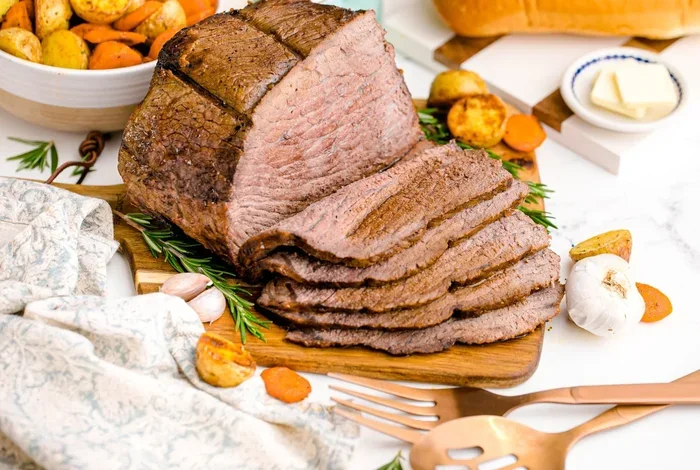
Let your roast rest for at least 15 to 20 minutes. Tent it loosely with aluminum foil to keep it warm. The beef roast rest time is non-negotiable if you want a juicy result.
How to Slice It
Always slice against the grain. The grain is the direction of the muscle fibers. Cutting against them shortens the fibers, which makes each piece easier to chew and more tender. Use a sharp carving knife and cut slices about a quarter-inch thick.
Making a Pan Sauce
Do not throw away the juices left in the pan. They are full of flavor. Place the pan on the stove over medium heat. Add a splash of beef broth and scrape up the brown bits from the bottom. Let it simmer for a few minutes and you have a simple, delicious pan sauce to drizzle over your roast.
Best Side Dishes
A beef rump roast pairs well with many sides. Here are some ideas:
- Mashed potatoes
- Roasted root vegetables
- Steamed green beans
- Crusty bread to soak up the juices
- A simple garden salad
Common Mistakes To Avoid
Even experienced cooks make mistakes with oven roasts. Here are the most common ones and how to avoid them.
Skipping the Sear
Some people skip searing to save time. Do not do this. Searing adds a deep, rich flavor through the Maillard reaction. It is a quick step that makes a huge difference in the final taste of your roast.
Not Using a Thermometer
guessing the doneness by time alone is risky. Every oven is different, and the roast size varies. A thermometer takes the guesswork out and gives you perfect results every time.
Cutting Too Early
We said it once, but it is worth repeating. Do not cut into your roast right away. The beef roast carryover cooking process continues to raise the internal temperature after you pull it from the oven. Cutting too early releases all the juices and leaves you with dry meat.
Using the Wrong Pan
Use an oven-safe skillet, Dutch oven, or roasting pan. Do not use a thin baking sheet. A heavy pan distributes heat evenly and helps with the searing process too.
Overcooking the Roast
It is easy to go too far. Set a timer, check the temperature early, and pull the roast as soon as it hits your target temp. A few minutes can be the difference between perfect and dry.
Quick Tips For A Perfect Beef Rump Roast
Here are some extra tips that can take your roast from good to great:
- Brine overnight: Soaking the roast in a saltwater solution for 8 to 12 hours adds moisture and flavor.
- Use fresh herbs: Rosemary and thyme added to the pan liquid give a wonderful aroma.
- Let the roast shine: Keep the seasoning simple. A good piece of meat does not need a lot of fuss.
- Preheat your oven: Always preheat to the target temperature before putting the roast in.
- Save the leftovers: Sliced beef rump roast makes amazing sandwiches, tacos, and salads the next day.
Expert Insights On Oven Roasting
Professional chefs agree on a few key principles when it comes to oven roasting beef.
Low and slow wins the race. A lower temperature over a longer period gives the collagen in the beef time to break down. This is what creates that melt-in-your-mouth texture that everyone loves. Beef rump roast is a cut that rewards patience. It is not a steak you can sear quickly on a pan. It needs time and gentle heat.
Another expert tip is to sear the roast on all sides before it goes in the oven. This step builds layers of flavor that you cannot get any other way. The brown crust on the outside becomes the foundation of a rich, savory pan sauce.
Finally, always rest your roast. Even if you are dying to cut into it, give it 15 to 20 minutes. The result will be worth the wait. Juicy, tender slices of beef rump roast are the reward for a little patience.
Conclusion
How long to cook beef rump roast in oven comes down to a few simple factors: the size of your roast, the oven temperature, and your preferred level of doneness. For most cooks, a 3 to 4 pound roast at 325°F will take about 3 to 4 hours. Use a meat thermometer to check the internal temperature, and always let your roast rest before slicing.
Cooking a beef rump roast is one of the most rewarding things you can do in the kitchen. It is a dish that brings people together and fills the house with an incredible aroma. Follow the steps in this guide, avoid the common mistakes, and you will serve a roast that rivals any restaurant. So preheat your oven, grab your beef rump roast, and get ready to make something truly delicious.
Frequently Asked Questions
How long does it take to cook a 3 pound beef rump roast in the oven?
At 325°F, a 3-pound beef rump roast takes about 3 to 3.5 hours. The exact time depends on your desired doneness. Use a meat thermometer to check the internal temperature for the best results.
What is the best temperature to cook beef rump roast in oven?
325°F is the most recommended temperature. It cooks the roast evenly and gives you a tender, juicy result. Some cooks prefer 300°F for an even slower, more tender roast.
Should I cover my beef rump roast with foil while cooking?
Yes, covering the roast with foil or a lid traps moisture and keeps the meat juicy. You can remove the foil during the last 30 minutes if you want a slightly crispier outer layer.
Can I cook a beef rump roast at 350°F?
Yes, but it cooks faster and there is a higher risk of drying out. At 350°F, a 3 to 4 pound roast will take about 2.5 to 3 hours. Check the temperature more frequently at this setting.
How do I know when my beef rump roast is done?
The best way is to use a meat thermometer. For medium rare, aim for 135°F internal temperature. For medium, target 145°F. Always remember the temperature will rise a few degrees after you take the roast out of the oven.
How long should I rest a beef rump roast before slicing?
Let the roast rest for 15 to 20 minutes after taking it out of the oven. Tent it loosely with foil to keep it warm. This resting period allows the juices to redistribute, which makes every slice moist and flavorful.