Can You Use A Stock Pot As A Dutch Oven For Cooking
Yes, you can use a stock pot as a Dutch oven for many cooking tasks, but there are important differences to know. A stock pot is tall and deep, while a Dutch oven is short and wide with thick walls. Understanding these differences helps you choose the right cooking vessel for soups, stews, braises, and one-pot meals. This guide covers when a stock pot works, when it does not, and how to get the best results either way.
Cooking at home becomes so much easier when you have the right tools. But what happens when a recipe calls for a Dutch oven and all you have is a stock pot? Many home cooks face this question every day. The good news is that using a stock pot as a Dutch oven is possible in many situations. You just need to know the differences, the trade-offs, and the best ways to adapt.
This article walks you through everything you need to know. We will cover what each pot does best, when they overlap, and how to get great results no matter which one you reach for. Whether you are making a hearty soup, a tender pot roast, or a rich stew, this guide has you covered.
Key Takeaways
- A stock pot can substitute for a Dutch oven in many recipes, especially soups, stews, and boiling tasks.
- Dutch ovens excel at heat retention and even cooking due to their thick walls and tight-fitting lids.
- Stock pots are taller and shallower, which affects moisture control and heat distribution during slow cooking.
- Not all stock pots are oven-safe, so always check the manufacturer’s guidelines before using one in the oven.
- Enameled steel stock pots offer a closer match to Dutch oven performance than thin aluminum ones.
- Lid fit matters greatly for braising and slow cooking, and stock pot lids often differ from Dutch oven lids.
- Choosing the right pot depends on your recipe, cooking method, and the results you want to achieve.
📑 Table of Contents
- What Is a Stock Pot and What Is a Dutch Oven?
- Can You Really Use a Stock Pot As a Dutch Oven?
- Key Differences Between a Stock Pot and a Dutch Oven
- When a Stock Pot Works Great As a Dutch Oven Substitute
- When You Should Stick With a Real Dutch Oven
- Comparison: Stock Pot vs. Dutch Oven
- Quick Tips for Using a Stock Pot As a Dutch Oven
- Common Mistakes to Avoid
- Expert Insights on Choosing the Right Pot
- Which Stock Pots Work Best as Dutch Oven Substitutes?
- How to Decide: Stock Pot or Dutch Oven for Your Recipe?
- Final Thoughts on Using a Stock Pot As a Dutch Oven
What Is a Stock Pot and What Is a Dutch Oven?
Before we dive into substitutions, let us quickly define each cooking vessel. Knowing the basics helps you understand why they behave differently on the stove and in the oven.
What Is a Stock Pot?
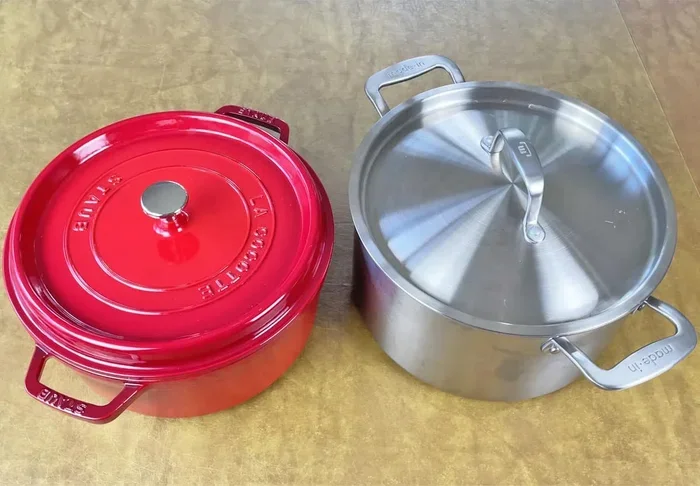
A stock pot is a tall, deep cooking vessel with a long handle and sometimes a second smaller handle on the opposite side. It is designed primarily for simmering and boiling. Most stock pots have thin to medium walls and a wide base. They come in sizes ranging from 8 quarts all the way up to 20 quarts or more.
Stock pots are perfect for making chicken stock, boiling pasta, cooking large batches of chili, or preparing big pots of soup. The tall sides allow liquid to stay contained even when it bubbles vigorously. Many stock pots have a stock pot lid that fits snugly to keep heat and moisture inside.
What Is a Dutch Oven?
A Dutch oven is a heavy, thick-walled cooking pot with a tight-fitting lid. It is usually made from cast iron, though enameled cast iron and enameled steel versions exist too. The Dutch oven is famous for its heat retention and even heat distribution. It can go from stovetop to oven with ease.
People use Dutch ovens for braising, slow cooking, baking bread, making pot roasts, and preparing rich stews. The thick walls hold heat steady, which makes low and slow cooking a breeze. A cast iron Dutch oven is a kitchen staple for many serious home cooks.
Can You Really Use a Stock Pot As a Dutch Oven?
The short answer is yes. The longer answer depends on what you are cooking and what results you expect. A stock pot can handle many of the same tasks as a Dutch oven, but it does so in a different way. Let us break this down.
When a Stock Pot Works Well
A stock pot shines when you are cooking with a lot of liquid. If your recipe involves boiling, simmering, or making a broth-based dish, a stock pot works great. Think about these common cooking tasks:
- Making soups and broths where liquid is the main component
- Boiling pasta or vegetables in a large volume of water
- Simmering beans or lentils for a long time
- Cooking one-pot meals with plenty of sauce or liquid
- Braising meat in a covered pot with added liquid
In all of these cases, a stock pot as a Dutch oven substitute works very well. The deep walls hold plenty of food, and the lid keeps moisture from escaping. You will get tasty results that are close to what a Dutch oven would produce.
When a Stock Pot Falls Short
Now, let us talk about where a stock pot struggles. The main issue comes down to wall thickness and heat retention. A Dutch oven holds heat very firmly and radiates it evenly around the food. A stock pot, especially a thin one, does not do this as well.
Here are situations where a stock pot is not the best choice:
- Dry-heat braising where you want to sear meat and then cook it slowly with minimal liquid
- Baking bread inside a hot pot, which requires thick walls to hold steady high heat
- Cooking in a very hot oven above 400 degrees Fahrenheit
- Recipes that need a tight seal to trap steam and build pressure inside the pot
For these tasks, a real Dutch oven will give you much better results. The heavy walls and snug lid create the cooking environment that these recipes need.
Key Differences Between a Stock Pot and a Dutch Oven
Understanding the differences helps you make smart choices in the kitchen. Let us look at the main factors that set these two pots apart.
Wall Thickness and Heat Retention
This is the biggest difference. A Dutch oven has thick walls, often a quarter inch or more. This means it holds heat for a long time, even after you remove it from the burner. A stock pot usually has thinner walls, so it heats up fast but also loses heat quickly.
If you are doing slow cooking or low-and-slow braising, the Dutch oven wins. It keeps a steady temperature without hot spots. A stock pot may have more temperature swings, which can affect how your food cooks.
Shape and Capacity
A Dutch oven is short and wide. This shape puts food closer to the heat source on all sides. A stock pot is tall and narrow. The food sits higher up, which means the bottom gets more direct heat while the sides get less.
This matters for recipes like pot roast or braised short ribs. In a Dutch oven, the meat cooks evenly from every angle. In a stock pot, the bottom might cook faster than the top. You can work around this by stirring more often or adjusting the heat.
Lid Design and Fit
A Dutch oven lid is heavy and fits very tightly. This creates a seal that traps steam inside, which is essential for braising and slow cooking. A stock pot lid is usually lighter and may not fit as snugly.
A loose-fitting lid lets more steam escape, which can dry out your food during long cooking times. If you are using a stock pot for braising, you can try wrapping the lid with aluminum foil to create a tighter seal. This simple trick helps a lot.
Oven Safety
Not every stock pot is safe for oven use. Many stock pots have plastic handles, rubber grips, or non-oven-safe materials on the lid. A traditional Dutch oven is built to handle extreme oven temperatures, sometimes up to 500 degrees Fahrenheit or more.
Before you put a stock pot in the oven, check the manufacturer’s label. Look for words like oven-safe and check the maximum temperature rating. If your stock pot is not oven-safe, it cannot replace a Dutch oven for oven recipes.
When a Stock Pot Works Great As a Dutch Oven Substitute
Let us get practical. Here are specific situations where you can confidently use a stock pot instead of a Dutch oven and still get excellent food.
Soups and Stews
Soups and stews are the easiest swaps. Since these recipes have lots of liquid, the thinner walls of a stock pot do not matter much. The liquid does most of the work, and the heat stays fairly even throughout the pot.
Try making a beef stew, a vegetable soup, or a chili in your stock pot. You will be happy with the results. Just keep the heat at a gentle simmering level to avoid scorching the bottom.
Boiling and Blanching
A stock pot is actually better than a Dutch oven for boiling tasks. The tall sides hold more water, and the wide base gives you plenty of room for pasta, potatoes, or corn on the cob. Use your stock pot for these jobs and save your Dutch oven for tasks that need heavy heat retention.
Making Stock and Bone Broth
This is what a stock pot was born to do. The tall shape holds lots of bones and water, and the long simmering time works perfectly with thin walls. You will get a rich, flavorful stock every time. A Dutch oven is too small for most batch stock-making.
One-Pot Pasta Dishes
One-pot pasta recipes work beautifully in a stock pot. The pasta cooks in the same liquid as the sauce, and the tall walls keep everything contained. Stir occasionally, and you will have a delicious meal with very little cleanup.
When You Should Stick With a Real Dutch Oven
There are times when nothing beats a real Dutch oven. Knowing these situations helps you plan your cooking and avoid disappointing results.
Braising with Little Liquid
Braising works best when the pot traps steam and circulates it around the food. The heavy walls of a Dutch oven create a moist, hot environment that tenderizes tough cuts of meat beautifully. A stock pot simply cannot match this because of its thinner walls.
If you are making a classic braised dish like coq au vin or boeuf bourguignon, reach for the Dutch oven. The results will be noticeably better.
Baking Bread
Dutch oven bread baking has become hugely popular, and for good reason. The heavy lid traps steam, which creates a crispy, golden crust. The thick walls hold heat steady, which gives the bread an even rise.
A stock pot is not designed for this. The thin walls and lighter lid will not hold enough heat to bake bread properly. If sourdough is your goal, invest in a real Dutch oven.
High-Heat Searing Followed by Oven Cooking
A Dutch oven handles high stovetop heat and then goes straight into a hot oven. This is the magic of braising. You sear the meat on the stove, add your vegetables and liquid, cover it, and put it in the oven for hours.
A stock pot may warp under high heat, and its lid may not seal properly in the oven. For this type of cooking vessel versatility, a Dutch oven is the clear winner.
Cooking for a Crowd at a Low, Steady Temperature
If you are feeding a large group and need food to stay warm for hours, a Dutch oven keeps a steady temperature that a stock pot cannot match. The thermal mass of the heavy walls acts like a battery, storing heat and releasing it slowly.
Think about holiday meals, potlucks, or backyard gatherings. A Dutch oven keeps your food at the right cooking temperature long after it comes out of the oven.
Comparison: Stock Pot vs. Dutch Oven
Here is a quick side-by-side look at how these two pots compare across key factors.
| Feature | Stock Pot | Dutch Oven |
|---|---|---|
| Wall Thickness | Thin to medium | Thick (heavy gauge) |
| Shape | Tall and deep | Short and wide |
| Heat Retention | Low to moderate | Very high |
| Lid Fit | Moderate seal | Tight seal |
| Oven Safe | Varies by model | Yes, almost always |
| Best For | Boiling, simmering, stock | Braising, baking, slow cooking |
| Weight | Light to medium | Heavy |
| Price Range | Affordable to mid-range | Mid-range to expensive |
| Common Material | Stainless steel, aluminum | Cast iron, enameled steel |
As you can see, each pot has its strengths. The best approach is to own both if you can, but if you only have one, know what it does best.
Quick Tips for Using a Stock Pot As a Dutch Oven
Here are some practical tips to help you get the best results when you substitute a stock pot for a Dutch oven.
- Use a heat diffuser on the stovetop to prevent hot spots and scorching on the bottom of the pot.
- Add extra liquid if your recipe calls for braising with minimal liquid. A stock pot loses moisture faster than a Dutch oven.
- Wrap the lid in foil to create a tighter seal and trap more steam inside during slow cooking.
- Stir more frequently to compensate for the thinner walls and less even heat distribution.
- Keep the heat lower than you normally would. Stock pots respond faster to heat changes, so a gentle setting often works best.
- Check for oven safety before putting your stock pot in the oven. Remove any plastic or rubber parts first.
- Preheat slowly to avoid warping the thin metal, especially with stainless steel stock pots.
Common Mistakes to Avoid
Even experienced cooks make mistakes when swapping pots. Here are the most common ones to watch out for.
Using a non-oven-safe stock pot in the oven. This can melt handles, damage the lid, or even create a safety hazard. Always double-check the manufacturer’s recommendations before using any pot in the oven.
Overheating an empty stock pot. Thin walls heat up fast, and an empty pot on high heat can warp or damage the cooking surface. Always add liquid or food before heating.
Expecting the same results as a Dutch oven. A stock pot is a different tool. It will not give you the same crispy crust on bread or the same deep braise on a pot roast. Adjust your expectations and your technique accordingly.
Ignoring lid fit. A loose lid means steam escapes, and your food may dry out during long cooking times. If your stock pot lid does not fit well, use foil as a workaround.
Skipping the heat diffuser. Without a diffuser, the bottom of a thin stock pot can get much hotter than the sides. This leads to scorching and uneven cooking. A heat diffuser is a cheap and effective solution.
Expert Insights on Choosing the Right Pot
We asked experienced chefs and home cooking experts for their thoughts on using a stock pot as a Dutch oven. Here is what they had to say.
“For soups, stews, and boiling tasks, a stock pot works just fine as a Dutch oven substitute,” says Chef Maria Torres, a professional chef with over 15 years of experience. “But for braising and baking, the Dutch oven’s thick walls make all the difference. There is no real shortcut there.”
“If you are on a budget, a good enameled steel stock pot is a smart investment,” adds cooking instructor James Lee. “It handles a wide range of cooking tasks and can step in for a Dutch oven more often than people think. Just understand its limits.”
The consensus among experts is clear: a stock pot is a versatile and valuable kitchen tool. It can handle many Dutch oven tasks with a few adjustments. But for the best results in braising, baking, and slow cooking, nothing truly replaces a quality Dutch oven.
Which Stock Pots Work Best as Dutch Oven Substitutes?
If you plan to use your stock pot in place of a Dutch oven, choose one that comes as close as possible to Dutch oven performance. Here are some features to look for.
Thick Walls and Heavy Bottom
A heavy bottom stock pot with thick walls will retain heat better and distribute it more evenly. Look for pots labeled as “tri-ply” or “five-ply” construction. These have layers of stainless steel and aluminum or copper that improve heat retention.
Oven-Safe Construction
Choose a stock pot that is fully oven-safe up to at least 400 degrees Fahrenheit. Make sure the lid is also oven-safe. Some high-end stock pots come with metal lids that fit tightly, which is a big plus.
Enameled Steel Options
An enameled steel stock pot is the closest you can get to a Dutch oven in stock pot form. The enamel coating provides a non-reactive cooking surface, and the steel construction offers better heat retention than plain aluminum or thin stainless steel.
Size Matters
For Dutch oven-style cooking, a 6 to 8 quart stock pot works best. This size gives you enough room for most recipes while keeping the food close enough to the heat source for even cooking.
How to Decide: Stock Pot or Dutch Oven for Your Recipe?
When you stand in front of your kitchen cabinets wondering which pot to grab, ask yourself a few simple questions.
- Does my recipe have a lot of liquid? If yes, the stock pot is a great choice.
- Am I cooking at a low temperature for a long time? The Dutch oven will perform better here.
- Do I need a tight lid seal? Choose the Dutch oven or use foil with the stock pot.
- Am I cooking in the oven? Make sure your stock pot is oven-safe first.
- Am I searing meat before slow cooking? The Dutch oven handles this best.
Answering these questions takes the guesswork out of pot selection. You will feel more confident every time you cook.
Final Thoughts on Using a Stock Pot As a Dutch Oven
The truth is that every kitchen benefits from having both a stock pot and a Dutch oven. But life happens, and sometimes you need to work with what you have. The good news is that a stock pot as a Dutch oven substitute works well for many everyday cooking tasks.
Soups, stews, boiling, and liquid-based recipes are where a stock pot shines. For drier cooking methods, slow braises, and oven baking, a real Dutch oven is the better choice. Understanding these differences makes you a smarter, more confident cook.
Next time you reach for your stock pot instead of a Dutch oven, you will know exactly what to expect. You will know how to adjust your technique, how to compensate for the differences, and how to still get delicious results. Cooking is all about adaptability, and now you have the knowledge to make it work with any pot in your kitchen.
So go ahead and experiment. Try your favorite Dutch oven recipe in a stock pot. You might be surprised at how well it works. And if you ever get the chance to add a Dutch oven to your collection, you will know exactly what it brings to the table that your stock pot cannot quite match.
Happy cooking, and enjoy every meal you make with the tools you have.
Frequently Asked Questions
Can I braise meat in a stock pot instead of a Dutch oven?
Yes, you can braise meat in a stock pot, but the results will differ slightly. A stock pot has thinner walls, so it loses heat faster and may need more frequent stirring. Add extra liquid and keep the heat low for the best results. The meat will still be tender and flavorful, though the texture may not be as uniform as with a Dutch oven.
Is a stock pot safe to use in the oven?
It depends on the model. Many stock pots are oven-safe, but some have plastic handles, rubber grips, or non-oven-safe lids. Always check the manufacturer’s instructions before placing a stock pot in the oven. Look for oven-safe ratings and temperature limits on the product packaging or bottom of the pot.
What is the main advantage of a Dutch oven over a stock pot?
The main advantage is heat retention and even cooking. A Dutch oven’s thick walls hold heat steady and distribute it evenly, making it ideal for slow cooking, braising, and baking. A stock pot heats up quickly but does not hold heat as well, which works fine for liquid-based recipes but falls short for dry-heat cooking methods.
Can I bake bread in a stock pot?
Baking bread in a stock pot is not recommended. Bread baking requires a pot that holds intense, steady heat and traps steam under a tight lid. Stock pots have thin walls and loose lids that cannot create the right environment. A Dutch oven is the best tool for baking bread at home.
What size stock pot should I buy if I want it to double as a Dutch oven?
A 6 to 8 quart stock pot is the best size for most households. It is large enough for soups, stews, and braises, while still fitting in most ovens. Choose a model with a heavy bottom and oven-safe construction for the closest Dutch oven-like performance.
Are enameled steel stock pots a good Dutch oven alternative?
Yes, enameled steel stock pots are one of the best alternatives to Dutch ovens. They offer better heat retention than thin aluminum or stainless steel stock pots, and the enamel coating makes them easy to clean. They are not as heavy as cast iron Dutch ovens, but they handle many cooking tasks very well.
=== CONCLUSION ===
Using a stock pot as a Dutch oven is a practical and workable solution for many home cooks. A stock pot handles soups, stews, boiling, and liquid-based recipes with ease. It may not match a Dutch oven for braising, baking, or slow cooking, but with a few simple adjustments, it can still deliver delicious meals.
Remember the key differences: wall thickness, lid fit, oven safety, and heat retention. Choose the right pot for each recipe, and you will enjoy great cooking results every time. Whether you have a stock pot, a Dutch oven, or both, the most important thing is to cook with confidence and enjoy the process.
Now that you know the answer to the question “Can you use a stock pot as a Dutch oven?”, you are ready to make the most of every pot in your kitchen. Get cooking, and savor every bite.