How Long To Cook Corned Beef In Dutch Oven Perfectly
Cooking corned beef in a Dutch oven is the easiest way to get tender, flavorful meat every time. This guide covers exact cooking times, temperatures, and simple steps so you can braise corned beef perfectly without any stress. You’ll learn how long to cook corned beef in a Dutch oven, from a 2-hour quick method to a 3-hour low-and-slow approach.
There’s something magical about how long to cook corned beef in a Dutch oven. The heavy pot traps moisture and heat, turning a tough cut into melt-in-your-mouth beef. Whether you’re feeding a crowd or meal-prepping for the week, a Dutch oven recipe like this one delivers consistent, juicy results.
Many people worry about timing. They wonder if three hours is too long or if a quick two-hour method will dry out the meat. This guide answers those questions. You’ll learn the exact corned beef cooking time for every method, plus tips to keep the meat tender. I’ll share my favorite braised corned beef techniques and simple sides that pair perfectly with the dish.
By the end, you’ll know exactly how to cook corned beef in a Dutch oven like a pro. No guesswork. No dry slices. Just flavorful, tender beef that your family will love.
Key Takeaways
- 3 hours is the sweet spot: Low and slow at 300°F gives the most tender results.
- Use a 6-quart Dutch oven: It fits a standard 3-4 pound corned beef brisket perfectly.
- Always rest the meat: Let it sit for 10-15 minutes before slicing against the grain.
- Save the broth: It makes amazing soup or gravy.
- Add vegetables later: Potatoes and carrots go in during the last 45 minutes.
- Pat the meat dry first: This helps get a nice brown sear.
- Don’t skip the rest: Resting keeps the juices inside the meat.
📑 Table of Contents
- Why a Dutch Oven Is Perfect for Corned Beef
- How Long To Cook Corned Beef In Dutch Oven: The Timing Guide
- Step-by-Step: Cooking Corned Beef in a Dutch Oven
- Making the Most of Your Braising Liquid
- Tips for Perfectly Tender Corned Beef
- Serving Suggestions and Pairings
- Common Mistakes to Avoid
- Key Takeaways
- Conclusion
Why a Dutch Oven Is Perfect for Corned Beef
The Science Behind Even Cooking
A Dutch oven distributes heat evenly. The thick walls hold steady temperatures, which is exactly what braised corned beef needs. Unlike a thin pan, it won’t create hot spots that burn the meat. The tight-fitting lid traps steam, which keeps the beef moist.
When you cook corned beef in a Dutch oven, the fat slowly renders. The collagen breaks down into gelatin. That’s what gives the meat its silky texture. A low and slow approach works best because it gives the connective tissue time to soften. This method also allows the pickling spices and aromatics to infuse deeply into the meat.
If you’ve ever wondered why restaurant corned beef tastes so tender, it’s the cooking vessel and the time. A Dutch oven mimics that professional environment right in your kitchen. The heavy lid prevents moisture from escaping, so the braising liquid stays rich and flavorful. Over time, the seasoning on the pot improves, adding a subtle layer of flavor to every batch.
Choosing the Right Size
For a 3-4 pound corned beef brisket, use a 6-quart Dutch oven. A 5-quart works for smaller cuts. If you buy a larger packer brisket, go for an 8-quart pot. Crowding the meat leads to uneven cooking. The liquid should cover at least half of the meat, not submerge it entirely. This balance creates steam while allowing the meat to brown slightly.
How Long To Cook Corned Beef In Dutch Oven: The Timing Guide
The answer to how long to cook corned beef in a Dutch oven depends on the heat level and the cut. Below is a comparison of the three most common methods.
| Method | Temperature | Time (per pound) | Best For |
|---|---|---|---|
| Low and Slow | 300°F | 45-60 minutes | Tender, fall-apart texture |
| Moderate Braise | 325°F | 30-45 minutes | Weeknight dinners |
| Quick Simmer | 350°F | 20-30 minutes | Thin slices, less fat |
The low and slow method at 300°F is my favorite. It takes about 3 hours for a 3-pound brisket. The meat becomes so tender you can cut it with a fork. The moderate braise at 325°F cuts the time in half but still yields juicy results. The quick simmer works if you’re short on time, but the meat can be slightly firmer.
Understanding Corned Beef Cuts
Not all corned beef is the same. The flat cut is leaner and slices neatly. The point cut has more fat and connective tissue, making it ideal for slow cooking. When you braise corned beef in a Dutch oven, the point cut becomes incredibly succulent. The flat cook dries out faster, so keep a close eye on it. Choose a cut that matches your patience and desired texture. A well-marbled point will reward you with rich, juicy slices.
Low and Slow: The 3-Hour Method
This is the gold standard for homemade corned beef. Set your oven to 300°F. Place the seasoned brisket in the Dutch oven with onions, garlic, and broth. Cover and cook for about 3 hours. The internal temperature should reach 200-205°F for tender meat.
I like to add a few mustard seeds and pickling spices to the liquid. They give the broth a classic flavor. After cooking, let the meat rest in the broth for 15 minutes. This keeps it juicy. The corned beef cooking time is forgiving here, so you can extend it by 30 minutes if needed. The meat won’t dry out easily at this low temperature.
Quick Braise: The 2-Hour Shortcut
If you need corned beef faster, try the 2-hour method. Raise the oven temperature to 325°F. The higher heat speeds up the collagen breakdown. However, you must keep the liquid level high. Check the pot every 30 minutes and add broth if needed.
This method works well for thinner cuts or when you’re in a hurry. The braised corned beef might not be as fall-apart tender, but it’s still delicious. Serve it with mashed potatoes and green beans for a complete meal. This Dutch oven recipe is perfect for busy weeknights when you want a home-cooked meal without the wait.
Overnight Soak and Cook
Some cooks soak the corned beef overnight to remove excess salt. This is especially helpful if you buy a very salty brisket. After soaking, pat the meat dry and follow the low-and-slow method. The corned beef cooking time stays the same, but the flavor is more balanced. Soaking also softens the meat slightly, which can reduce overall cook time by 15-20 minutes. Rinsing after soaking removes surface salt without washing away the spice rub.
Step-by-Step: Cooking Corned Beef in a Dutch Oven
Prepping the Meat
Start by rinsing the corned beef under cold water. Pat it completely dry with paper towels. This step is crucial for getting a good sear. Trim any large fat caps to about a quarter-inch thickness. Too much fat can make the broth greasy and mask the spice flavors. Leave some fat intact though—it adds moisture and richness during cooking.
Season the meat with black pepper and a touch of sugar. The sugar helps caramelize the surface. Let the meat sit at room temperature for 20 minutes before cooking. This ensures even cooking throughout the thick cut. A cold center leads to uneven doneness. While the meat rests, prepare your aromatics.
Building the Flavor Base
Heat a tablespoon of oil in the Dutch oven over medium-high heat. Once the oil shimmers, add the corned beef. Sear each side for 2-3 minutes until you get a deep brown crust. This Maillard reaction adds incredible flavor to the final dish. Don’t move the meat too much; let it develop a crust. You’ll know it’s ready when the pot smells deeply savory.
Remove the meat and set it aside. In the same pot, add diced onions, minced garlic, and sliced carrots. Sauté for 5 minutes until the vegetables soften. Add a cup of beef broth, a bay leaf, and a teaspoon of mustard seeds. Stir to deglaze the pot, scraping up any browned bits. Those bits are pure flavor. Add a few whole peppercorns and a sprig of thyme if you have it. The broth should taste rich and aromatic before the meat returns to the pot.
Braising Techniques
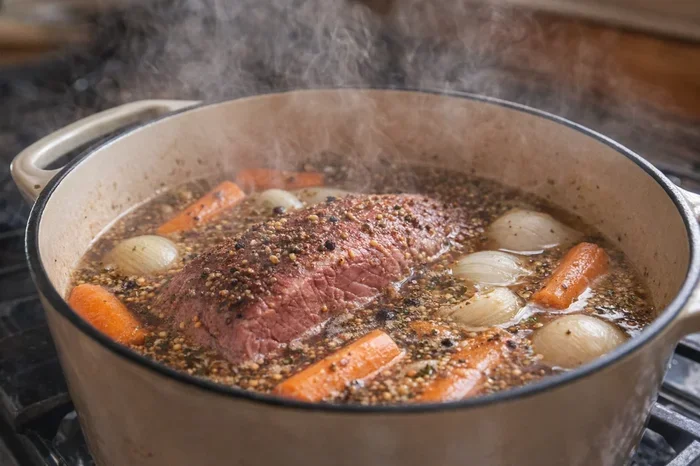
Return the corned beef to the pot. Add enough broth to cover it halfway. Bring the liquid to a gentle simmer on the stovetop. Then cover the pot and transfer it to the preheated oven. For the best results, maintain a steady temperature. If you’re using the low and slow method, set the oven to 300°F. If you prefer a faster cook, go with 325°F.
The braising liquid should barely bubble. A rolling boil will make the meat tough and stringy. Check the pot after 2 hours. The corned beef is done when a fork slides in and out with no resistance. If it’s not tender yet, continue cooking in 30-minute increments. Most 3-pound briskets need 2.5 to 3.5 hours total. The meat is ready when it feels tender but still holds its shape.
Making the Most of Your Braising Liquid
Turning Broth into Gravy
Don’t throw away the cooking liquid. It’s packed with flavor from the meat, vegetables, and spices. Strain the broth into a saucepan and skim the fat. You can use it as a base for soup or reduce it into a rich gravy. Add a splash of red wine or a splash of vinegar to brighten the flavor. A cornstarch slurry will thicken it into a luscious sauce that coats every bite.
Cooking Vegetables in the Broth
The last 45 minutes of cooking is the perfect time to add root vegetables. Potatoes, carrots, and parsnips soak up the spiced broth beautifully. The braised corned beef broth gives them a deep, savory flavor you can’t buy in a store. Just make sure the vegetables are added late enough so they don’t turn to mush. Firm vegetables hold their shape better.
Tips for Perfectly Tender Corned Beef
Temperature Control
Invest in a meat thermometer. The ideal internal temperature for braised corned beef is 200-205°F. At this range, the collagen breaks down completely, giving you tender, juicy meat. If you pull the meat too early, it will be chewy. If you wait too long, it can dry out.
Avoid opening the oven door frequently. Each time you open it, the temperature drops by 25-50 degrees. That adds extra cooking time and can lead to uneven texture. Trust the process and let the Dutch oven do its job. The trapped heat does the work for you. Patience is the secret ingredient in every great pot of corned beef.
Resting and Slicing
Once the meat is cooked, transfer it to a cutting board. Cover it loosely with foil and let it rest for 10-15 minutes. This resting period is non-negotiable. It allows the juices to redistribute throughout the meat. Cutting too soon releases all those flavorful juices onto the board. You’ll end up with dry slices instead of moist, tender ones.
When slicing, always cut against the grain. Look for the lines of muscle fiber and slice perpendicular to them. This makes the corned beef easier to chew and more enjoyable to eat. Use a sharp knife for clean, thin slices. A dull knife tears the meat and makes it look messy. Thin slices also warm up faster when you reheat leftovers.
Serving Suggestions and Pairings
Classic Sides
Corned beef pairs beautifully with simple, hearty sides. Here are some of my favorites:
- Boiled potatoes: Their creamy texture balances the salty meat.
- Steamed cabbage: A traditional pairing that soaks up the broth.
- Carrots and parsnips: Roast them in the cooking liquid for extra flavor.
- Mustard sauce: A tangy mustard cream cuts through the richness.
- Irish soda bread: Perfect for soaking up the braising liquid.
- Buttered egg noodles: They catch every drop of the savory broth.
A Simple Mustard Sauce
Whisk together sour cream, Dijon mustard, and a splash of the cooking broth. Season with salt and a pinch of sugar. This creamy sauce adds a bright contrast to the rich meat. Spoon it over the slices or serve it on the side. It’s the kind of simple addition that makes the whole meal feel elevated.
Leftover Ideas
Don’t let leftovers go to waste. Corned beef makes incredible sandwiches. Pile thin slices on rye bread with Swiss cheese and sauerkraut. You can also chop the meat and add it to egg scrambles or fried rice. The braised corned beef stays moist for days when stored properly in the fridge. Reheat it gently in a splash of broth to keep it from drying out. Corned beef hash for breakfast is another fantastic way to use leftovers.
Common Mistakes to Avoid
Overcooking and Dry Meat
The biggest mistake is cooking the meat too long at too high a temperature. This dries out the fibers and turns the beef into shoe leather. Stick to the recommended times and temperatures. If you’re unsure, pull the meat at 200°F and let it rest. The carryover heat will continue cooking it gently to the perfect 205°F. A timer helps you stay on track.
Skipping the Sear
Some people skip searing to save time. But that step builds the flavor foundation. A good sear creates a brown crust that locks in juices and adds depth to the broth. Take the extra 10 minutes—it makes a noticeable difference. Without the sear, the meat tastes flat and one-dimensional. The crust also gives the broth a deeper color and richer taste.
Using Too Much Liquid
You don’t need to submerge the corned beef completely. The meat should be about halfway covered. Too much liquid dilutes the flavor and turns the braise into a soup. The goal is a concentrated, savory broth that coats the meat. Reduce the liquid at the end if it’s too thin. A little less liquid means more flavor per bite.
Ignoring the Resting Time
Resting isn’t just a suggestion; it’s essential. When you cut into hot meat immediately, the juices run out. You end up with dry slices. Give the corned beef time to cool slightly. Ten to fifteen minutes is plenty. The meat will be juicier and easier to slice. Use this time to warm your plates and set the table.
Key Takeaways
- Low and slow wins: Cooking at 300°F for 3 hours produces the most tender corned beef.
- Rest the meat: Always let it sit for 10-15 minutes after cooking to keep juices inside.
- Slice against the grain: This makes the beef easier to chew and more tender.
- Use the broth wisely: It’s a flavor-packed base for soups, gravies, and cooking vegetables.
- Don’t rush the sear: Browning the meat adds deep, savory flavor that you can’t fake.
- Check the internal temp: 200-205°F is the sweet spot for tender, sliceable corned beef.
Conclusion
How long to cook corned beef in a Dutch oven is simpler than you think. With the right temperature and a little patience, you can create restaurant-quality braised corned beef at home. The low and slow method is your best bet for tender, juicy slices that fall apart with a fork.
Remember to rest the meat, slice against the grain, and save that flavorful broth for sides. A Dutch oven recipe like this one becomes a family favorite in no time. Whether it’s a holiday dinner or a cozy Sunday meal, perfectly cooked corned beef brings everyone to the table.
Now you have all the tools to succeed. Pick up a brisket, preheat your oven, and enjoy the process. The aroma of homemade corned beef filling your kitchen is worth every minute. You’ll be glad you took the time to do it right. Your family will ask for it again and again.
Frequently Asked Questions
Can I cook corned beef in a Dutch oven on the stovetop?
Yes, you can. Bring the liquid to a simmer on the stovetop, then cover and cook on low heat for about 3 hours. However, the oven method provides more even heat. If you use the stovetop, check the liquid level often and maintain a gentle simmer.
What is the best internal temperature for corned beef?
The ideal internal temperature is 200-205°F. At this range, the collagen breaks down completely, giving you tender, juicy meat. Use a meat thermometer to check the thickest part of the brisket.
Should I soak corned beef before cooking?
Soaking helps remove excess salt, especially if the meat tastes too salty. Soak it in cold water for 2-4 hours or overnight. If you’re short on time, rinsing it under cold water for a few minutes works too.
Can I use the cooking liquid for gravy?
Absolutely. Strain the broth, skim the fat, and simmer it with a little cornstarch or flour to thicken. The result is a rich, savory gravy that pairs perfectly with the corned beef and potatoes.
How long does leftover corned beef keep?
Store cooked corned beef in an airtight container in the refrigerator for up to 4 days. You can also freeze it for up to 3 months. Reheat gently in the broth to keep it moist.
What cuts of beef work best for Dutch oven cooking?
Corned beef brisket is the classic choice. You can also use a beef round roast or a chuck roast for a similar braised result. Look for cuts with good marbling and connective tissue for the best texture.