How Long To Oven Bake Tri Tip For Juicy Perfect Results
Learning how long to oven bake tri tip is the key to serving a juicy, tender roast that everyone will love. The perfect bake depends on your oven temperature, the size of the roast, and your preferred level of doneness. With the right time, temperature, and a few simple tricks, you can achieve restaurant-quality results in your own kitchen.
Few things beat the smell of a beef tri tip roasting in the oven. The problem is, many people either overcook it or undercook it. The result? A dry, tough roast that nobody wants seconds of. If you have ever wondered how long to oven bake tri tip the right way, you are in the right place.
This guide covers everything you need to know. From oven temperature to resting time, we will walk you through each step. By the end, you will feel confident enough to bake tri tip like a pro. Let us get started.
Key Takeaways
- Bake at 425°F for about 25-30 minutes per pound for a juicy tri tip with a beautiful crust.
- Use a meat thermometer to check internal temp and avoid overcooking.
- Rest the roast for 10 minutes before slicing to keep all the juices inside.
- Sear the tri tip first for a flavorful brown exterior that locks in moisture.
- Slice against the grain for the most tender bites every time.
- Marinating the meat adds flavor and helps keep the roast moist during baking.
- Let the roast come to room temperature before it goes in the oven for even cooking.
📑 Table of Contents
- How Long To Oven Bake Tri Tip: The Short Answer
- Best Oven Temperature For Baking Tri Tip
- Step-By-Step Guide To Oven Baking Tri Tip
- How To Tell When Tri Tip Is Perfectly Done
- Pro Tips For Juicy Tri Tip Every Time
- Common Mistakes To Avoid When Baking Tri Tip
- How Long To Oven Bake Tri Tip By Weight
- Frequently Asked Questions
- Conclusion
How Long To Oven Bake Tri Tip: The Short Answer
The general rule is simple. Bake a tri tip roast at 425°F for about 25 to 30 minutes per pound. A typical tri tip weighs between 1.5 and 3 pounds. That means a 2-pound roast takes roughly 50 to 60 minutes total.
However, time is only one piece of the puzzle. The internal temperature matters just as much. You want the roast to reach 130°F for medium-rare or 140°F for medium. These numbers make a huge difference in the final texture.
Always remember that the roast continues to cook after you take it out of the oven. This is called carryover cooking. The temperature can rise another 5 to 10 degrees during resting. So pulling it out a few degrees early is the smart move.
Why Timing Matters So Much
Baking tri tip is all about balance. Too little time and the center stays raw. Too much time and the meat dries out fast. Beef tri tip has a unique shape that cooks unevenly if you are not careful.
The thick end needs more time than the thin end. This is why many cooks prefer to sear the narrow side first. It helps create a more even thickness throughout the roast. Small adjustments like this can change everything.
Best Oven Temperature For Baking Tri Tip
Temperature is the second most important factor after time. Most experts agree that 425°F is the sweet spot for oven-baked tri tip. This high heat creates a beautiful crust on the outside while keeping the inside juicy.
Some cooks prefer a lower temperature of 350°F. This approach takes longer but can work well for larger roasts. The tradeoff is less crust formation. You lose some of that crispy, caramelized exterior that makes tri tip so delicious.
Why 425°F Works So Well
At 425°F, the Maillard reaction kicks in quickly. This is the chemical process that browns meat and develops deep flavor. The outside of the roast gets a golden-brown sear while the inside stays pink and tender.
Lower temperatures slow this process down. You end up with a pale exterior and a longer cook time. For most home cooks, 425°F hits the perfect balance between flavor and convenience.
Here is a quick comparison of common oven temperatures for tri tip:
- 425°F: Best for a crispy crust and juicy interior. Cook time is 25 to 30 minutes per pound.
- 375°F: A middle ground option. Slightly longer cook time, still good results.
- 350°F: Slower bake. Better for very large roasts. Less crust formation.
- 300°F: Low and slow. Rarely used for tri tip but works for tougher cuts.
Step-By-Step Guide To Oven Baking Tri Tip
Now that you know the time and temperature, let us walk through the full process. Following these steps will give you consistent, delicious results every time you bake tri tip.
Step 1: Prep The Roast
Take the tri tip out of the fridge about 30 minutes before cooking. Letting it sit at room temperature helps it cook more evenly. Cold meat going straight into a hot oven creates uneven results.
Pat the roast dry with paper towels. This removes surface moisture and helps the crust form faster. Next, season the meat generously. A simple mix of salt, pepper, garlic powder, and smoked paprika works wonders.
For extra flavor, you can marinate the tri tip overnight. A basic marinade of olive oil, soy sauce, garlic, and lemon juice adds tons of depth. Just make sure to pat it dry before baking so the sear is not blocked by excess liquid.
Step 2: Preheat The Oven
Preheat your oven to 425°F while the roast is resting. Give it at least 15 to 20 minutes to reach the right temperature. An oven thermometer can help here. Many home ovens run hotter or cooler than the dial shows.
Place a rack in the center of the oven. This allows hot air to circulate around the roast evenly. If you are using a baking sheet, line it with foil for easy cleanup later.
Step 3: Sear Before Baking
This step is optional but highly recommended. Heat a cast iron skillet over medium-high heat with a little oil. Sear the tri tip on all sides until you get a deep brown crust. Each side should take about 2 to 3 minutes.
Searing does not cook the meat all the way through. Instead, it builds flavor on the surface. Once seared, transfer the roast directly to the oven or to a baking dish.
Step 4: Bake And Monitor
Place the tri tip in the oven on the center rack. Set a timer based on the weight of your roast. For a 2-pound roast, that is about 50 to 60 minutes.
Use a meat thermometer to check the internal temperature. Insert it into the thickest part of the roast, avoiding any bone or fat pockets. Here are the target temps for different levels of doneness:
- 125°F: Rare
- 130°F: Medium-rare (recommended for tri tip)
- 140°F: Medium
- 150°F: Medium-well
- 160°F+: Well-done (not recommended for tri tip)
Most people prefer medium-rare for tri tip. This keeps the meat juicy and tender. Well-done tri tip tends to be dry and tough, so try to stay below 150°F.
Step 5: Rest The Roast
Once the tri tip hits its target temperature, pull it out of the oven. Place it on a cutting board and tent it loosely with aluminum foil. Let it rest for at least 10 minutes.
Resting allows the juices to redistribute throughout the meat. If you cut too early, all those flavorful juices run out onto the board instead of staying inside the roast. Ten minutes is the sweet spot for a tri tip of average size.
Step 6: Slice And Serve
When slicing tri tip, always cut against the grain. This means cutting perpendicular to the muscle fibers. It shortens the fibers and makes each bite much more tender.
Use a sharp carving knife for clean slices. Aim for pieces about a quarter-inch thick. Serve the slices with the juices spooned over the top for maximum flavor.
How To Tell When Tri Tip Is Perfectly Done
Knowing when to pull the roast out of the oven can be tricky. Visual cues alone are not enough. The internal temperature is your best friend here.
Use A Meat Thermometer
A good instant-read thermometer takes the guesswork out of baking tri tip. Insert it into the thickest part of the roast. Wait a few seconds for the reading to stabilize.
Digital thermometers are faster and more accurate than dial versions. They are a small investment that pays off every time you cook meat. Keep one in your kitchen drawer at all times.
Look For These Visual Signs
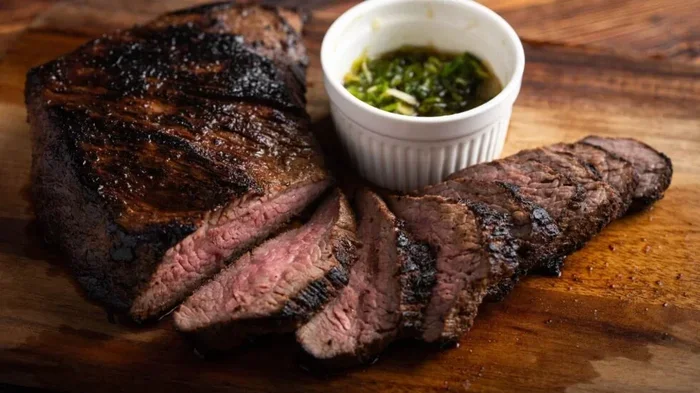
While the thermometer is the gold standard, there are visual clues too. A perfectly baked tri tip has a deep brown crust on the outside. When you press the center with your finger, it should feel firm but still springy.
Cutting into the roast is the ultimate test. The center should be pink with a hint of red for medium-rare. If it is completely gray throughout, you have overcooked it. If it is still raw in the middle, it needs more time.
Common Doneness Mistakes
One of the biggest mistakes is relying on the clock alone. Every oven is different. Every roast is a different size. The clock gives you a rough estimate, but the thermometer gives you the truth.
Another mistake is not accounting for carryover cooking. The temperature rises after the roast comes out of the oven. Pulling at 125°F for medium-rare is the right move. By the time you finish resting, it will be right at 130°F.
Pro Tips For Juicy Tri Tip Every Time
Baking tri tip perfectly takes a little practice, but these tips will speed up your learning curve. They are the same techniques that professional cooks use every day.
Brine Or Marinate Overnight
A simple brine or marinade can transform a plain tri tip into something extraordinary. A basic brine of water, salt, and sugar works wonders for moisture retention. Soak the roast for 4 to 12 hours before baking.
For a flavor boost, try a dry rub the night before. Rub the seasoning all over the meat and let it sit in the fridge uncovered. This dries the surface slightly, which leads to a better crust in the oven.
Do Not Skip The Sear
Searing the tri tip before baking adds a layer of flavor that is hard to replicate any other way. The Maillard reaction creates hundreds of new flavor compounds in just a few minutes.
Make sure your pan is ripping hot before you add the roast. A hot pan means a fast sear and less moisture loss. If the pan is not hot enough, the meat will steam instead of sear.
Invest In A Good Roasting Pan
A sturdy roasting pan makes a difference. Look for one with a rack that elevates the roast above the pan bottom. This allows hot air to flow around the meat more evenly.
If you do not have a rack, you can use chopped vegetables as a bed. Onions, carrots, and celery hold the roast up while adding subtle flavor to the drippings. It is a win-win situation.
Let The Meat Tell You When It Is Done
Every tri tip is different. The weight, the starting temperature, and the shape all affect cooking time. Instead of following the clock blindly, trust your thermometer.
Start checking the temperature about 10 minutes before the estimated finish time. This gives you time to adjust if needed. It is much better to add a few minutes than to overcook the roast.
Slice Thin And Against The Grain
Tri tip has fibers that run in different directions through the roast. Identifying the grain and cutting perpendicular to it is essential for tenderness.
Thin slices are more forgiving than thick ones. They chew more easily and absorb sauces better. If you are serving tri tip at a gathering, thin slices go a lot further and please more people.
Common Mistakes To Avoid When Baking Tri Tip
Even experienced cooks make mistakes with tri tip. Knowing what to avoid saves you from serving a disappointing roast. Here are the most common pitfalls and how to dodge them.
Skipping The Rest Period
Cutting into the roast right after it comes out of the oven is the fastest way to lose juicy flavor. The juices need time to settle back into the meat. Ten minutes of resting makes a noticeable difference in every slice.
Using The Wrong Oven Temperature
Baking tri tip at too low a temperature can result in a gray, dry roast. The meat spends too much time in the danger zone where bacteria can grow. Stick to 425°F for the best balance of safety, flavor, and texture.
Over-seasoning Or Under-seasoning
Tri tip has a bold beef flavor that can handle a lot of seasoning. But too much salt can overpower everything. Aim for about a teaspoon of kosher salt per pound of meat.
On the flip side, under-seasoning leaves the roast bland. Tri tip benefits from garlic, black pepper, and a touch of smoked paprika. These simple additions elevate the flavor without masking the natural taste of the beef.
Not Letting The Roast Come To Room Temperature
Putting a cold roast straight into the oven creates uneven cooking. The outside overcooks while the inside stays cold. Taking the meat out 30 minutes before baking solves this problem easily.
How Long To Oven Bake Tri Tip By Weight
Not all tri tip roasts are the same size. Here is a handy reference guide based on weight. These times assume an oven temperature of 425°F and a starting roast temperature of about 70°F.
- 1.5 pounds: About 35 to 45 minutes total bake time.
- 2 pounds: About 50 to 60 minutes total bake time.
- 2.5 pounds: About 60 to 75 minutes total bake time.
- 3 pounds: About 75 to 90 minutes total bake time.
These times include any searing you do beforehand. If you skip the sear, the bake time stays roughly the same. Always use the thermometer to confirm doneness rather than relying on the clock alone.
Keep in mind that these are estimates. Your oven may run a few degrees hotter or cooler than the dial shows. An oven thermometer placed inside the oven can help you calibrate and get more accurate results over time.
Frequently Asked Questions
Can I bake tri tip at 350°F instead of 425°F?
Yes, you can bake tri tip at 350°F, but it will take longer. Expect to add about 10 to 15 minutes per pound. The crust will be less pronounced, but the meat will still cook through. This method works well if you prefer a slower, more hands-off approach to roasting beef tri tip.
What is the best internal temperature for tri tip?
The best internal temperature for tri tip is 130°F for medium-rare. This gives you a juicy, tender roast with a pink center. If you prefer your meat more done, aim for 140°F for medium. Always pull the roast out a few degrees early because the temperature continues to rise during resting.
Should I cover tri tip with foil while baking?
No, do not cover tri tip with foil while baking. Leaving it uncovered allows the heat to circulate freely around the roast. This creates a better crust on the outside. You can tent it with foil during the resting period after it comes out of the oven.
How long should tri tip rest before slicing?
Tri tip should rest for at least 10 minutes before slicing. This resting period allows the juices to redistribute throughout the meat. If you cut too early, the juices will run out and the roast will be drier. Ten minutes is the sweet spot for a roast of average size.
Can I freeze leftover baked tri tip?
Yes, you can freeze leftover baked tri tip. Let the roast cool completely, then wrap it tightly in plastic wrap and aluminum foil. Place it in a freezer-safe bag and it will keep for up to 3 months. Reheat slices gently in the oven or microwave until warmed through.
What is the difference between tri tip and brisket?
Tri tip comes from the bottom sirloin subprimal cut, while brisket comes from the breast or lower chest. Tri tip is smaller, usually 1.5 to 3 pounds, and cooks much faster. Brisket is larger and requires longer, slower cooking. Both are delicious beef cuts, but they require different approaches to oven baking.
Conclusion
Baking tri tip in the oven does not have to be intimidating. Once you understand the basics of time, temperature, and resting, you are well on your way to perfect results every time. The key is to keep things simple and trust the process.
How long to oven bake tri tip depends on the weight and your oven, but 25 to 30 minutes per pound at 425°F is a great starting point. Use a meat thermometer, let the roast rest, and always slice against the grain. These small steps make a massive difference in the final dish.
With practice, you will be able to bake tri tip without even thinking about it. The flavors will develop on their own, and the aroma filling your kitchen will tell you everything you need to know. So fire up that oven, grab a tri tip roast, and get cooking. Your family and guests are going to love every bite.