How To Fix Asparagus In The Oven And Stop Ruining It
Learning how to fix asparagus in the oven is easier than you think. Most people overcook or under-season their asparagus, leading to soggy or bland results. This guide covers the right temperature, prep steps, and common mistakes so you can roast asparagus perfectly every time.
Key Takeaways
- Fix the temperature: Roast asparagus at 400°F to 425°F for the best results.
- Dry your spears: Patting asparagus dry prevents sogginess and helps it crisp up.
- Use parchment paper: It stops asparagus from sticking and makes cleanup a breeze.
- Don’t overcook: Keep a close eye on the oven timer to avoid mushy spears.
- Season at the right time: Add salt after roasting to draw out less moisture.
- Fix undercooked asparagus: Return it to the oven for a few more minutes.
- Store leftovers properly: Keep roasted asparagus in an airtight container in the fridge.
📑 Table of Contents
- Why Your Asparagus Always Comes Out Wrong In The Oven
- The Right Oven Temperature For Perfect Asparagus
- How To Prep Asparagus The Right Way Before Roasting
- Cooking Methods That Actually Work For Asparagus
- Common Mistakes And How To Fix Them
- How To Rescue Asparagus That Is Already Ruined
- Serving And Storing Your Perfectly Roasted Asparagus
- Final Thoughts On Perfect Oven Asparagus
Why Your Asparagus Always Comes Out Wrong In The Oven
You are not alone if your asparagus turns out limp, burnt, or bland. Almost everyone has ruined a batch of asparagus at least once. The good news is that fixing the problem is simple once you know what went wrong.
Most people make a handful of common mistakes. These include setting the oven too hot, using wet spears, or forgetting to season properly. Once you understand these pitfalls, you can fix them fast. Your oven-roasted asparagus will taste restaurant-quality in no time.
Roast asparagus the right way and it becomes a side dish everyone loves. It pairs well with chicken, fish, eggs, and even pasta. The key is mastering a few basic steps. This guide walks you through each one in detail.
We will cover temperature settings, prep tricks, and how to salvage asparagus that is already in the oven. Whether you are a beginner or a seasoned home cook, you will find something useful here. Let us get started.
What Goes Wrong When You Roast Asparagus
The most common issue is soggy asparagus. This happens when the spears release too much moisture before they can crisp up. Another problem is burnt tips, which occur when the oven is too hot or the cooking time is too long.
Sometimes the asparagus comes out undercooked. The bottom part is hard and woody while the tips are overdone. This usually means the spears were not uniform in size or the oven was not hot enough.
Flavor is another issue. Plain asparagus can taste boring even when cooked correctly. Seasoning at the right time and using the right ingredients makes a huge difference. We will dive deeper into all of this below.
The Right Oven Temperature For Perfect Asparagus
Getting the oven temperature right is the single most important step. Too low and the asparagus steams instead of roasting. Too high and the tips burn before the stalks are tender.
The sweet spot for baking asparagus is between 400°F and 425°F. At this range, the spears caramelize nicely on the outside while staying tender inside. You get a slight crunch with a melt-in-your-mouth center.
If you are using a toaster oven, you may need to lower the temperature by about 25°F. Toaster ovens run hotter and have less space, which can cause uneven cooking. Check your asparagus a few minutes early to prevent burning.
For oven roasted vegetables in general, 400°F is the standard go-to temperature. Asparagus fits right into that range. The high heat quickly evaporates surface moisture, which is what creates that beautiful golden color.
Is parchment paper toaster oven safe? Yes, it is. Using parchment paper on your sheet pan prevents the asparagus from sticking and makes cleanup much easier. It also promotes even browning by allowing air to circulate around the spears.
Temperature Cheat Sheet
Here is a quick reference for different oven types and asparagus thicknesses:
- Thin spears: Roast at 425°F for 8 to 12 minutes.
- Medium spears: Roast at 400°F for 12 to 15 minutes.
- Thick spears: Roast at 400°F for 15 to 20 minutes.
- Toaster oven: Roast at 375°F to 400°F for 10 to 14 minutes.
How To Prep Asparagus The Right Way Before Roasting
Proper prep is the secret to fixing bad asparagus results. Most people skip steps or rush through them. Taking five extra minutes can completely change the outcome.
Step One: Wash and Dry Thoroughly
Rinse your fresh asparagus under cool running water. Use your hands to gently remove any dirt from the spears. Then pat them completely dry with a clean kitchen towel or paper towels.
This drying step is critical. Wet asparagus steams in the oven instead of roasting. You end up with mushy spears instead of crispy ones. Do not skip this step no matter how rushed you feel.
Step Two: Snap Off the Woody Ends
Hold each spear near the bottom and near the top. Gently bend it until it snaps. The spear will naturally break at the point where the tough woody part ends and the tender part begins. You can also line up several spears and cut the ends off in one go.
Do not throw away those ends. You can save them to make asparagus soup or add them to a vegetable broth. Nothing goes to waste in a good kitchen.
Step Three: Season with Purpose
Place the prepped spears on a lined sheet pan. Drizzle with olive oil and toss gently to coat. Then add salt, pepper, and any other seasonings you like.
Here is a pro tip: add salt after the asparagus comes out of the oven. Salt draws moisture to the surface of vegetables. If you salt before roasting, you may end up with wet spears again. Save the salt for after cooking.
Simple seasonings work best for asparagus. Garlic powder, lemon zest, and a sprinkle of parmesan cheese are all fantastic options. Keep it simple and let the natural flavor shine through.
Should You Use Aluminum Foil?
Some people swear by lining their baking sheet with aluminum foil. It does make cleanup faster. However, foil can trap steam and prevent the asparagus from crisping up. Parchment paper is a better choice for roasting because it allows airflow.
If you do use foil, make sure the asparagus is not wrapped tightly. Loose placement helps moisture escape and promotes browning. You want the spears to roast, not steam.
Cooking Methods That Actually Work For Asparagus
Not all oven methods produce the same results. Depending on your oven type and the thickness of your spears, one method may work better than another.
Method One: Standard Sheet Pan Roasting
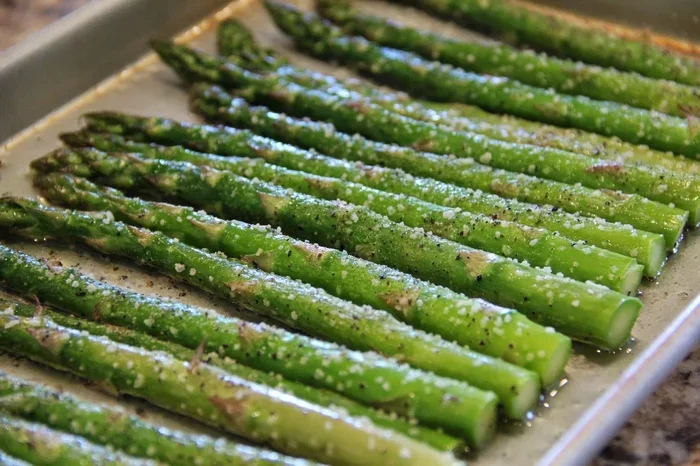
This is the most popular method and for good reason. Spread the asparagus in a single layer on a sheet pan lined with parchment paper. Make sure the spears are not touching or overlapping. Crowding leads to steaming, which causes sogginess.
Place the pan on the middle oven rack for even heat distribution. Roast at 400°F for about 12 to 15 minutes. Check at the 10-minute mark. The tips should be slightly crispy and the stalks should be tender when pierced with a fork.
Method Two: High-Heat Quick Roast
If you are short on time, try a high-heat roast at 450°F. This method works best with thin to medium spears. The intense heat quickly caramelizes the natural sugars in the asparagus.
Roast for only 8 to 10 minutes at this temperature. Watch them closely because they can go from perfectly done to burnt very fast. This method produces a deeper, more intense flavor with beautiful char marks.
Method Three: Two-Stage Cooking
This is the method for thick, woody spears. Start by roasting at 400°F for 10 minutes. Then increase the heat to 450°F or turn on the broiler for the final 2 to 3 minutes.
The two-stage approach cooks the thick stalks through while crisping up the tips. It gives you the best of both worlds. The result is tender asparagus with a satisfying crunch on the outside.
If you are looking for other ways to cook asparagus, you might enjoy learning how to cook Omaha steaks filet mignon in oven. The temperature control principles are very similar and can help you understand your oven better.
Method Four: The Sheet Pan with Potatoes
Roasting asparagus alongside potatoes is a classic combination. The potatoes soak up the asparagus juices and create a flavorful side dish. Just be aware that potatoes take longer to cook than asparagus.
You might want to start the potatoes first and add the asparagus halfway through. Check how long potatoes take to cook in the oven to time everything perfectly. This way, both vegetables finish at the same time.
Common Mistakes And How To Fix Them
Even experienced cooks make mistakes with asparagus. The good news is that most problems are easy to fix if you catch them early.
Mistake One: Overcrowding the Pan
Packing too many spears onto one sheet pan is the fastest way to get soggy results. The asparagus steams instead of roasting when there is no room for air to flow around each spear.
How to fix it: Use two sheet pans if you have a large batch. Spread the spears in a single layer with space between each one. Your oven can handle two pans at once. The extra few minutes of cooking time is worth the perfectly crispy result.
Mistake Two: Skipping the Dry Step
We mentioned this earlier, but it deserves its own section. Wet asparagus is the number one cause of limp, undercooked spears. Water on the surface turns to steam and prevents browning.
How to fix it: If you notice your asparagus is too wet, pat it dry again with paper towels before it goes back in the oven. You can also increase the oven temperature by 25°F to help evaporate the extra moisture faster.
Mistake Three: Using the Wrong Pan
Dark colored pans absorb more heat and can cause the bottoms of the asparagus to burn. Thin, flimsy pans create hot spots that lead to uneven cooking.
How to fix it: Use a light-colored, heavy-duty sheet pan. A rimmed baking sheet works best because it keeps the spears contained. If all you have is a dark pan, simply reduce the oven temperature by 25°F and check the asparagus earlier.
Mistake Four: Forgetting to Rotate the Pan
Ovens have hot spots. The back of the oven is often hotter than the front. If you do not rotate your pan, one side of the asparagus may burn while the other stays undercooked.
How to fix it: Rotate the sheet pan 180 degrees halfway through the cooking time. This simple step ensures even browning on all sides. It takes just five seconds but makes a noticeable difference.
Mistake Five: Serving Immediately Without Resting
Just like a steak, asparagus benefits from a short rest after cooking. Cutting into it immediately can release steam and make the spears lose their crispness.
How to fix it: Let the asparagus sit on the pan for 2 to 3 minutes after removing it from the oven. This allows the heat to distribute evenly and the surface to firm up slightly. A short rest makes a big difference in texture.
How To Rescue Asparagus That Is Already Ruined
So you already put your asparagus in the oven and things went wrong. Do not throw it away just yet. There are ways to save it depending on what went wrong.
If the Asparagus Is Soggy
Soggy asparagus means it released too much moisture and did not get enough direct heat. Place the spears back in the oven at 425°F for 3 to 5 minutes. This extra blast of heat will evaporate the surface moisture and restore some crispness.
Make sure the oven rack is positioned in the upper third of the oven for this rescue mission. The closer proximity to the top heating element helps brown and dry out the spears. Keep a close eye on them to prevent burning.
If the Asparagus Is Burnt on the Tips
Burnt tips happen when the oven is too hot or the spears are too close to the top element. Unfortunately, you cannot un-burn the tips. However, you can cut off the burnt portion and save the rest.
Use a sharp knife to slice off the blackened ends. The remaining spear should still be perfectly edible. Season the cut ends with a little extra olive oil and serve them as normal. No one will know they were almost ruined.
If the Asparagus Is Undercooked
Hard, woody stalks mean the asparagus did not cook long enough. Add a splash of water to the sheet pan and cover it tightly with foil. This creates a steam environment that will help cook the thick parts through.
Return the covered pan to the oven at 375°F for 5 to 7 minutes. Check the thickest spear with a fork. It should slide through easily when done. Remove the foil for the last 2 minutes to crisp up the surface.
If the Asparagus Is Bland
Sometimes the texture is fine but the flavor is lacking. This is an easy fix. Toss the cooked asparagus with a little extra virgin olive oil, a squeeze of fresh lemon juice, and a pinch of flaky sea salt.
You can also sprinkle on some grated parmesan cheese or a dash of balsamic vinegar. These additions add depth and complexity to the flavor. Even plain canned or frozen asparagus can be rescued with the right seasonings.
If you are looking for more oven-based recipes, check out how to cook Omaha steak burgers in the oven for another delicious way to use your oven. And if you are wondering about using plates or other dishware in the oven, you can read can I put a plate in the oven for helpful safety tips.
Serving And Storing Your Perfectly Roasted Asparagus
Now that your asparagus is cooked to perfection, you want to enjoy it the right way. Serving and storing properly keeps the quality high and extends the life of your leftovers.
Best Ways to Serve Roasted Asparagus
Roasted asparagus is incredibly versatile. Here are some serving ideas:
- As a side dish: Serve alongside grilled chicken, salmon, or steak.
- In a salad: Chop the spears and toss them with mixed greens and vinaigrette.
- On toast: Spread ricotta on crusty bread and top with roasted asparagus and a poached egg.
- In a pasta: Toss with penne, olive oil, garlic, and parmesan cheese.
- As a snack: Serve cold or room temperature with a dipping sauce.
For the best flavor, serve asparagus warm but not piping hot. The slight cooling allows the natural sweetness of the spears to come through. Cold roasted asparagus also makes a great addition to lunch boxes and meal prep containers.
How To Store Leftover Asparagus
Store leftover roasted asparagus in an airtight container in the refrigerator. It will keep for up to 3 days. Do not leave it at room temperature for more than 2 hours.
Reheat in the oven at 350°F for 5 to 7 minutes. The microwave tends to make asparagus soggy, so the oven is the better choice. If you are reheating in the oven, place the spears on a sheet pan lined with parchment paper for the best results.
You can also freeze roasted asparagus. Let it cool completely, then spread it on a baking sheet in a single layer. Freeze for 1 hour, then transfer to a freezer bag. Frozen roasted asparagus keeps for up to 3 months. Reheat directly from frozen in the oven at 375°F for 10 minutes.
Final Thoughts On Perfect Oven Asparagus
Cooking asparagus in the oven does not have to be stressful. With the right temperature, proper prep, and a little attention, you can achieve restaurant-quality results at home. The key is to avoid the common mistakes we covered and to know how to fix problems when they arise.
Start with dry, fresh spears. Use a light-colored sheet pan lined with parchment paper. Roast at 400°F to 425°F and check early. Season after cooking for the best flavor. And if something goes wrong, you now know how to rescue almost any mistake.
Once you master these techniques, you will never ruin asparagus again. It will become a quick, reliable, and delicious side dish that your whole family enjoys. Practice makes perfect, so try these tips the next time you roast a batch.
Remember, even professional chefs sometimes overcook their vegetables. The difference is that they know how to fix it. Now you do too. Get in the kitchen, preheat your oven, and make the best asparagus of your life.
Frequently Asked Questions
What temperature should I roast asparagus in the oven?
Roast asparagus at 400°F to 425°F for the best results. This range allows the spears to caramelize on the outside while staying tender inside. If you are using a toaster oven, lower the temperature by about 25°F to prevent burning.
Why is my asparagus soggy after roasting?
Soggy asparagus usually happens when the spears are too wet or the pan is overcrowded. Water on the surface creates steam, which prevents crispiness. Make sure to pat your asparagus dry before roasting and spread the spears in a single layer with space between them.
Can I use aluminum foil instead of parchment paper?
Yes, you can use aluminum foil, but parchment paper is better for roasting asparagus. Foil traps steam and can make the spears soggy. Parchment paper allows air to circulate, which helps the asparagus crisp up and brown evenly.
How do I know when asparagus is done in the oven?
Asparagus is done when the tips are slightly crispy and the stalks are tender when pierced with a fork. Thin spears take about 8 to 12 minutes, while thick spears need 15 to 20 minutes. Check your asparagus a few minutes before the minimum time to avoid overcooking.
Can I fix undercooked asparagus after it comes out of the oven?
Yes, you can fix undercooked asparagus by adding a splash of water, covering the pan with foil, and returning it to the oven at 375°F for 5 to 7 minutes. This steam method helps cook the thick, woody parts through without burning the tips.
How long does roasted asparagus last in the fridge?
Roasted asparagus keeps in an airtight container in the refrigerator for up to 3 days. Reheat it in the oven at 350°F for 5 to 7 minutes for the best texture. Avoid microwaving, as it tends to make the spears soggy and limp.